
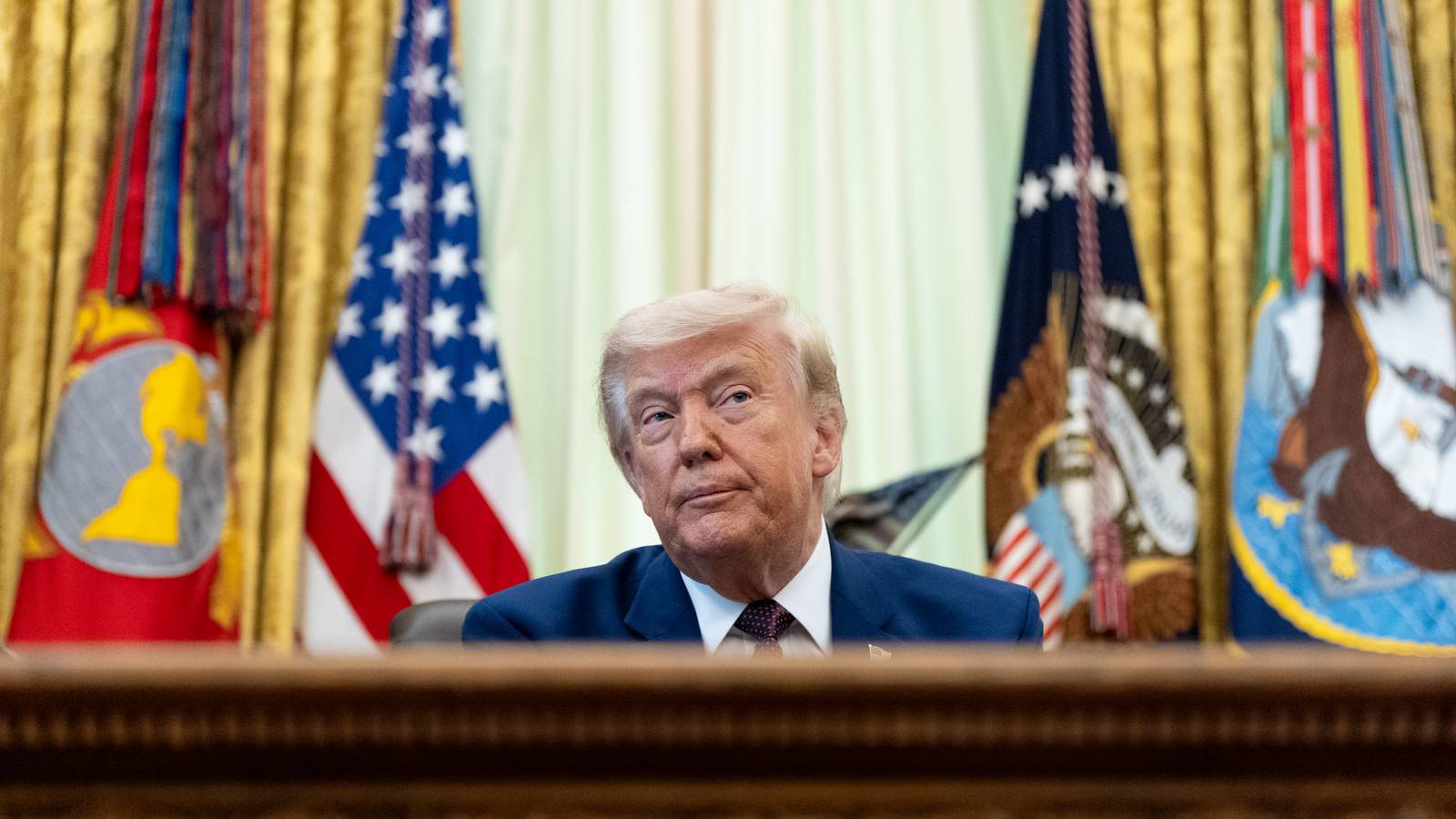
On Wednesday evening, four Republican lawmakers broke ranks with their party to support a war powers resolution aimed at limiting President Donald Trump’s authority in the ongoing conflict with Iran. The President’s administration downplayed the significance of this legislative move, stating it lacks real impact.
Significant Legislative Shift
This vote represents a notable change from previous war powers resolutions, which had seen little bipartisan support in either the House or Senate. Historically, Democrats have struggled to garner enough backing from the Republican majority to effectively challenge the Trump administration’s military actions in Iran, particularly those initiated on February 28 without explicit congressional approval. An earlier vote slated for May 21 was scrapped by House Speaker Mike Johnson, who anticipated discontent due to potential Republican absences. However, Wednesday’s resolution was indeed voted on, reflecting a shift in the political dynamics on Capitol Hill.
Introduced by Rep. Gregory Meeks (D-NY), who serves as the ranking member of the House Foreign Affairs Committee, the resolution passed with a close 215 to 208 vote. Notably, Republican Reps. Thomas Massie (KY), Brian Fitzpatrick (PA), Tom Barrett (MI), and Warren Davidson (OH) crossed party lines to aid Democrats in what has been characterized as an end to a prolonged legislative drought for the party in these matters.
Political Landscape Changing
The passage of this resolution occurs amidst growing dissent from within the Republican Party regarding the Trump administration’s tactics. Some members have expressed concern about the impact of certain decisions, such as the $1.8 billion fund established as a response to actions taken on January 6, 2021. Meeks expressed his satisfaction post-vote, stating, “I am thrilled that we’ve had the opportunity to have some members from the Republican side stand up,” emphasizing the unity demonstrated by Democrats in support of the resolution.
Rep. Massie, who faced recent electoral challenges from a Trump-aligned candidate, remarked on social media, declaring that “The People’s House is sending a message: end this war.” His statement reflects a growing sentiment among some lawmakers that the current military engagement warrants a reevaluation, suggesting a need for a more peaceful approach.
Administration’s Response
In reaction to the resolution, the White House asserted that it holds no real legislative power. An unnamed official from the administration indicated that the vote stemmed from several Republican absences and cited a historical record of previous successful war powers votes that overshadow this latest attempt. It was emphasized that the resolution, designated as a concurrent resolution (H.Con.Res 86), lacks the force of law and thus would not reach the President’s desk for approval.
This administration official further argued that concurrent resolutions are unconstitutional based on past judicial interpretations. They articulated that President Trump intends to continue exercising his constitutional authority as Commander-in-Chief while maintaining transparency with Congress. Meanwhile, Meeks reiterated his commitment to “our constitutional responsibilities,” underscoring the importance of legislative checks and balances on executive power.
Speaker Johnson voiced his concerns about potential implications of limiting the President’s military powers, characterizing it as a “very dangerous prospect.” He warned that concentrating power away from the executive branch could diminish the nation’s negotiating position internationally, particularly regarding peace in conflict zones. Ultimately, the ongoing debate around the resolution reflects a deeper conversation in American politics regarding the balance of power and effectiveness of congressional oversight in military matters.