
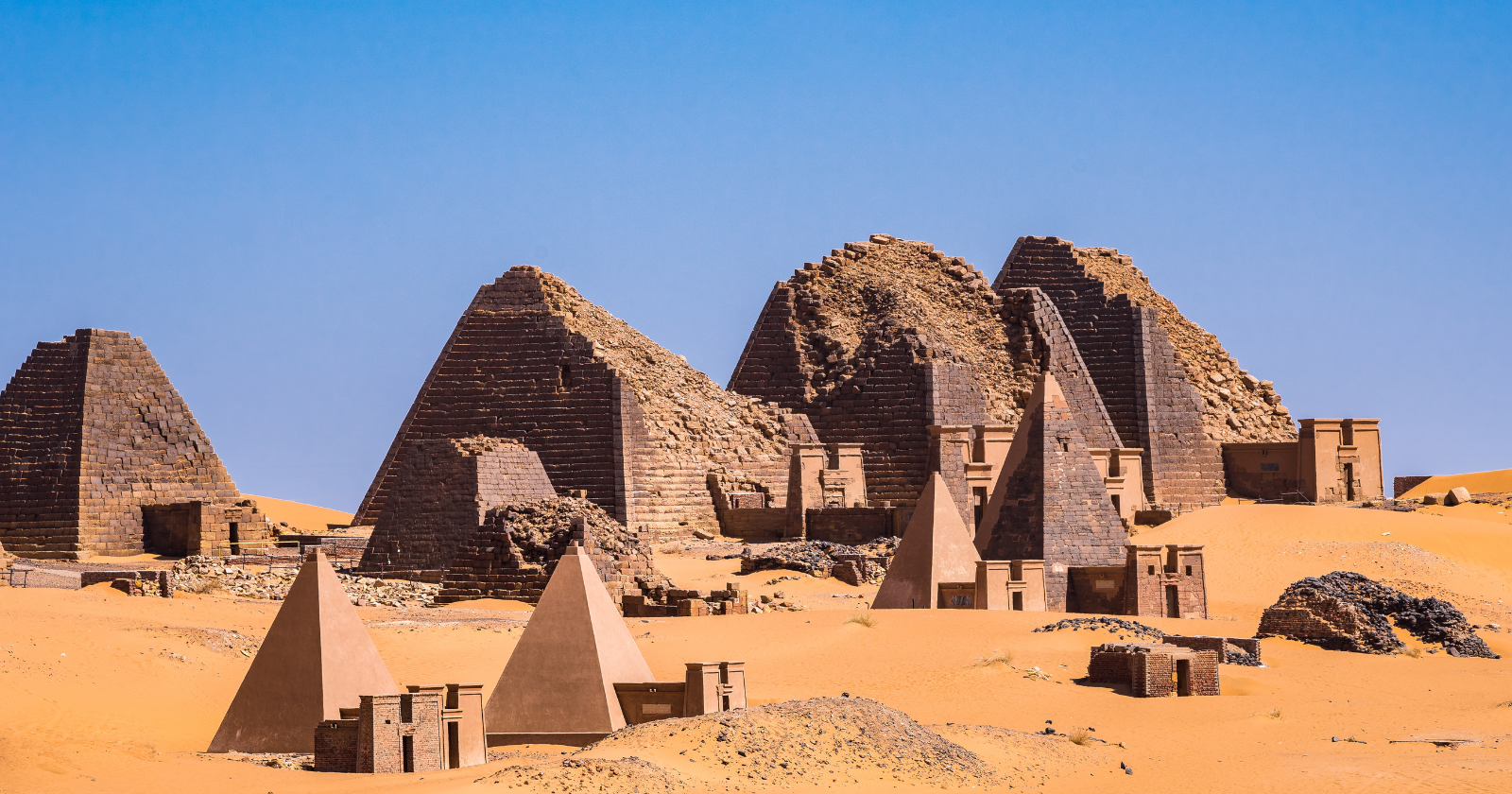
Egypt is renowned for its iconic pyramids, particularly those at Giza. However, many people are unaware that neighboring Sudan boasts an astonishing greater number of ancient pyramids—around 255 to Egypt’s 118. This underappreciation of the Nubian pyramids is rooted in a mix of historical, geopolitical, and cultural factors, none of which reflect the architectural significance of these structures themselves.
The Kingdom of Kush: Builders of the Nubian Pyramids
The Nubian pyramids were constructed by the Kingdom of Kush, an advanced civilization that thrived along the upper Nile Valley, encompassing parts of modern-day Sudan and Egypt. According to historical accounts, Kushite pyramid construction commenced around 900 BC and continued until approximately 400 AD. This period yielded over 250 pyramids scattered across the rugged Sudanese landscape. In stark contrast, the Egyptians’ pyramid construction largely halted around 1500 BC, marking the end of a prolific era of monumental architecture. Remarkably, the Kushites sustained their pyramid-building tradition for nearly two millennia after their Egyptian counterparts had ceased.
Characteristics of the Nubian Pyramids
The appearance of the Nubian pyramids sets them apart from their Egyptian siblings. While the Great Pyramid of Giza boasts a massive base of 756 feet, most Nubian pyramids measure between 20 and 90 feet on each side. The steep angles of the Nubian pyramids, rising at approximately 70 degrees compared to the 52 degrees of Khufu’s pyramid, give them a distinct, almost obelisk-like silhouette. Constructed primarily from red Nubian sandstone, these structures present a warm, rustic hue that contrasts beautifully with the arid desert surroundings. The largest Nubian pyramid resides at Nuri, the burial site of King Taharqa, a notable ruler during the Kushite reign over Egypt during the 7th century BC.
The Obscurity of Nubian Pyramids
Despite their historical significance, the Nubian pyramids remain relatively unknown on the global stage. European archaeologists have recognized these structures since the early 19th century, thanks to the efforts of figures like George Reisner, who meticulously mapped the sites from 1916 to 1923. Nevertheless, their fame has not matched that of the Egyptian pyramids, primarily due to limited tourist access resulting from Sudan’s political climate. Civil wars and ongoing conflicts have discouraged international travelers, contributing to a stark difference in tourism numbers—while Egypt welcomes millions each year, Sudan lags far behind with fewer than 15,000 visitors annually in recent years.
The political landscape has also impacted cultural perceptions; the portrayal of ancient Egypt as a part of the Mediterranean civilization has overshadowed the achievements of neighboring regions like Nubia. This misrepresentation was exacerbated by 19th-century European scholarship, which often deemed African civilizations as less sophisticated. Such biases continue to shape the narratives surrounding these ancient monuments.
The Legacy of Nubian Pyramids Today
Despite facing challenges such as erosion and past destructive excavations, the Nubian pyramids stand as one of the largest collections of royal funerary monuments globally. Meroë alone hosts around 100 pyramids, making it the most significant concentration. Unlike the highly commercialized Pyramids of Giza, visitors to Nubia can explore these ancient sites with relative solitude, often without the confines of modern tourism infrastructure.
For anyone seeking a deeper understanding of ancient civilizations, the Nubian pyramids offer an impressive glimpse into a thriving civilization that preserved its monumental traditions long after its Egyptian neighbor had ceased. Indeed, for those willing to venture off the beaten path, the Nubian pyramids present an opportunity to engage with a lesser-known yet equally captivating chapter of human history.