
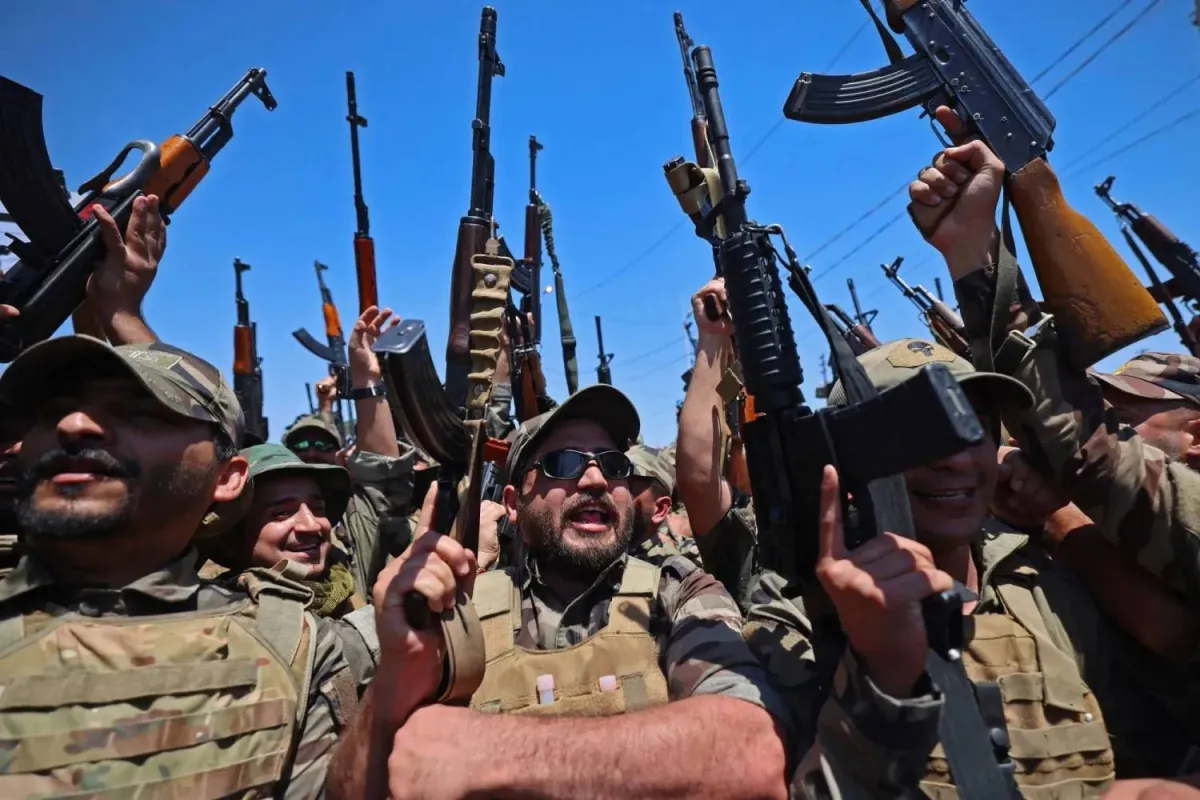
The recent changes in Iraq’s security landscape mark a significant shift in power dynamics within the country’s armed forces. The transformation is primarily driven by the Sadrist movement, led by Moqtada al-Sadr, as it hands over security responsibilities in Samarra to the Iraqi army. This strategic decision reflects a broader initiative to restructure the Popular Mobilization Forces (PMF) in a bid to enhance state control and stabilize the region.
Handing Over Security Responsibilities
On Thursday, the Sadrist military wing, Saraya al-Salam, conducted a symbolic ceremony where they officially transferred security responsibilities in Samarra to the Iraqi army. This handover saw the faction lowering its flag, a significant gesture indicating their commitment to align with national military efforts. Observers characterized this move as a “qualitative shift,” indicative of a new phase in Iraq’s security operations. Saad Maan, head of the Security Media Cell, confirmed that all Saraya al-Salam members now report directly to the prime minister, who also holds the title of commander-in-chief of the armed forces.
Saraya al-Salam, acting as part of the PMF, has a long-standing presence in Samarra, particularly since the 2007 bombing of the Imam al-Askari shrine. This transition marks a potential turning point for the group as it officially enters the state’s military structure. Despite this advancement, various factions within the PMF, such as Kataib Hezbollah, remain resistant to disarmament and still operate separately, raising concerns over the overall goals of the restructuring efforts.
Restructuring the Popular Mobilization Forces
The restructuring of the PMF is gaining momentum, with Prime Minister Ali al-Zaydi’s administration taking actionable steps. Sabah al-Numan, the spokesperson for the commander-in-chief, revealed that a committee has been established to oversee this significant reform. This initiative aims to integrate various armed groups into the regular armed forces while ensuring that the rights of individual fighters are honored.
The focus of the restructuring is not merely about disarming but also includes forming administrative frameworks that will govern how these groups interact with state military institutions. Numan emphasized the importance of creating a streamlined system where military formations are integrated into the security apparatus, a necessary evolution for Iraq’s national stability.
Future Implications and Disarmament Plans
Looking ahead, the developments within the PMF have triggered discussions among other factions regarding their status and future. For instance, Asaib Ahl al-Haq and Kataib al-Imam Ali are contemplating similar moves toward integration under the Iraqi military’s command. As these factions recognize the shift in priorities towards political engagement rather than armed conflict, they appear willing to cooperate with the government’s agenda, which includes layoffs and transitional opportunities for their members.
As Iraq navigates this complex disarmament plan, the government’s capacity to follow through remains a point of skepticism among political analysts. While reforms signal a push towards consolidating state control over armed entities, the realities on the ground pose challenges. Key figures, including U.S. officials, have expressed hope that these measures could establish order in Iraq amid shifting regional power dynamics, particularly given Tehran’s waning influence.
In conclusion, the restructuring of the Popular Mobilization Forces and the handover of security responsibilities to the Iraqi army represent critical steps in Iraq’s ongoing journey toward national unity and security. While challenges remain, the developments thus far are indicative of a renewed focus on state authority over militia groups, essential for ensuring long-term stability in the region.