
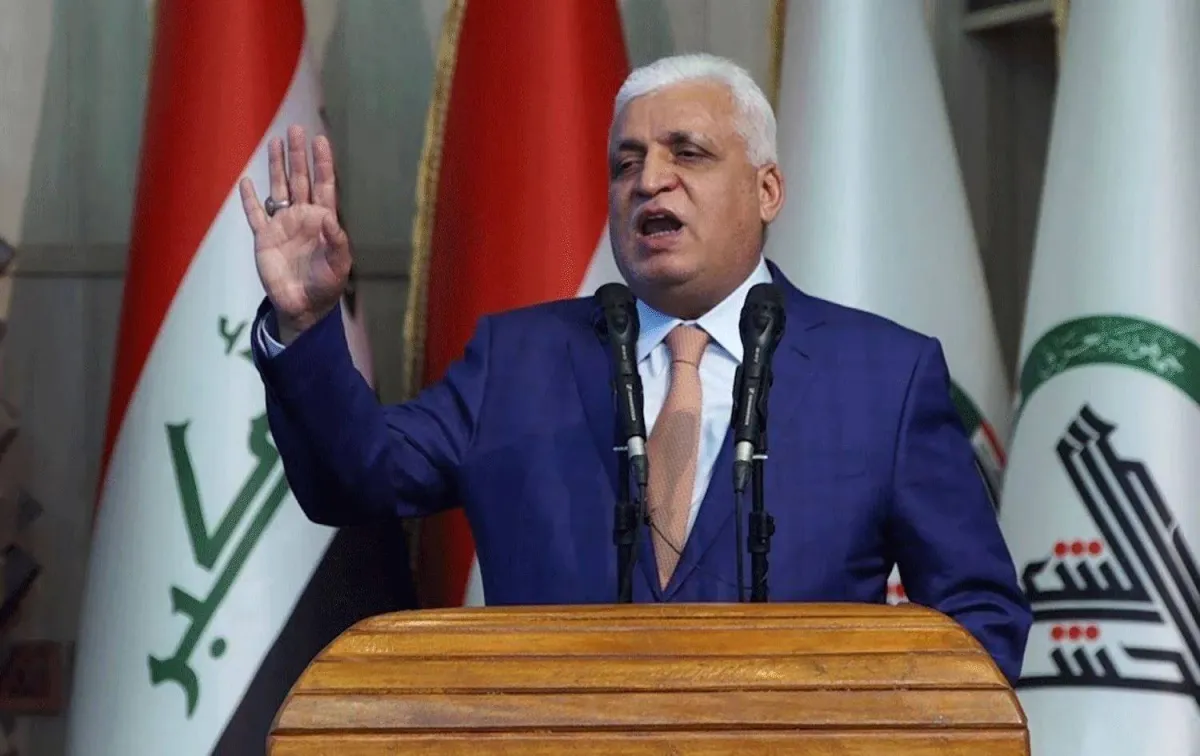
Iraq’s Popular Mobilization Forces (PMF) is taking significant strides towards reestablishing its role within the country’s security framework. Recently, the PMF leadership announced actions to align more closely with the government’s directives under Prime Minister Ali al-Zaidi. This decision aims to strengthen state control over armed factions and bring all weapons under government jurisdiction.
Strategic Shift in PMF’s Structure
Faleh al-Fayyadh, the head of the PMF, revealed in a recent television interview that a new committee has been formed to facilitate the “complete disengagement” of the PMF from any political affiliations or factional ties. This strategic move is intended to establish the PMF as a coherent entity directly connected to the commander-in-chief of the armed forces, a role that al-Zaidi fulfills. According to Fayyadh, this initiative aligns with the 2016 law governing the PMF, although challenges in fully executing this framework due to ongoing conflicts, particularly against ISIS, had hindered progress.
In tandem with these developments, Sabah al-Numan, a spokesperson for the armed forces, confirmed the formation of a “sovereign” committee aimed at implementing binding mechanisms to eradicate the possession of weapons outside the state’s authority. Numan highlighted the critical importance of minimizing the politicization of the military, emphasizing the need for national security that hinges on comprehensive control over weaponry.
Challenges to PMF’s Existence
Despite these reformation efforts, al-Fayyadh recently dismissed calls—both local and international—to dissolve the PMF following the conclusion of significant battles. He articulated that as long as security issues persist, the presence of security forces, including the PMF, is essential. Al-Fayyadh described demands for dissolution as “unrealistic,” asserting that critics fail to understand the ongoing threats that necessitate the PMF’s existence. The process of integrating brigades affiliated with the Sadrist movement into the PMF infrastructure further illustrates the ongoing complexities of Iraq’s military landscape.
In a notable shift, these brigades have recently transferred their security responsibilities in Samarra to the Iraqi army. Fayyadh mentioned that these forces would be incorporated into the PMF under new operational guidelines, aiming to eliminate the concept of factions controlling specific areas and instead promoting centralized military management.
Current Developments in Weapons Control
As these structural changes unfold, Lieutenant General Saad Maan announced that implementation steps to regulate weapon possession are underway. Some factions, such as Asaib Ahl al-Haq and Kataib al-Imam Ali, have initiated legal procedures to relinquish their heavy and medium weaponry, anticipating their roles within official state institutions. However, resistance remains from other factions, including Kataib Hezbollah and the Nujaba movement, which insist that disarmament will only occur once their foundational goals—particularly related to foreign military presence—are met.
Fayyadh emphasized that this period marks a “starting point” for enforcing standardized operational practices across all military formations. He warned against any partisan affiliations within the military framework and stated that all brigades would be subject to these new regulations, regardless of their political background. Local media reports suggest that leaders within the Coordination Framework have been cautioned that external pressures, particularly from Washington, are pushing for the PMF’s dissolution and resist its integration into the national security apparatus.
In conclusion, as Iraq grapples with its evolving military dynamics, the PMF’s reformation will be pivotal in stabilizing its security landscape. The interplay between internal political pressures and external expectations will shape the future of both the PMF and Iraq’s broader security strategy.