
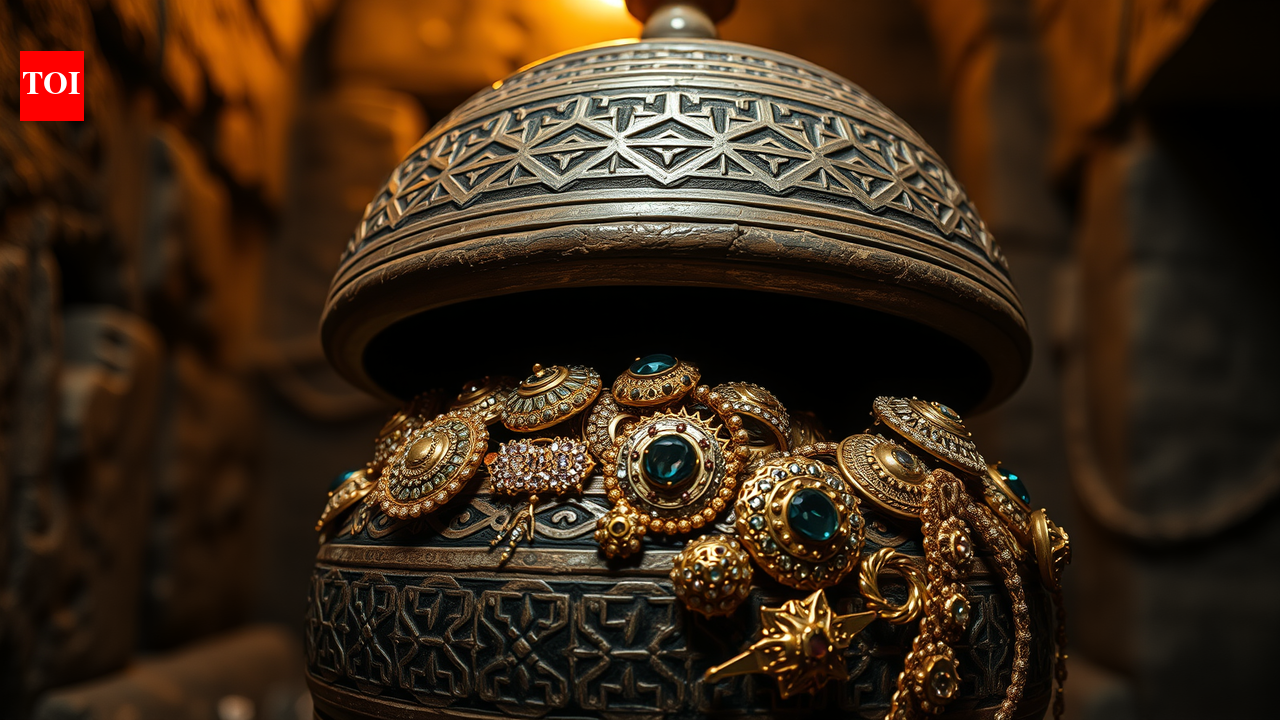
Archaeologists working at the ancient site of Diriyah, located in Saudi Arabia’s Al-Qassim region, have unearthed an extraordinary find: a ceramic jar containing over 100 pieces of exquisite gold, silver, and gemstone jewellery that dates back more than 1,200 years. Dubbed the “Diriyah Treasure” by the Saudi Heritage Commission, this collection is believed to have belonged to a pilgrim traversing a historically significant Hajj pilgrimage route. This discovery raises compelling questions about its owner and the circumstances that led to its burial.
Contents of the Discovery: Insights from the Jar
The Saudi Heritage Commission’s excavation efforts over the course of six seasons proved fruitful when they discovered this buried treasure. Inside the ceramic jar, archaeologists found what seems to be a unified set of jewellery pieces, characterized by floral gold pendants, decorated discs, colorful beads, finely crafted gold spacers, and a large ornament inlaid with symmetrical colored stones. The jewellery showcases advanced crafting techniques, such as hand-hammering gold sheets and decorative inlay work, demonstrating the exceptional metalworking skills of the period. Alongside the jewellery, the excavation also revealed water basins and remnants of residential structures, suggesting that Diriyah was a permanent settlement rather than a transient stopover.
The Abbasid Era: A Cultural Renaissance
The jewellery is attributed to the early Abbasid Caliphate, which emerged in 750 CE and significantly shaped the Islamic Golden Age—a period marked by remarkable advancements in various fields including science, literature, and the arts. The Abbasid Empire, which stretched from North Africa to modern-day Iran, had its heart in the Arabian Peninsula. The artistic expressions of this era, especially in goldsmithing, reflect a blend of cultural influences including Persian, Mesopotamian, Byzantine, and Arabian aesthetics. The unique floral and geometric motifs found in the Diriyah Treasure resonate with this artistic tradition, making it both visually stunning and historically significant.
Significance of the Basran Hajj Route
The location of the find further enriches its historical context. Situated along the Basran Hajj route, Diriyah was a vital resting point for pilgrims traveling to Mecca from Basra. Radiocarbon dating suggests that this settlement was active between 743 and 753 CE, placing it squarely in the early Abbasid period. The Basran route was one of the principal pilgrimage pathways, complemented by the extensive Darb Zubaydah road network, which included amenities for the thousands of pilgrims who undertook the journey annually. Diriyah served not only as a rest site but also as a crucial hub for trade and social interactions, enriching the cultural fabric of the Abbasid Empire.
Why Was the Diriyah Treasure Buried?
A central mystery surrounding this archaeological find is why such a valuable and carefully curated collection was buried and never reclaimed. One prevalent theory posits that a pilgrim, facing the hazards of travel, buried the jar to safeguard their wealth, intending to retrieve it later—a plan that may not have come to fruition due to unforeseen circumstances. Another possibility is that the jewellery belonged to a local resident, hidden for safety during a period of unrest. Archaeological evidence at the site supports the notion of a thriving community, further complicating the narrative of the buried treasure.
Insights into Trade and Craftsmanship
The Diriyah treasure provides a fascinating glimpse into the interconnectedness of the medieval Islamic world. The presence of semiprecious stones in the jewellery highlights active trade networks that spanned vast distances during the Abbasid era, while the craftsmanship of the pieces indicates a high level of skill and access to fine materials. This discovery is especially valuable given the rarity of surviving Abbasid gold and silver artifacts, as many were melted down in subsequent centuries. The Diriyah Treasure stands not only as a stunning reflection of artistic achievement but also as tangible evidence of a rich historical narrative that underscores the complexity of medieval trade and culture.