
Global stock markets have experienced a decline as worries grow regarding the future of technology stocks. In contrast, oil prices have surged due to escalating conflicts in the Middle East, raising concerns that key shipping routes, such as the Strait of Hormuz, may not reopen soon.
Asian and European Markets Take a Hit
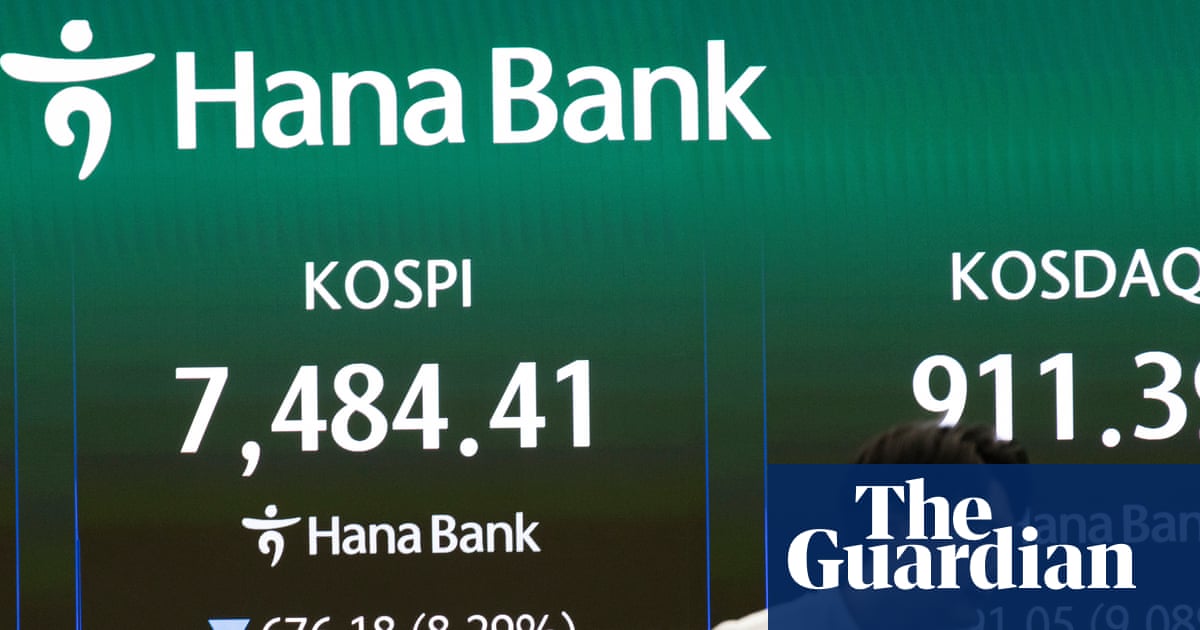
On a dismal Monday for investors, stock exchanges across Asia and Europe registered significant losses following a sharp downturn in U.S. tech stocks late last week. The South Korean Kospi index plunged nearly 9% at one point, prompting a temporary halt in trading. This decline was driven primarily by major semiconductor companies Samsung Electronics and SK Hynix, whose stocks dipped by 9% and 6%, respectively. Meanwhile, Japan’s Nikkei 225 index fell by 3%, and Hong Kong’s Hang Seng index recorded a 1.5% drop.
In Europe, the FTSE 100 in London opened down by 0.4%, with losses seen in companies like Rolls-Royce and British Airways’ parent company, IAG. However, shares of oil giants BP and Shell showed gains amid the rising crude prices. Declines were noted in tech stocks across Germany, France, and Spain as well, with the pan-European Stoxx 600 index dropping almost 0.9%.
Tech Sector Faces Increasing Scrutiny
The recent downturn in stock prices is attributed to a notable sell-off in tech-related ventures, particularly after the tech-heavy Nasdaq index fell nearly 5% last week. While investors once rushed to capitalize on the burgeoning artificial intelligence sector, they are now exhibiting cautious behavior. Analysts attribute this sentiment to concerns about the sustainability of high spending by tech firms in a potentially inflationary environment.
Susannah Streeter, chief investment strategist at Wealth Club, highlighted that markets are factoring in an increased probability of interest rate hikes by the Federal Reserve this year. As these tech giants, which typically possess substantial cash reserves, seek additional funding for aggressive capital expenditures, uncertainties loom large. “Investors are now looking for clearer indicators of profitability and responsible capital deployment,” she noted.
Oil Prices Rise Amid Middle East Tensions
Meanwhile, oil prices have soared, with Brent crude rising nearly 5% to $97.60 per barrel. This increase follows direct confrontations between Iran and Israel, raising fears of further escalations that could threaten essential shipping routes. The Strait of Hormuz is critical for global oil transportation, handling about a fifth of the world’s oil and gas supply.
As expectations grow that tensions in the region may hinder the reopening of this vital channel, industry experts remain watchful. The geopolitical situation has implications not only for oil prices but for global economies reliant on stable energy costs. Donald Trump, prior to the recent flare-up, expressed a desire to influence Israel’s military strategy, but after the bombings in Beirut and the ensuing retaliations, he retracted his initial enthusiasm for coordinated actions.
In summary, both tech and oil sectors face turbulence in these rapidly changing market conditions. With rising oil prices often coinciding with geopolitical tensions and growing skepticism around AI investments, investors find themselves navigating a challenging landscape marked by uncertainty and potential volatility.