
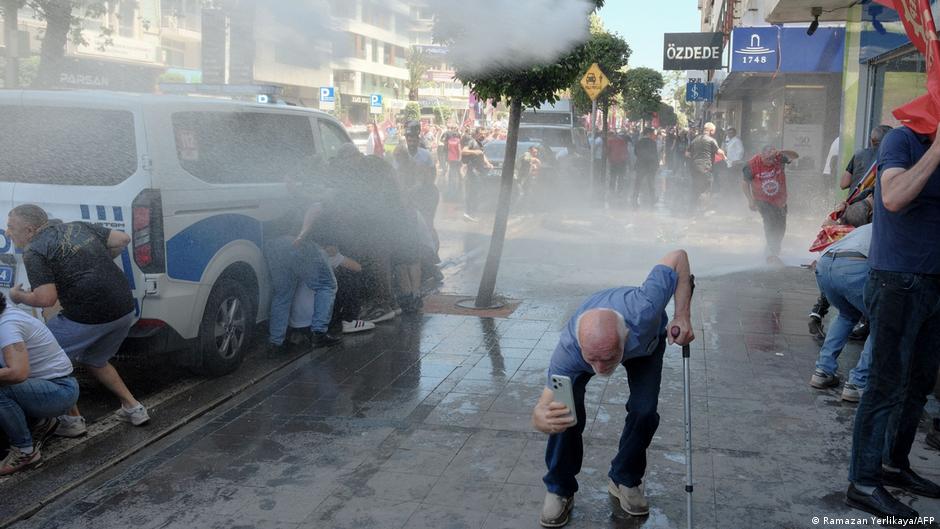
Recent images of riot police raiding the headquarters of Turkey’s main opposition party, the CHP (Republican People’s Party), have raised serious concerns about the nation’s democratic decline. This alarming development follows a contentious judicial decision that has altered the party’s leadership structure and comes after a sustained campaign against opposition members, including the arrest of prominent political figures.
Crackdown on Opposition Figures
The political atmosphere in Turkey has become increasingly hostile toward dissenting voices. The judiciary, often accused of being politically influenced, has played a pivotal role in sidelining the opposition. This recent court ruling not only reshapes the leadership within the CHP but also signifies a broader trend of diminishing democratic standards. Key politicians have faced arrests, and many dissenters experience increasing intimidation, contributing to an environment where political discourse is stifled. Observers argue that this deliberate suppression of opposition threatens the foundational principles of democracy.
International Response and Strategic Interests
Despite the gravity of the situation, the international reaction, particularly from European nations, has been relatively muted. Europe’s reluctance to confront Turkey stems largely from strategic interests in areas such as security, migration control, and energy supply. As European nations grapple with challenges like rising migration and securing energy resources, engaging with Turkey remains a priority. This pragmatic approach raises ethical concerns about the potential compromise of democratic values in favor of realpolitik.
Implications for Democracy in Turkey
The incidents surrounding the CHP reflect broader implications for Turkey’s democratic framework. As opposition parties are increasingly marginalized, the risk of authoritarianism looms larger. Many citizens express disillusionment with the political system, fearing that their voices are being systematically silenced. The erosion of democratic institutions not only undermines the rule of law but also endangers civil liberties, fueling widespread apprehension about the country’s political future.
In conclusion, the behavior of Turkey’s government toward its opposition is creating a worrying narrative of democratic backsliding. While strategic interests may dictate international responses, the situation demands closer scrutiny and advocacy for the protection of democratic principles. Observers and concerned citizens alike must remain vigilant, as the future of democracy in Turkey hangs in a precarious balance.