
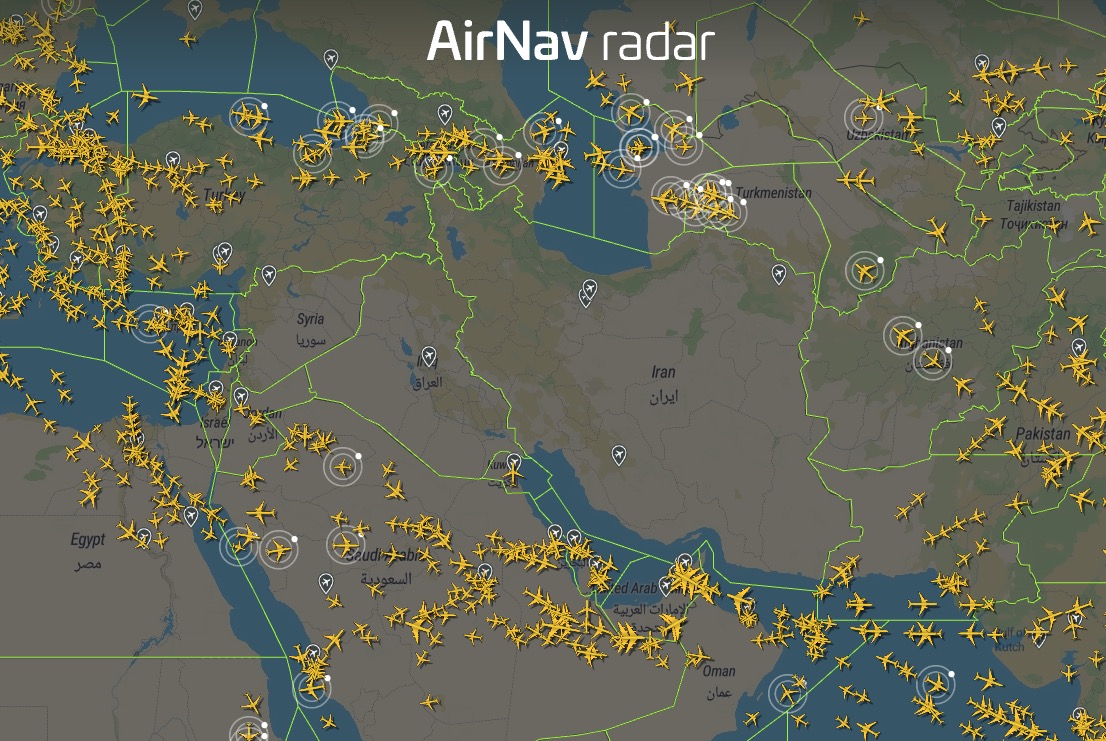
Iran and Iraq have enacted immediate airspace closures following a significant rise in regional conflicts, marked by a substantial Iranian missile strike directed at Israel. This abrupt decision has caused widespread disruptions in international air travel, forcing airlines to alter their routes to avoid the increasingly volatile Middle East.
Iran’s Comprehensive Airspace Shutdown
In light of escalating tensions, the Iranian Civil Aviation Authority has mandated a total cessation of all civilian and commercial flights. This directive requires the grounding of domestic flights while international airlines are urged to vacate the Tehran Flight Information Region (FIR). The sudden measure comes on the heels of a considerable barrage of ballistic missiles launched from Iran towards Israel, reported to be in retaliation for recent military activity in Beirut. This situation underscores Iran’s heightened military posture and its readiness to respond decisively to perceived threats.
Iraq’s Response: Air Traffic Lockdown
Not far behind, Iraq has taken steps to close its airspace, primarily due to its strategic location between Iran and Israel. The Iraqi Ministry of Transport quickly issued an emergency NOTAM (Notice to Air Missions), effectively sealing off the Baghdad FIR. The notice cited “operational reasons” for the closure, a common term used in the aviation sector during periods of military conflict. This designation aims to safeguard civilian aircraft from potential missile fallout or interceptions by anti-aircraft defenses.
Heightened Military Readiness in the Region
The concurrent closure of airspaces has elevated military alertness across the entire Middle East. Air defense systems in neighboring countries have been activated to monitor any potential projectiles or follow-up strikes that could arise from escalating military actions. Aviation authorities in the region have issued cautionary advice to commercial operators, urging them to steer clear of affected airspaces until further developments are confirmed. The situation remains fluid and uncertain, keeping travelers and airlines on high alert.
In a series of updates, reports indicate that after some deliberation, two flights have been granted permission to land in the southern parts of Iraq, specifically Basra and Najaf. Additionally, Syria has announced a suspension of operations at Damascus Airport, though further details on those impacts are still emerging. Meanwhile, a departure from Tehran Mehrabad International Airport (THR) was recently confirmed, indicating that while operations may be limited, not all flights are entirely halted.
The rapidly changing landscape exemplifies the complexities of air travel in the Middle East amidst ongoing tensions. As the situation develops, clear communication from aviation authorities will be essential for ensuring the safety of both passengers and aircraft in this precarious environment. The ramifications of the strike and the subsequent airspace closures will likely reverberate through the region for some time, affecting travel plans and international relations alike.