
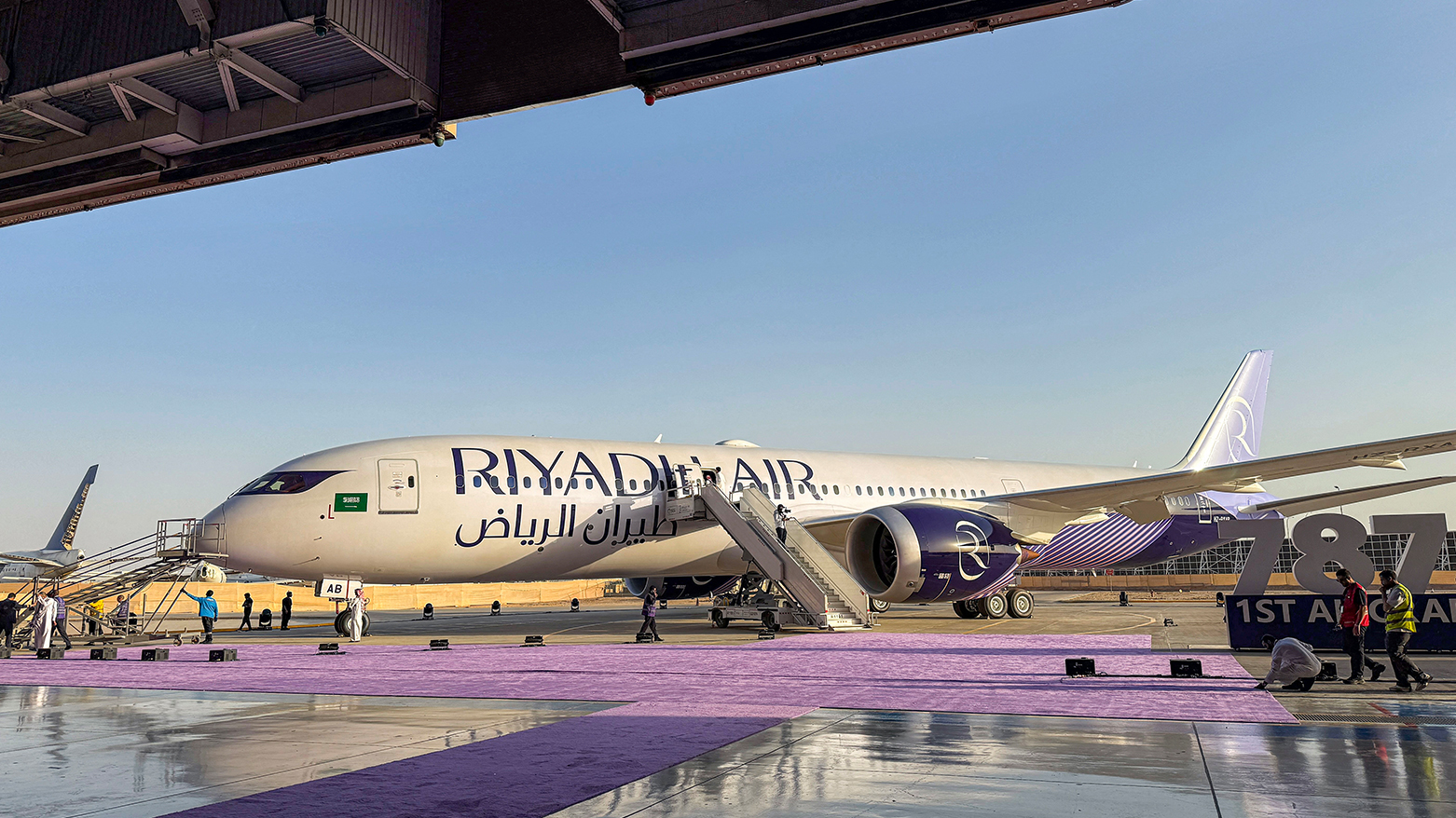
Saudi Arabia has officially inaugurated Riyadh Air, its new national airline, marking a pivotal moment in its Vision 2030 initiative. This move aims to diversify the Kingdom’s economy, reducing dependence on oil amid increasing competition and regional unrest. The launch of Riyadh Air comes after a year-long delay, showcasing the Kingdom’s determination to establish itself as a key player in the global aviation sector.
Symbolic Launch of Riyadh Air
The debut flight, a Boeing 787 Dreamliner destined for London, took off early in the morning, showcasing the airline’s signature white and lavender colors. This event represents not just the beginnings of a new airline but also a monumental leap for Saudi Arabia as it seeks to elevate Riyadh into a major aviation hub, rivaling the likes of Dubai’s bustling airport infrastructure.
Riyadh Air, fully owned by the Public Investment Fund (PIF), is part of Crown Prince Mohammed bin Salman’s broader strategy to transform the Kingdom into a logistics and tourism powerhouse. “We aim to restore elegance and sophistication to air travel,” stated Riyadh Air CEO Tony Douglas, who previously led Abu Dhabi’s Etihad Airways. He emphasized that the launch was the result of extensive preparations over four years, reflecting the Kingdom’s geographic advantages that may shield it from some regional instability.
Overcoming Challenges in the Aviation Sector
The airline’s commencement follows a series of setbacks, including issues related to Boeing’s manufacturing capabilities, which have delayed aircraft deliveries across various airlines. Additionally, the regional tensions have caused uncertainties in the aviation sector, with attacks on Gulf infrastructure introducing further risk. Despite these hurdles, Douglas expressed optimism about the future, highlighting the resilience needed to establish the airline.
Saudi Arabia is investing heavily in its aviation landscape, with plans for a new airport in Riyadh aiming to accommodate up to 120 million passengers annually by 2030—more than double the capacity of the current King Khalid International Airport. Riyadh Air has already placed substantial aircraft orders, including 132 Boeing 787 Dreamliners and 25 Airbus A350-1000s, underscoring its future aspirations for global reach.
Job Creation and Future Prospects
The launch event was also attended by Yasir Al-Rumayyan, the governor of PIF and Riyadh Air’s chairman, who reiterated the airline’s potential to create approximately 200,000 direct and indirect jobs. As the Kingdom aligns its mega-project aspirations with economic realities, it grapples with the need to scale back certain high-cost ventures to maintain fiscal balance.
Moreover, Saudi Arabia is preparing to host significant international events, including the 2030 World Expo and the 2034 FIFA World Cup, as well as managing millions of religious pilgrims visiting Mecca each year. The Kingdom’s ambition is to triple its annual passenger traffic to reach 330 million by 2030. However, this projection raises questions among analysts regarding its feasibility, especially given the dominance of established carriers like Emirates and Qatar Airways in the region.
In conclusion, Riyadh Air’s entry into global aviation signifies a crucial test of Saudi Arabia’s Vision 2030 strategy. With a domestic population of around 35 million people—making it the largest in the Gulf Region—the Kingdom has a solid foundation for sustained growth in aviation. As Riyadh Air embarks on its journey, its performance will be closely monitored as a barometer of Saudi Arabia’s plans for economic diversification and transformation.