
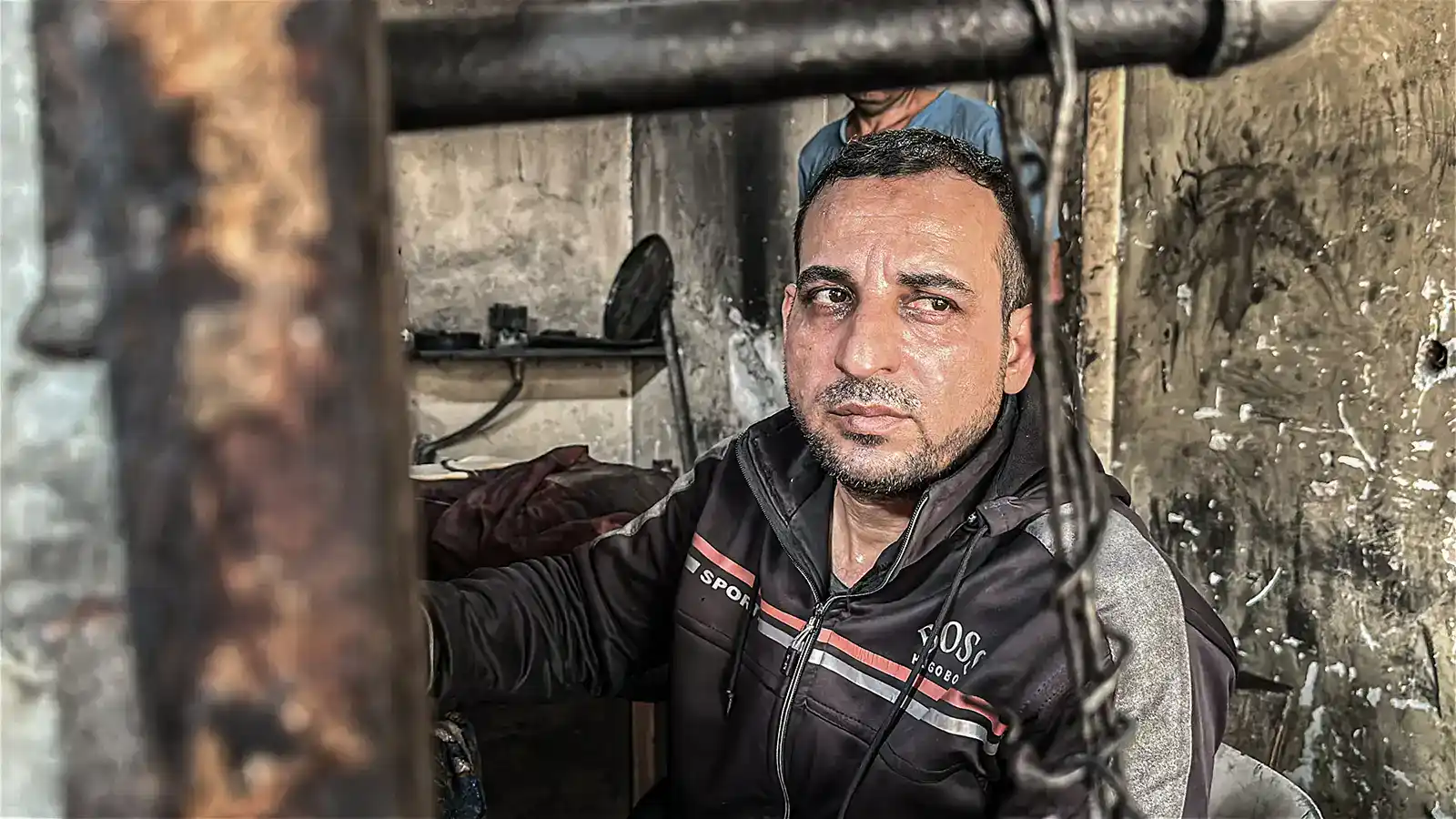
Today, many Palestinians find themselves navigating a world of uncertainty, where survival often hinges on creativity and resourcefulness. Individuals like Reem and Nour exemplify this struggle, as they adapt to their circumstances by cultivating their own means of livelihood.
Transforming Homes into Businesses
Reem operates a small-scale food business from her home, utilizing WhatsApp as her primary means of interaction with clients. Many of her customers are fellow Palestinians yearning for a taste of home, seeking comfort through familiar meals while living away from their homeland. “This food reminds them of home,” Reem reflects. “And for me, it’s a way to survive here.” Her endeavor highlights the increasing trend of women leveraging their domestic spaces for financial support. However, this type of work exists within a precarious legal framework. Without permits or protections, Reem’s business faces continual constraints. “I can’t expand or open a shop. Everything I do is confined to this space,” she laments. “And even this could stop at any moment.”
The Challenge of Displacement
Nour al-Haddad, 27, knows similar difficulties. Forced to leave her teaching position in Gaza due to displacement, she now offers private tutoring in Egypt. Meeting students in various homes or connecting online, she expresses the challenges of starting anew. “I had a profession,” she says. “Here, I’m starting from zero.” Both women demonstrate that, regardless of geographical differences, Palestinians are crafting their own economic landscapes in the face of adversity. Rather than building stable systems, they adapt to a reality of uncertainty and necessity, often relying on personal relationships instead of standardized institutions.
The Fragile Economy of Survival
In Gaza, the destruction of infrastructure and the limitations imposed on humanitarian aid have devastated traditional economic life, making it nearly unattainable. In Egypt, the lack of legal rights pushes many into informal, precarious employment. “Everything here feels temporary,” Reem observes, capturing the inherent instability of their circumstances. As these informal economies proliferate, they raise essential questions: What occurs when informality becomes normalized? Who is marginalized when access is contingent upon resources or personal connections? The sustainability of these systems amid prolonged crises remains uncertain.
Navigating Uncertainty
As the crisis endures, many Palestinians remain ensnared in cycles of instability, unable to forge secure lives either in Gaza or abroad. Amid ongoing conflict and restrictions on basic needs, they face a precarious existence. The interplay of war and humanitarian challenges compels individuals to focus on survival, often viewing tomorrow through the lens of chance. For now, these alternative economies persist, offering fleeting relief but lacking long-term security. Mahmoud, as he wraps up his work with a solar panel, reflects the collective sentiment: “Tomorrow depends on the sun, and on luck.” Similarly, Reem concludes her daily orders, already pondering the next day.
Ultimately, the absence of stable systems means survival rests heavily on individual shoulders. While Reem, Nour, and others like them create opportunities in difficult circumstances, they do so not for progress but simply to endure. Their reality serves as a poignant reminder of resilience amid relentless adversity.