
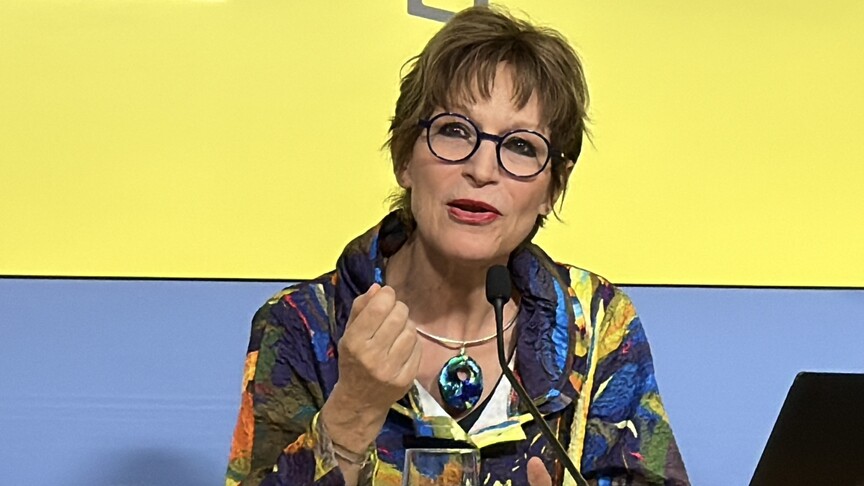
Agnes Callamard, the Secretary General of Amnesty International, has recently criticized the European Union for its inadequate response to Israel’s actions against Palestinians in the West Bank. Her remarks underscore a growing concern regarding what she describes as systematic ethnic cleansing policies perpetrated by Israel. Callamard emphasizes the urgent need for the European community to take decisive action rather than merely issuing statements of concern.
Insufficient Global Response
According to Callamard, the international response, particularly from European nations, has been woefully lacking. “The response from the European community and the international community so far has been very insufficient and in fact has had no impact,” she stated in an interview with Anadolu. She pointed out that while many governments express concern over violence and settlement plans, these statements are hardly enough to drive meaningful change in Israel’s behavior. The lack of serious measures to hold Israel accountable is alarming, especially given the continued reports of widespread violence, torture, and human rights violations.
In her assessment, the violence against Palestinians cannot be dismissed as isolated incidents. Instead, she argues that there is a broader scheme at play. Callamard describes a pattern of actions designed to erode Palestinian presence in the West Bank, allowing for the unchecked expansion of Israeli settlements and outposts. “It’s a litany of crimes being committed to erase everything Palestinian from this land,” she asserted, accusing the Israeli state of orchestrating a project of demographic reshaping within the territory.
A Call for Action
Callamard urges European countries to reconsider their policies and take more substantial action. She advocates for a coordinated, systemic response that includes suspending the EU-Israel association agreement. “What we need is a systemic response which begins with cancelling the EU-Israel association agreement,” she stated. By adopting unilateral measures—including prohibiting all trade and financial transactions related to the occupied territories—European governments could exert real pressure on Israel.
Moreover, she has specifically targeted Germany for its unwavering support of Israel, linking it to the country’s historical responsibilities stemming from the Holocaust. Callamard criticized this logic, arguing that such support enables Israel’s current government to commit violations of international law with little consequence. She calls on Germany to leverage its special relationship with Israel to advocate for Palestinian rights, instead of condoning ongoing violence.
Public sentiment in Germany is also shifting. Recent polls indicate that a significant majority of the German populace views Israel’s actions as genocidal and expresses dissatisfaction with the current government’s foreign policy toward Israel. “The German authorities need to listen to their own people,” Callamard urged, suggesting it is time for policymakers to reflect public opinion.
The Need for Coordinated Measures
The time for meaningful action is now, according to Callamard. She argues that statements of concern will not suffice in the face of ongoing atrocities. Only through concerted economic and diplomatic efforts can European nations hope to change the trajectory of violence in the region. The calls for a united approach signal a pivotal moment for the European Union’s moral stance and its commitment to human rights.
As the situation continues to escalate, it is essential for international bodies and governments to reevaluate their roles and influence in the region. A commitment to human rights and international law should guide responses, urging actions that hold those responsible for violations accountable. The world watches as the possibility for change hangs in the balance, depending on whether European nations choose to act decisively or remain passive observers.