
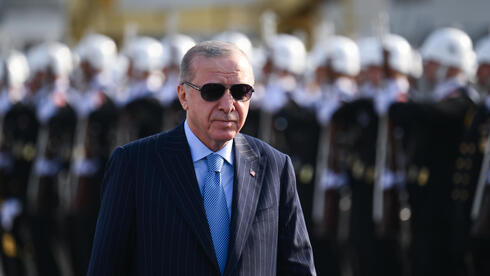
In a rapidly shifting geopolitical landscape, Turkish President Recep Tayyip Erdogan has been deftly maneuvering to transform regional challenges into strategic opportunities. As Israel focused its military capabilities on dismantling Iran’s nuclear threats, Erdogan seized the moment to bolster Turkey’s influence in the Middle East. This article delves into the implications of a newly announced rail corridor between Turkey and Saudi Arabia, which aims at reshaping regional trade and logistics dynamics.
Strategic Infrastructure Developments
Recent agreements solidified by Turkish and Saudi officials in Riyadh aim to establish an overland rail corridor that will circumvent the tumultuous Strait of Hormuz. This ambitious project is designed to cut cargo transit times from over a month by sea to less than two weeks by land, addressing the supply chain challenges exacerbated since the onset of the U.S.-Iran conflict. The rail line is set to connect Istanbul, traverse Syria, and link with the Jordanian and Saudi railroad networks, with potential future expansions toward Oman and the Indian Ocean. The total investment is projected to reach around $5.5 billion, with partial funding already pledged by the Asian Infrastructure Investment Bank.
Turkey’s Geopolitical Reassertion
The corridor also represents an explicit response to the recently proposed India-Middle East-Europe Economic Corridor (IMEC), unveiled by former U.S. President Joe Biden. This original plan sought to facilitate trade flows between India and Europe using infrastructure that included passage through Israel. Erdogan’s response to IMEC was one of indignation, reflecting Turkey’s crucial geographic position as a bridge between continents. With IMEC faltering after the Hamas attacks in October 2023, the newly formed Saudi-Turkish corridor ensures Turkey’s pivotal role is secured and recognized in this evolving landscape.
The Emerging Ottoman Influence
Erdogan’s strategy in Syria has transformed the country into a linchpin for the corridor’s success. Backing the post-Assad government in Damascus, Erdogan has been positioning Turkey as a vital economic partner for the war-torn nation. Turkish investments are already flowing into regions like Aleppo, setting a foundation for a bilateral trade target of $10 billion by 2030. The railway will effectively pass through Syrian territories, creating an economic dependency that solidifies Turkey’s influence from the Bosphorus to the Red Sea.
Regional Realignment and Future Prospects
This development is noteworthy not only for its immediate economic implications but also for what it signals about future Middle Eastern alliances. Saudi Arabia, traditionally viewed as a potential counterbalance to Turkey, is now showing a pragmatic shift by opting for cooperative ventures with Ankara rather than aligning with Israeli interests. While Riyadh has two coastlines that make it a logistics hub irrespective of corridor choice, this partnership with Turkey underscores a realignment of power dynamics in the region.
In conclusion, Erdogan’s orchestration of this rail corridor reflects not just a logistical advancement but a deliberate reconstruction of regional order in a post-Iran conflict era. As Turkey emerges as the central player in Middle Eastern trade logistics, the long-term effects on Israel’s strategic posture and regional alliances will require careful scrutiny. Erdogan may not have conquered Israel, but he has certainly used the opportune moment to enhance Turkey’s stature on the global stage while Israel focused on immediate threats. As historical narratives of Ottoman centrality reemerge, the intricate chess game of Middle Eastern geopolitics unfolds, with implications that reach far beyond mere economic transactions.