
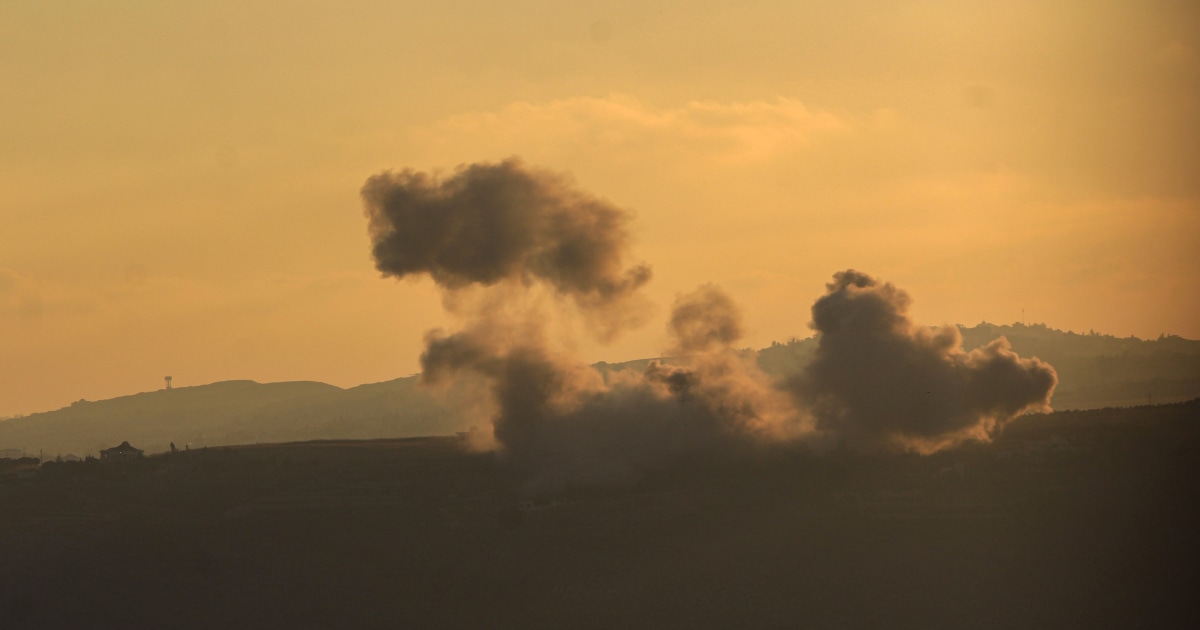
Lebanon is currently witnessing escalating tensions, particularly in its southern regions where military activities are intensifying. A recent withdrawal of Lebanese army troops from a strategic base highlights the shifting dynamics in this ongoing conflict.
Lebanese Military Movements
On Saturday, the Lebanese army pulled its forces from the Kfar Tebnit barracks following an advance by Israeli troops nearby, according to a military official. This strategic retreat came amid increasing threats, as the Israeli military issued evacuation warnings for approximately 20 locations, including the southern city of Nabatiyeh. This area has been a focal point in the ongoing conflict, underscoring rising tensions between the two nations.
Lebanon’s state-run news agency reported airstrikes targeting villages near Nabatiyeh, resulting in civilian casualties, including two deaths in Deir al-Zahrani. The artillery shelling in Nabatiyeh reflects the adverse impact of the military confrontations ongoing in the region, which aggravates the humanitarian crisis.
Israeli Strategies and Objectives
A senior Lebanese military official indicated that the withdrawal was a direct response to Israeli incursions into the region. While the official did not provide detailed information, the move stresses the precarious security situation. Israeli troops appear focused on capturing the strategic Ali Taher hill, which has historically provided a vantage point overlooking Nabatiyeh and key access routes to nearby locales.
Israel maintained control of the Ali Taher hill for 18 years until its withdrawal from Lebanon in May 2000. Since then, military activities have fluctuated, with recent escalations culminating in the storming of a nearby significant mountain topped by the historic Beaufort Castle, marking Israel’s deepest military engagement in Lebanon since 2000.
Regional Ramifications and Ceasefire Challenges
Compounding these tensions, a recent statement from Pakistan’s prime minister suggested that diplomatic discussions are underway between the U.S. and Iran, focusing on ending hostilities across the Middle East, including potential agreements related to Lebanon. Iranian officials have reportedly been in touch with Hezbollah, indicating that Lebanon could be a pivotal piece in an emerging ceasefire deal.
Despite the purported ceasefire established on April 17, hostilities between Israel and Hezbollah persist. The ongoing conflict has resulted in significant civilian casualties and damaged infrastructure, further complicating an already dire humanitarian situation. Hezbollah, backed by Iran, has not adhered to the ceasefire, continuing its rocket and drone assaults.
Recent reports indicate that over 3,700 lives have been lost in Lebanon due to this latest armed conflict, revealing the urgent need for sustainable peace initiatives. Meanwhile, Israel has reported casualties among its soldiers and civilians, emphasizing that the region remains embroiled in violence.
This complicated landscape of military movements, regional negotiations, and long-standing geopolitical tensions continues to challenge stability in Lebanon and the broader Middle East, underscoring the necessity for effective diplomatic interventions.