
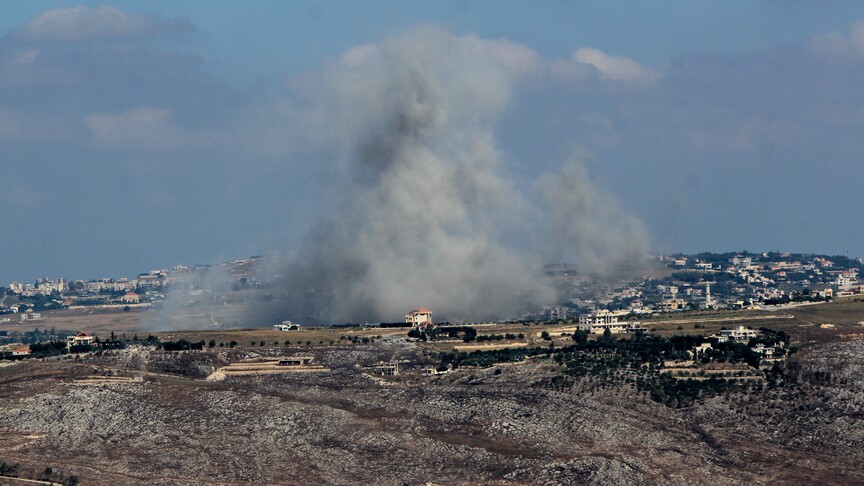
Hezbollah has recently announced significant military engagements targeting Israeli forces in southern Lebanon. These actions are part of ongoing tensions in the region, where the group claims to have repelled multiple Israeli incursions while inflicting substantial damage on their military assets.
Claims of Successful Defense
On Saturday, Hezbollah stated that its fighters had thwarted two Israeli ground forces attempting to infiltrate strategic areas in southern Lebanon. Utilizing drones, rockets, and artillery, they conducted 19 separate attacks against Israeli troops and military equipment. The group stated its fighters detected an Israeli infantry unit trying to advance into the Maabar area near Kfartibnit under the cover of artillery fire and smoke. Hezbollah reportedly lured the forces into a pre-set ambush, where they detonated explosives and employed medium-range weapons, ultimately forcing the Israeli troops to retreat.
In another operation, Hezbollah claimed responsibility for engaging an Israeli contingent that had entered the town of Majdal Zoun. The group asserted that its forces utilized a combination of light and medium weapons, along with rockets, leading to the destruction of several military vehicles accompanying the Israeli unit.
Drone Strikes and Targeted Attacks
Hezbollah’s operations also involved the deployment of Ababil suicide drones targeting specific Israeli military assets. They reported successfully striking an Israeli Yagi military vehicle near Zawtar al-Sharqiya and targeting two Namera armored vehicles in Nabatieh. The group further disclosed that a Humvee was hit in a separate action. These drone strikes showcase Hezbollah’s increased reliance on unmanned strategies to engage Israeli forces effectively.
Furthermore, Hezbollah executed a series of rocket attacks aimed at concentrations of Israeli soldiers and vehicles in the southwestern region of Majdal Zoun as well as in Jadidat Marjayoun. The group’s statements indicate that these operations were intended as a response to perceived Israeli provocations and military violations.
Response to Ongoing Israeli Operations
Despite a ceasefire established on April 17, tensions remain high. Israeli military operations in Lebanon have persisted, prompting Hezbollah to assert its need for defensive actions. The group claims that its military responses are crucial for safeguarding Lebanon and its citizens amid ongoing Israeli incursions. Recent reports indicate that the death toll from escalating clashes since early March has reached over 3,700, with thousands more injured.
Current Israeli military presence in southern Lebanon remains a contentious issue, with forces having advanced more than six miles into Lebanese territory—marking their most significant movement since withdrawing from the region in 2000. As these dynamics evolve, both Hezbollah and Israel appear entrenched in a cycle of retaliation and defense, complicating prospects for lasting peace.
The complexities of the situation reflect deep-seated historical grievances and geopolitical factors influencing the ongoing conflict. While the international community closely monitors the situation, both sides continue to prepare for further confrontations, raising concerns about the potential for an escalation in violence. The developments underline the precarious nature of peace in the region, as each party navigates its military and political objectives.