
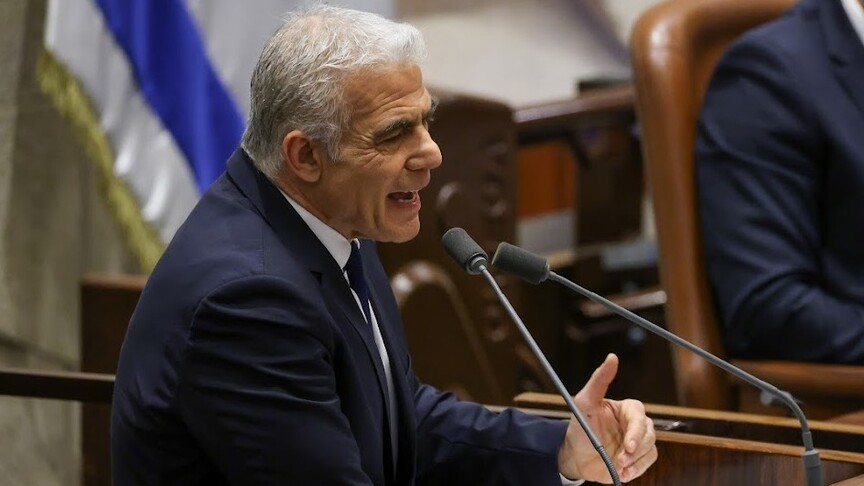
Former Prime Minister Yair Lapid has recently voiced strong criticisms regarding the evolving agreement between the United States and Iran, suggesting that it will ultimately undermine Israel’s national security objectives. With tensions high and the stakes even higher, Israel finds itself at a critical juncture as negotiations between the two powers progress.
Concerns Over National Security
Lapid has articulated his belief that the emerging agreement will fail to meet Israel’s strategic goals in the region. He argues that the new framework does not bring about any substantive change in the power dynamics with Iran. According to Lapid, the terms being discussed will not deter the Iranian government but will rather enable it to maintain its missile development initiatives and potentially advance its nuclear ambitions. This perspective raises alarming questions about the long-term implications for Israel’s defense strategy and broader regional stability.
Netanyahu’s Strategy Under Fire
The former Prime Minister pointedly labeled the situation as “Netanyahu’s complete failure,” indicating that Israel has become overly reliant on external directives regarding its national security. Lapid emphasized that no amount of media manipulation or public relations efforts could obscure this pressing issue. By positioning Israel as a “satellite state,” he believes that Netanyahu has compromised the country’s sovereignty and military autonomy. This kind of rhetoric is not just politically charged; it also resonates with a populace that is increasingly anxious about its safety in a volatile region.
Political and Security Implications
The growing unease among Israeli political and security officials adds another layer of complexity to the situation. Reports have surfaced indicating that Israeli authorities fear the impending agreement could embolden the Iranian government, thereby limiting Israel’s ability to conduct military operations, particularly in volatile regions like Lebanon. These concerns reflect a broader apprehension about the effectiveness of Israel’s current defense posture and its capability to respond to potential threats from Iran and its allies.
The Path Forward
As negotiations between Washington and Tehran edge closer to resolution, the implications for Israel are profound. With American and Iranian officials reportedly nearing a deal to end hostilities initiated earlier this year, questions loom large about what this means for Israel’s regional strategy. This precarious balance raises not only immediate security concerns but also the long-term viability of Israel’s defense alliances and operational strategies in the Middle East.
The situation is fluid and calls for serious contemplation about the future of Israeli security policy. With leaders like Yair Lapid sounding alarms over the new geopolitical landscape, the coming months will be crucial for Israel as it navigates the repercussions of these negotiations with an eye toward preserving its national interests and ensuring its safety in an increasingly unpredictable environment.