
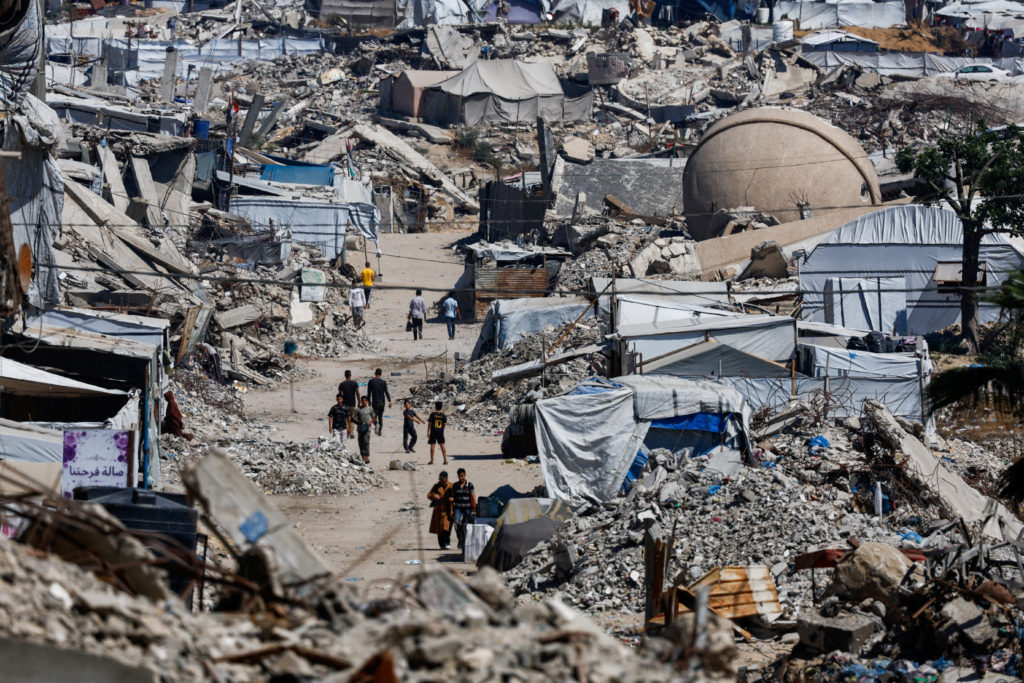
The ongoing conflict between Israel and Hamas has tragically escalated, resulting in a staggering loss of life. Recent reports indicate that the death toll in Gaza has exceeded 73,000, according to the Gaza Health Ministry. This information comes amid a fragile ceasefire that appears to be faltering.
Continued Violence Despite Ceasefire
Despite the agreement reached in October, Israel has not paused its military operations in Gaza. The Israeli military claims that its strikes are aimed at Hamas and other militant groups that threaten its security, citing ceasefire violations as justification for its ongoing attacks. As of now, five Israeli soldiers have also lost their lives since the so-called truce began. This cycle of violence continues to claim lives on both sides, deepening the humanitarian crisis.
Casualty Figures and Their Implications
According to Zaher al-Waheidi, head of the records department at Gaza’s Health Ministry, the death toll now stands at 73,001, with five new fatalities reported recently. The ministry also indicates that over 173,200 individuals have suffered injuries since the conflict erupted on October 7, 2023, when Hamas launched an attack that resulted in around 1,200 Israeli deaths and the capture of 251 hostages.
It’s important to note that the health ministry operates under the Hamas-led government and is staffed by experienced medical professionals. It maintains thorough records that international organizations generally recognize as credible. While the ministry does not differentiate between civilians and militants, it estimates that approximately half of the casualties are women and children, raising the stakes for humanitarian assistance.
The Stalled Ceasefire and Its Challenges
The ceasefire, facilitated by U.S. negotiations, was initially intended to halt full-scale military operations and facilitate the return of hostages. However, significant aspects of the agreement have come to a standstill. Hamas has refused to disarm, while Israeli forces have continued their ground operations in Gaza. Both parties blame each other for the breakdown of the agreement, but they maintain that the truce is still technically in effect.
This deadlock hampers progress on essential issues such as rebuilding efforts and the potential formation of a new Palestinian government. Nickolay Mladenov, the U.S. diplomat overseeing the ceasefire negotiations, has highlighted how the inability to reach an agreement over the disarmament of Hamas is stalling further discussions on these critical topics.
The Humanitarian Crisis Intensifies
The war has resulted in widespread devastation, displacing much of Gaza’s population of over 2 million. Significant portions of the region are in ruins, leading to severe shortages of food, medical supplies, and other necessities. The closure of border crossings—most of which are controlled by Israel—has exacerbated these shortages, creating further challenges for humanitarian relief efforts.
The situation remains dire, and the implications of this ongoing conflict extend far beyond immediate casualties. As the violence continues, the essential need for a sustainable resolution becomes increasingly urgent to alleviate human suffering in Gaza and foster long-term stability in the region.