
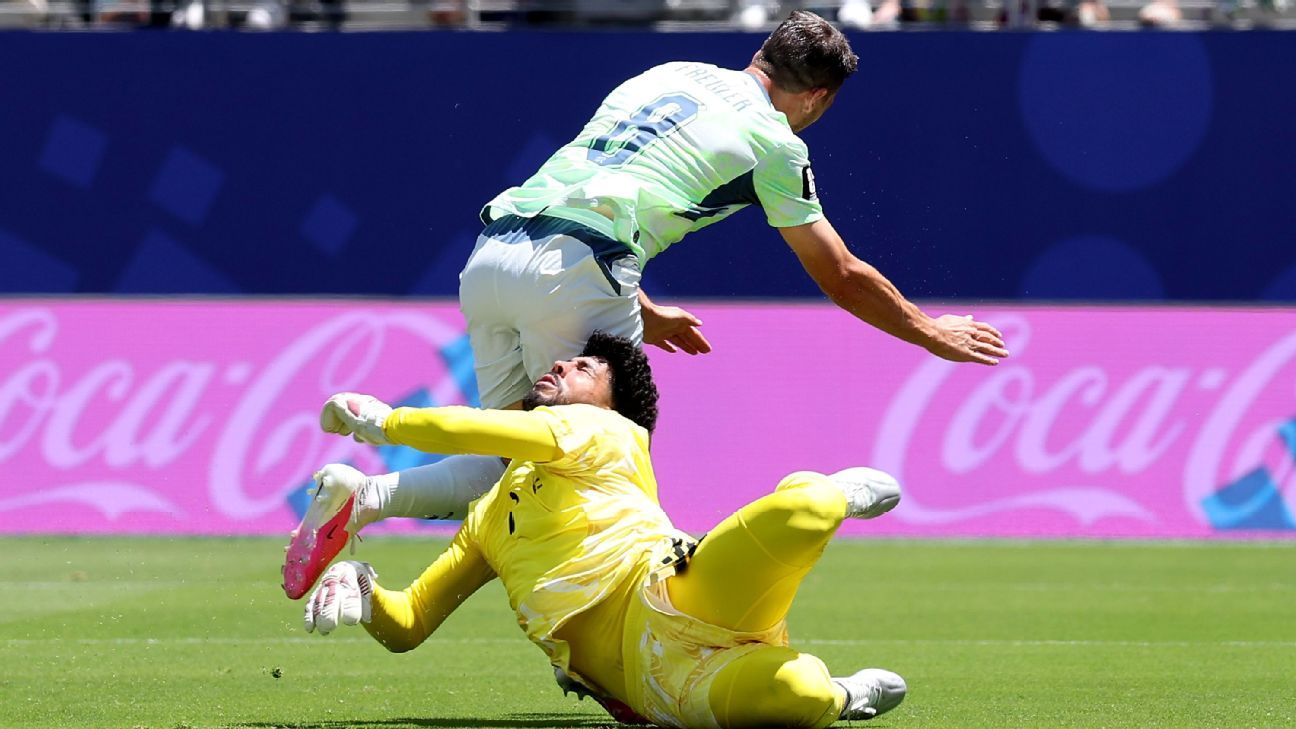
FIFA recently attributed a controversial penalty decision during the 1-1 draw between Switzerland and Qatar to a “technical outage.” This match, held on Saturday, stirred significant debate among fans and analysts, particularly regarding the validity of the penalty awarded to Switzerland.
Details of the Controversial Penalty
The penalty, successfully converted by Breel Embolo, was issued for a foul committed against Remo Freuler. This decision came after both players were deemed marginally onside prior to the incident. However, the reaction from viewers was less than positive; the usual 3D graphic that provides clarity on potential offside situations was conspicuously absent from the broadcast. With replays failing to definitively clarify the situation, the integrity of the decision faced widespread scrutiny.
FIFA’s public response on social media clarified that a temporary technical issue had hindered the generation of the onside animation graphic for the penalty awarded in the 14th minute. They stated, “The issue was quickly resolved,” but critics pointed out that the absence of this key graphic raised suspicions regarding the legitimacy of the decision made by the officials.
Reactions from Football Analysts
Despite FIFA’s assurances, the controversy surrounding the penalty led to significant backlash. Prominent football pundit Gary Neville expressed his frustration, likening FIFA’s handling of the situation to a dictatorship. He questioned why FIFA, as the governing body of football, did not provide viewers with the crucial evidence supporting their decision. “It’s like a dictatorship in that they hold this evidence and don’t show it for fans. It’s ridiculous,” Neville remarked, emphasizing the need for transparency in officiating.
Another analyst, Ian Wright, echoed similar sentiments, stating, “They do what they want. We’re seeing it now. It’s scandalous.” The criticism underscores a growing concern among fans and commentators about the transparency and reliability of decision-making in high-stakes matches.
The Implications of VAR Decisions in Football
The incident has reignited discussions about the role and reliability of Video Assistant Referee (VAR) technology in modern football. FIFA’s statement asserted that the standard procedures for VAR were followed despite the technical difficulties. They confirmed that the lines used to check the positions of the players did not indicate any offside violations.
Nevertheless, the lack of visual evidence supporting the on-field decision raises questions about the implementation of VAR and its ability to enhance the game’s integrity. With fans and pundits alike calling for more accountability, it’s evident that the dialogue surrounding VAR will continue to be a crucial element in the evolution of football officiating.
The match itself concluded with Qatar leveling the score in the 94th minute, resulting in a 1-1 draw. The fallout from the penalty decision is likely to linger, highlighting the ongoing tension between technology and tradition in football. While it’s important for governing bodies to maintain the integrity of the game, the challenge lies in how transparently and effectively they communicate their decisions to the public.