
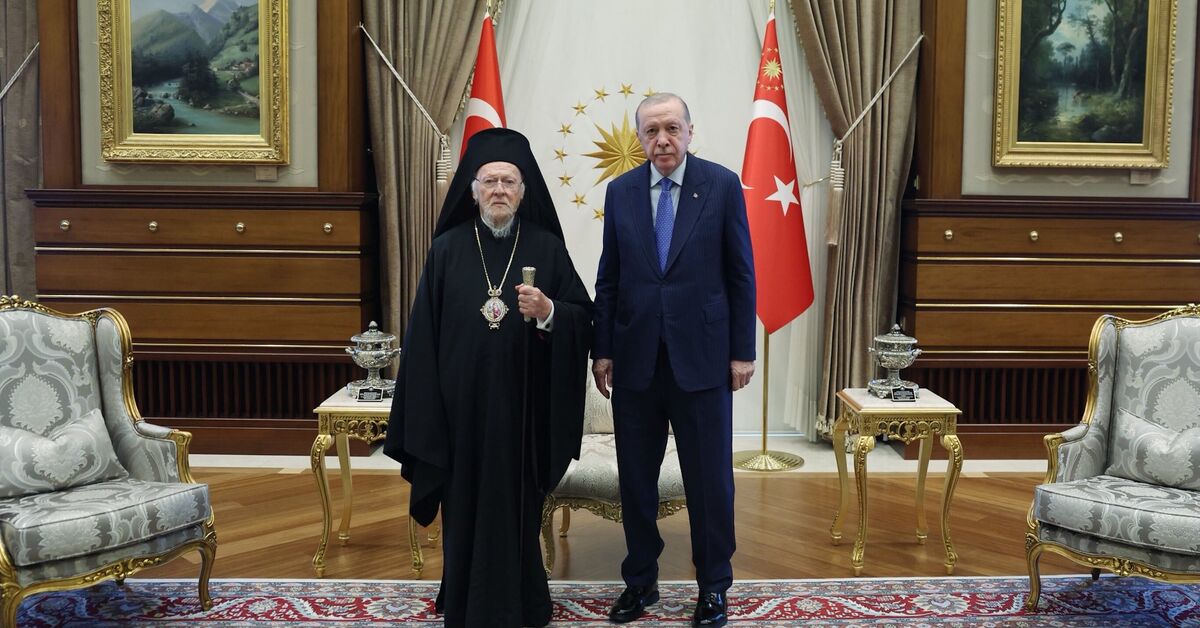
Turkish President Recep Tayyip Erdogan recently engaged in a significant meeting with Ecumenical Patriarch Bartholomew I, the global leader of around 300 million Orthodox Christians. This rare encounter, held at the official presidential complex in Ankara, has rekindled hopes for the reopening of the Halki Seminary, a prominent Orthodox theological institution that has remained closed for over five decades.
Significance of the Halki Seminary
Located on Heybeliada island near Istanbul, the Halki Seminary was established in 1844 and served as a crucial training ground for Orthodox clergy, including Patriarch Bartholomew himself. The school operated until 1971 when a Turkish Constitutional Court ruling mandated that private higher education institutions fall under government control, leading to its closure. The Patriarchate has persistently advocated for its reopening, arguing that this has hindered their ability to nurture clergy within Turkey.
The discussions between Erdogan and Bartholomew come at a time when the anticipated reopening of the Halki Seminary aligns with broader discussions involving the United States, particularly in light of Turkey’s ongoing tensions with Greece regarding minority rights and maritime issues in the Aegean Sea. Bartholomew’s remarks last week shed light on the restoration efforts at the seminary, which are expected to conclude soon. He stated that he is awaiting approval from Turkish authorities to allow the seminary to resume its educational activities.
Political Context Surrounding the Meeting
This meeting is particularly noteworthy as it precedes a NATO summit scheduled to occur in Ankara, emphasizing the relevance of international relations in the conversation. In previous discussions with U.S. President Donald Trump, Erdogan committed to addressing the Halki Seminary’s status. During their meeting in September 2025, Trump raised the issue, showcasing its importance in the diplomatic dialogue between Turkey and the U.S.
Erdogan stated his willingness to collaborate on the reopening of the seminary, indicating a potential shift in policy. He directed the Turkish Education Minister to explore ways to allow the seminary to function again. Reports suggest that preliminary talks between the Education Ministry, the higher education board, and the Patriarchate have been initiated, raising optimism about the future of the institution.
Tensions With Greece and Minority Rights
The meeting also coincides with heightened tensions between Turkey and Greece, particularly related to territorial disputes in the Aegean Sea. A recently proposed Turkish draft law aims to codify Turkey’s territorial waters at six nautical miles, provoking opposition to any potential Greek extensions in that region. As the political landscape shifts, Bartholomew emphasized the need for Turkey and Greece to avoid letting their disputes affect minority communities.
The Ecumenical Patriarch pointed out that Turkey’s Greek Orthodox citizens desire equal treatment and wish to be regarded as integral members of society rather than as second-class entities. He echoed similar sentiments on behalf of those in Greece who belong to the Muslim Turkish minority, calling for acknowledgment of their cultural identities and rights.
The Path Forward for Halki
Erdogan’s long-standing policy ties the reopening of Halki to negotiations concerning minority rights in Greece, suggesting that reciprocity is essential for progress. Ankara has frequently urged Greece to recognize the Turkish identity of its Muslim citizens, permit the election of Muslim religious leaders, and resolve disputes related to minority educational institutions and religious foundations. The upcoming discussions and potential solutions surrounding the Halki Seminary could pave the way for improved relations and cooperation between Turkey and Greece, creating a more inclusive environment for their respective minority communities.