
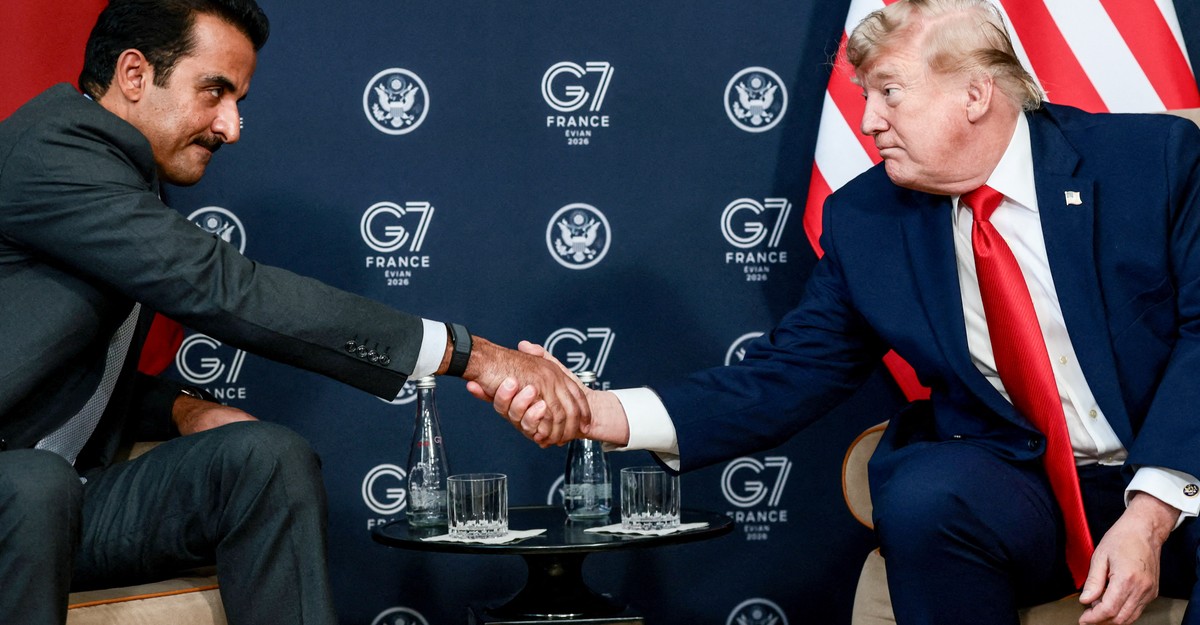
Several nations have played a role in the recent memorandum of understanding aimed at resolving the ongoing conflict between Iran and the United States. While negotiations were largely guided by Pakistan, countries like Saudi Arabia, Egypt, and Oman also contributed in various ways. However, Donald Trump has emphasized that without the vital involvement of Qatar, this agreement may not have come to fruition.
Qatar’s Crucial Role in Negotiations
At a recent G7 summit in Evian, France, Trump reflected positively on Qatar’s involvement, highlighting the nation’s geographical proximity to Iran. “Working with Qatar and the people of Qatar was really a pleasure,” he stated. While Trump claimed that Qatar’s closeness to Iran made negotiations easier, the reality is that a significant stretch of the Persian Gulf separates the two nations. Nonetheless, Qatar’s diplomatic skills have proven invaluable in easing tensions and fostering dialogue.
The relationship between Qatar and Iran is largely built on shared economic interests, particularly concerning natural gas reserves that extend into both territories. The Strait of Hormuz, under Iranian control in recent months, serves as a critical artery for Qatari liquefied natural gas, which is essential for Qatar’s economy. The significance of these resources has created a sense of urgency in maintaining channels of communication between the countries involved.
Qatar’s Strategic Position
Qatar is uniquely positioned to facilitate discussions between Iran and the U.S. It hosts the largest American military base in the Middle East and has maintained strong ties with Washington for over three decades. Even before hostilities began, Qatari diplomats sought to engage with U.S. officials in an effort to prevent the outbreak of war. Trump’s acknowledgment of Qatari Emir Tamim bin Hamad Al Thani during the summit underscores the emirate’s importance in these negotiations, as well as the complexities of regional politics.
Interestingly, Qatar’s relationship with Iran has not been without controversy. Rival nations, particularly Israel and Saudi Arabia, perceive Doha as a supporter of Iran-backed extremism. While Qatar describes its ties with Tehran as pragmatic, focusing on mutual needs, critics argue that these relationships complicate the broader geopolitical landscape. Such accusations are backed by Qatar’s history of providing political support to groups like Hamas, which paints a more intricate portrait of its diplomatic endeavors.
The Outcome of Qatar’s Diplomacy
Despite the criticisms, many agree that Qatar excels at navigating complex diplomatic waters. U.S. officials have lauded their diplomatic efforts, claiming the emirate has effectively represented U.S. interests in the region. This credibility allowed them to wield influence during negotiations, encouraging Iranian officials open to reaching an agreement.
According to reports, the memorandum of understanding secured by Qatar outlines provisions such as sanctions relief for Iran and plans to manage its stockpiles of enriched uranium. The reopening of the Strait of Hormuz is particularly important for Qatar, as it has halted liquefied natural gas shipments since the conflict began.
At the G7 summit, Emir Al Thani opted to downplay Qatar’s mediation role, opting instead to commend Trump for his leadership. He also highlighted Qatar’s substantial planned investments in the U.S., signifying an understanding of how to engage with the current administration effectively.
In closing, if this agreement proves successful, it could serve as a strategic victory for Trump, shedding light on how Qatar’s influential position has opened avenues for diplomacy. The path to peace has indeed run through Doha.