
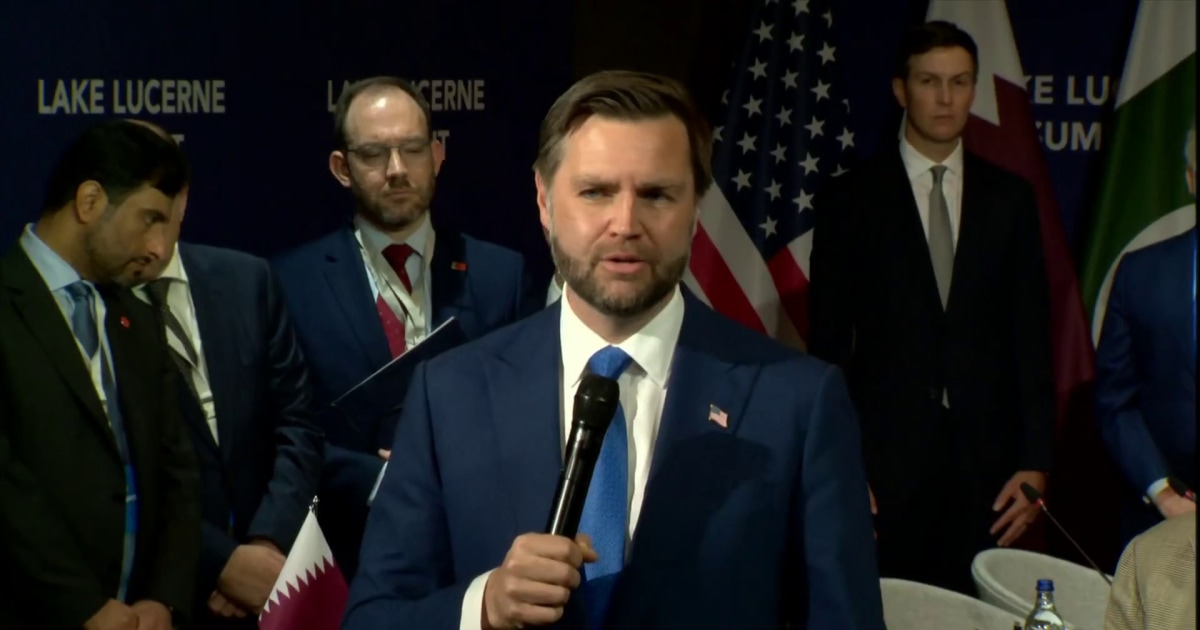
Iran’s geopolitical landscape is currently experiencing significant tension as Vice President JD Vance embarks on pivotal discussions in Switzerland. This comes at a time when Iran has voiced threats to close the strategic Strait of Hormuz following Israel’s recent military actions in Lebanon. The meetings Vance is engaging in aim to foster cooperation amid escalating regional hostilities.
Vance’s Diplomatic Mission
In Lucerne, Switzerland, Vice President JD Vance is meeting with officials from Iran, Pakistan, and Qatar. His objectives include addressing the delicate situation that has unfolded due to ongoing conflicts in the region. The discussions aim to quell concerns over Iran’s potential military maneuvers in the face of regional instability. Vance has expressed a commitment to diplomacy as a pathway to a more stable Middle East, emphasizing the need for collaborative efforts to avoid further escalation.
Impact of U.S. Policy on Regional Dynamics
The strategy adopted by the Biden administration regarding Iran has drawn both supporters and critics. Prominent concerns arise over the implications of sanctions and military strategies on Iran’s nuclear aspirations. Vance’s meetings come after heightened concerns from allied nations regarding Iran’s potential closure of vital shipping lanes. The administration’s approach aims to balance deterrence while pursuing diplomatic channels to ensure peace.
Comparative Analysis of Historical Contexts
The current Iran-U.S. dynamics echo historical tensions, particularly when comparing the existing framework with previous agreements, such as the 2015 Iran Nuclear Deal. Vance’s discussions bring to light the contrasting approaches taken by previous administrations. Reflecting on where the past agreements have fallen short is crucial for shaping an effective path forward.
The Future of U.S.-Iran Relations
As these talks unfold, all eyes are on the potential for a new framework that can stabilize the region. The successful outcome hinges on mutual understanding and respect for national interests. For Vance, the task is monumental but vital; any misstep could exacerbate tensions that have long plagued U.S.-Iran relations. Continued engagement in talks signifies a willingness to explore solutions over military confrontations, making this diplomatic strategy essential as both sides navigate a complex geopolitical landscape. Ultimately, the outcome of these discussions could redefine international relations in the Middle East and beyond.