
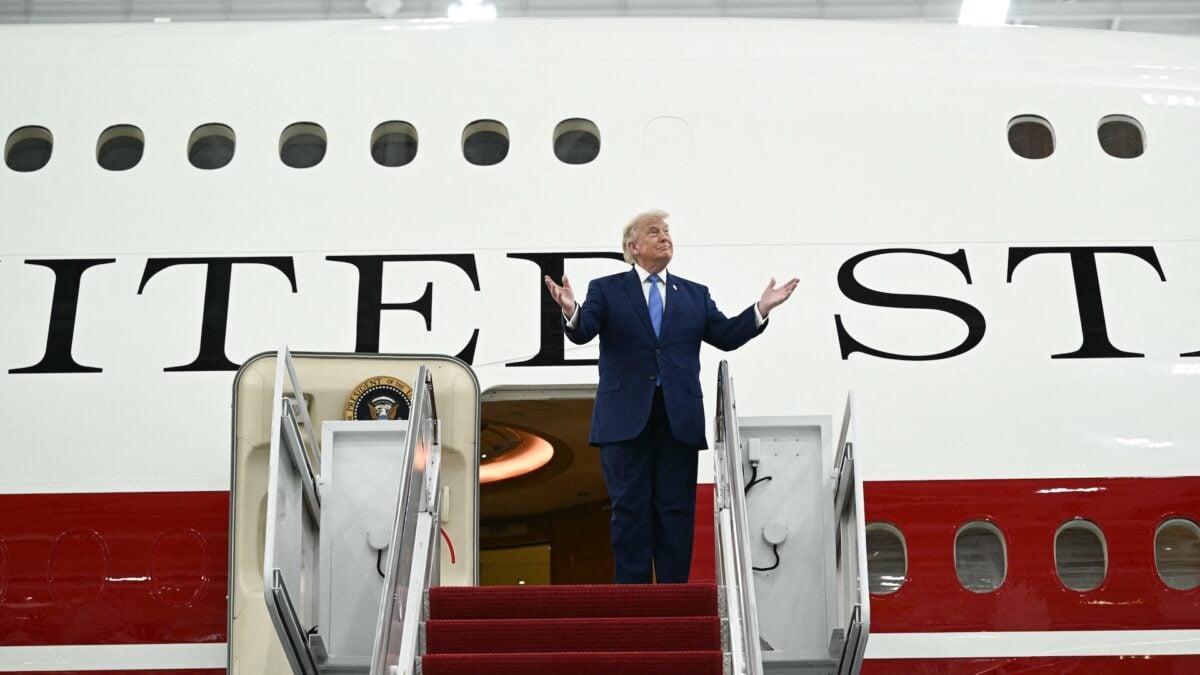
On July 4th, this year, President Trump is set to feature a flight formation above Washington, D.C. led by the highly anticipated new Air Force One. This year marks a significant occasion—America’s 250th birthday—making the event even more noteworthy. Recently unveiled, this aircraft is a reimagining that some are suggesting may not only symbolize luxury but also raise questions about its features and capabilities.
The Controversy Surrounding the New Air Force One
The transition of this aircraft from Qatar to the U.S. military is steeped in legal debate. Many experts contend that this transfer is unconstitutional, potentially violating the emoluments clause. Discussions around this topic raise concerns about the administration’s integrity and legality. However, some analysts believe that, regardless of the legal arguments, no significant actions will be taken against Trump regarding the issue. The president argues that the Pentagon can accept gifts like this one without implicating his administration. Reports suggest that this wasn’t merely a generous gift but rather a request from Trump for Qatar to provide the airplane. Public opinion on this matter heavily revolves around individual support for the current administration.
This situation unfolds against a backdrop of delayed upgrades for Air Force One, moving from the old VC-25A to the new VC-25B model. The initial discussions and plans for the new aircraft have been in the public eye since President Obama’s administration. However, Boeing’s delays and cost overruns have created frustration, leading Trump to renegotiate the deal, which is now purportedly set for delivery in 2024. Until then, the U.S. will temporarily rely on this Qatar-modified aircraft.
Limitations of the New Aircraft
One of the most pressing limitations of the Qatar-gifted Air Force One is its midair refueling capability. The current Air Force One can refuel while flying, a significant strategic advantage for secure travel during emergencies. This feature is intended to ensure that the president remains protected and airborne in critical situations. However, this new model, as well as any future Air Force One aircraft, is not equipped for midair refueling, a decision made back in 2017. While this doesn’t impact daily operations directly, it raises questions about readiness during high-stakes scenarios.
Furthermore, the new aircraft may lack the advanced defense mechanisms that previous models boasted. The specific security systems protecting Air Force One are classified, but experts have noted potential omissions in missile countermeasures and electromagnetic pulse shielding for the new aircraft. Without necessary enhancements, this could lead to vulnerabilities that would have been unacceptable in earlier models.
Preserving Luxurious Features
Despite the controversies swirling around its acquisition, the interior of the plane retains a level of luxury reminiscent of its time with Qatari royalty. Reports indicate that only minimal renovations were made to accommodate classified communications technology, while much of the original lavish design—such as high-end seating and decor—remains intact. Discussions about expected updates included changing exit signs and artwork, leaving the extravagant design largely unchanged. General Dale White of the Air Force confirmed that the interior conditions would remain similar to those of the former Qatari luxury.
A New Look for the Iconic Aircraft
Visually, the aircraft also sports a revamped paint scheme, featuring more red and hints of gold, reflecting the administration’s aesthetic preferences. This opportunity to showcase a fresh identity ties into a long-standing tradition of Air Force One as more than just a mode of transport—it stands as an emblem of American power and prestige.
As the nation prepares for a significant celebration, all eyes will be on the skies. The new Air Force One may come with its own set of limitations and controversies, but its role will undoubtedly be crucial during this historic moment, signifying a blend of past traditions and present-day challenges.