
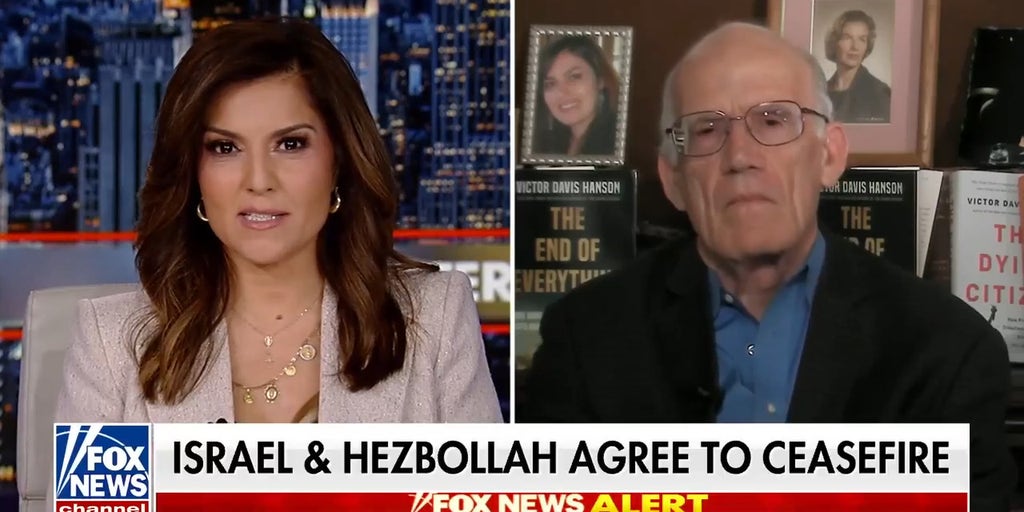
In recent discussions, historical perspective on international agreements often highlights the complexities of diplomatic relations. Victor Davis Hanson, a senior fellow at the Hoover Institution, has shared insights regarding the nuances of the Trump administration’s understanding of its agreement with Iran and the significant hurdles Tehran faces on the global stage.
The Misunderstood Dynamics of U.S.-Iran Relations
Victor Davis Hanson emphasizes that many misconceptions cloud public perception of the Trump administration’s approach towards Iran. He argues that the agreement reached during Trump’s tenure was not merely a concession but rather a strategic maneuver aimed at reshaping the balance of power in the region. The Obama-era negotiations, often praised, neglected to address Iran’s regional ambitions and its engagement in destabilizing activities. In contrast, Trump’s strategy sought to position the U.S. as a formidable presence that could counter Iranian influence and reduce its leverage.
Pressures on Tehran: Economic and Political Challenges
As the U.S. continues to exert economic pressure on Iran, the challenges for Tehran are intensifying. Hanson notes that the sanctions reinstated during the Trump administration are placing significant strains on Iran’s economy. These measures impact trade, including oil exports, which are crucial to the Iranian economy. Moreover, internal political turmoil exacerbates Iran’s situation, as discontent grows among its populace. The combination of external sanctions and internal dissent complicates Iran’s ability to engage meaningfully in negotiations.
Seeking a Lasting Ceasefire: The Role of Leadership
Rachel Campos-Duffy has also pointed out President Trump’s efforts to forge a lasting ceasefire, especially concerning the tensions between Israel and Iran. This ambition reflects a broader initiative to stabilize the Middle East by reorienting alliances and forming new diplomatic relationships. Trump’s leadership style and direct approach stand in sharp contrast to previous administrations, which often pursued a more cautious diplomatic route. This shift has prompted both allies and adversaries to reassess their strategies in the region, making the current geopolitical landscape more dynamic and unpredictable.
Conclusion: A Complex Path Forward
In essence, the landscape of U.S.-Iran relations remains intricately complex, shaped by historical grievances and evolving power dynamics. Victor Davis Hanson’s analysis sheds light on the critical need for a comprehensive understanding of the stakes involved. As international politics continue to unfold, the balance between sanction-induced pressure on Iran and the potential for negotiations will be crucial. As the situation develops, the potential for lasting peace and stability in the region depends heavily on thoughtful dialogue, strategic oversight, and a nuanced approach to diplomacy.