
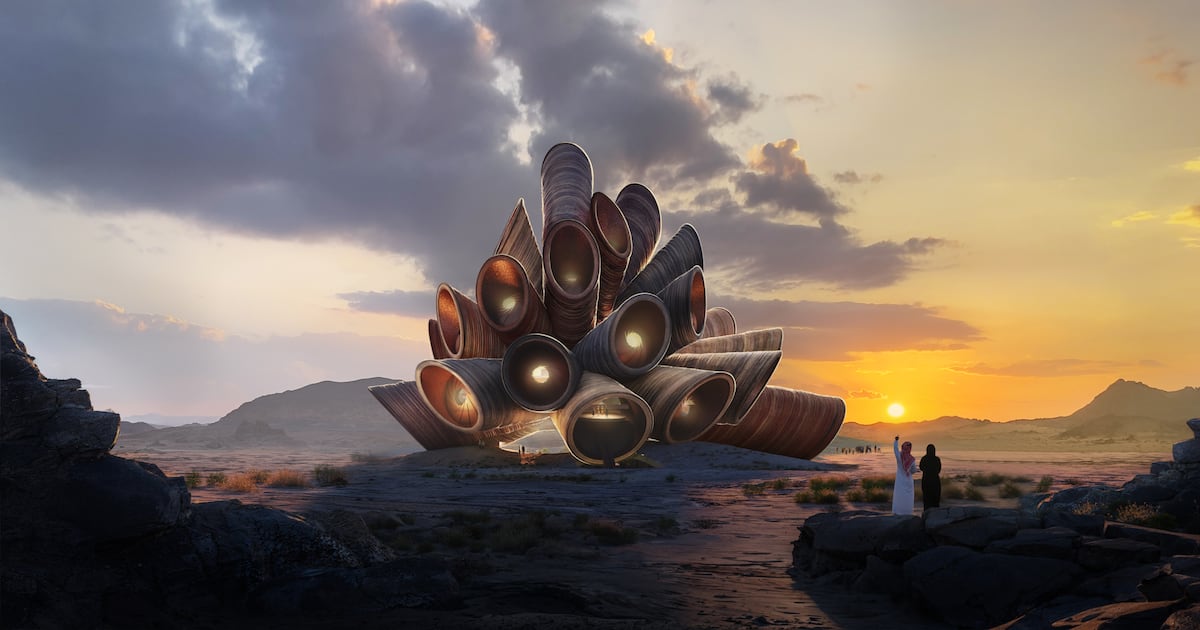
Saudi Arabia is embarking on an exciting journey in the field of astronomy with the announcement of the AlUla Manara project. This astronomical observatory and research center, planned for the northwestern region of the kingdom, promises to enhance both scientific research and public engagement with the wonders of the universe.
AlUla Manara: A Gateway to the Stars
On June 17, the design for AlUla Manara received the green light from the Royal Commission for AlUla. Located approximately 70 kilometers north of AlUla, it benefits from dark skies and minimal light pollution, making it an ideal setting for astronomical endeavors. The site will feature a range of facilities including large telescopes, observation platforms, exhibitions, a planetarium, and interactive experiences aimed at immersing visitors in the realm of astronomy. While the specific opening date is yet to be announced, the project is designed to support scientific research and provide enriching experiences for astronomy enthusiasts.
Regional Astronomy Centers: Expanding Horizons
In addition to AlUla Manara, various astronomy centers across the region are already welcoming visitors. One notable example is the Al Sadeem Observatory in Abu Dhabi, UAE, which opened in 2016 and offers guided tours and stargazing experiences. Visitors have the opportunity to engage in astronomy lectures and use a 40cm telescope for deep-sky observations.
In Dubai, the Al Thuraya Astronomy Centre operates within Mushrif Park and provides public astronomy activities, including telescope observations, planetarium shows, and educational classes. Evening sessions for telescope observations offer further chances to explore the cosmos after sunset, while the center also runs private sessions for those looking for a more personalized experience.
Enhancing Education through Public Engagement
The Sharjah Space and Astronomy Hub in Sharjah, UAE, combines academic research with community education. It features a planetarium, astronomy exhibitions, and research laboratories, making it a hub for both budding astronomers and dedicated scientists. Similarly, the Al Thuraya Planetarium in Doha, Qatar, houses a modern full-dome digital system providing English and Arabic shows covering various astronomical themes, reinforcing both education and entertainment.
Further afield, the SciTech Observatory in Al Khobar, Saudi Arabia, is geared towards enhancing public interest in astronomy. It features a modern telescope that guides visitors in observing celestial events like meteor showers and eclipses, alongside hosting lectures and courses aimed at deepening their understanding of the cosmos.
Across Borders: Stargazing in the Region
Astrolab Oman and RumSky in Jordan offer unique stargazing experiences. Astrolab Oman combines traditional Omani culture with astronomy, providing visitors with guided mountain activities along with telescope viewing. RumSky, located in the scenic Wadi Rum, invites tourists to gaze at constellations and planetary bodies, emphasizing a tourism experience rather than research.
Moreover, observatories such as the Kottamia Astronomical Observatory in Egypt and the Oukaimeden Observatory in Morocco highlight the region’s commitment to advancing astronomical knowledge. While Kottamia is primarily a research facility, it also accommodates special public visits. In contrast, Oukaimeden serves more as a site for guided activities rather than casual visits, emphasizing the importance of guided expertise in experiencing the wonders of the night sky.
The ongoing developments in astronomy across the region showcase a vibrant community committed to expanding scientific research and public engagement. With projects like AlUla Manara on the horizon, the future of astronomy in the Middle East is poised to shine brighter than ever.