
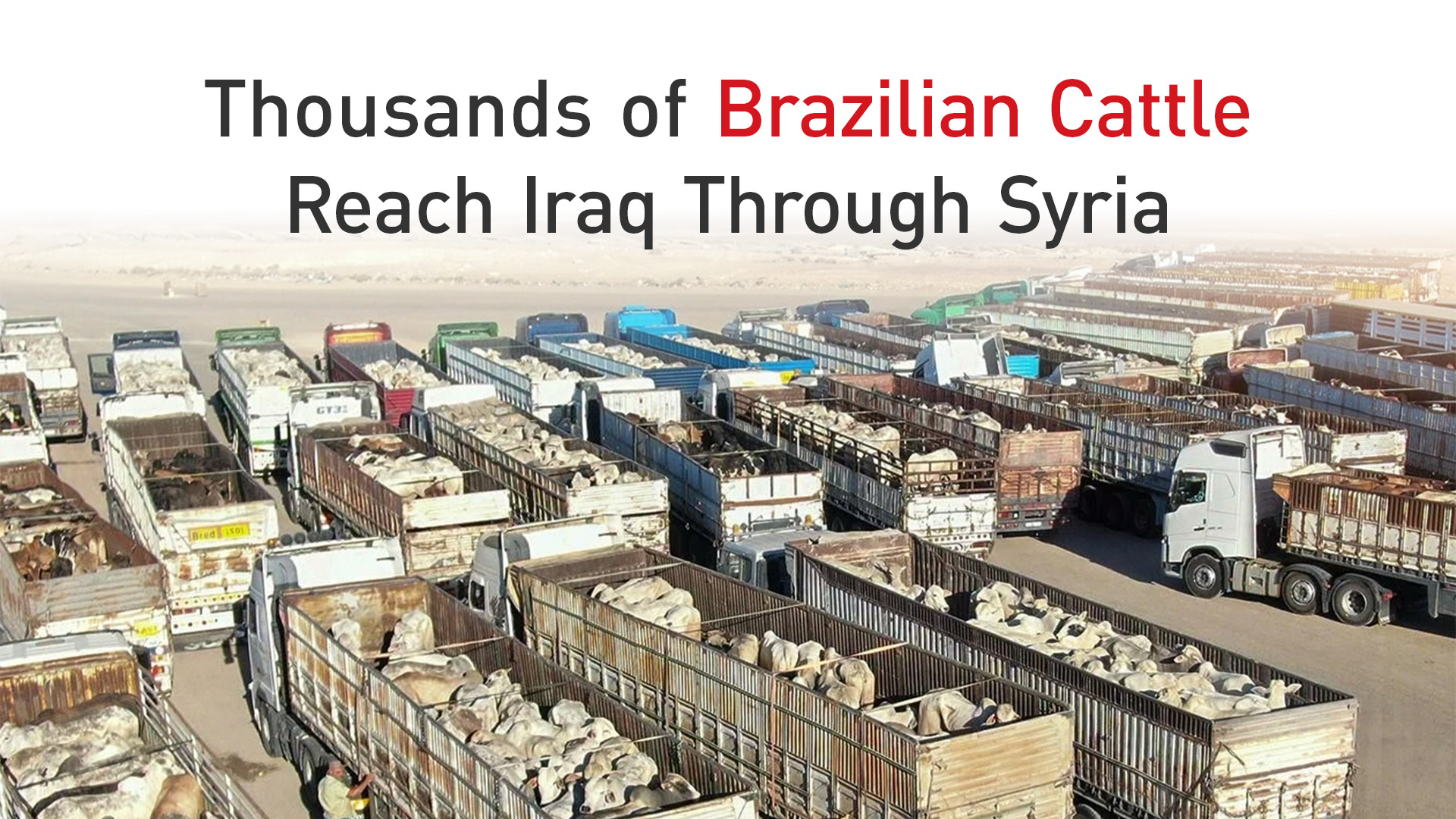
The recent influx of Brazilian cattle into Iraq via Syria highlights significant changes in regional trade dynamics and the pressing food security challenges in the region. As Iraq grapples with population growth and increasing demand for meat, the reliance on imported livestock is becoming more prevalent, reflecting the evolving landscape of domestic agriculture and food supply.
Shifts in Trade Routes and Supply Chains
This monumental shipment of Brazilian cattle doesn’t just represent a standard import; it signifies a transformation in the logistical pathways that connect the Middle East with global meat suppliers. According to the Syrian Arab News Agency, the cattle were initially transported through maritime routes to the port of Tartus, after which they made their way into Iraq via the Al-Tanf border crossing. This strategic movement underscores an expanding transport corridor that is expected to facilitate future livestock shipments, potentially increasing to 50,000 head.
The route through Syria reflects a reimagined role for the country, which has typically been associated with regional transit trade. As it emerges as a vital logistical channel, it is adapting to meet the requirements of international suppliers and surrounding markets. Utilizing Tartus as the entry point not only increases the speed and efficiency of trade but also illustrates how evolving commercial needs and infrastructural capabilities shape regional supply chains.
The Role of Brazilian Livestock in Iraq’s Meat Supply
Brazil stands at the forefront of this transformation, being the largest beef exporter globally. Its predominance in the livestock market can be attributed to its vast grazing lands and cost-effective production methods. The U.S. Department of Agriculture notes that recent currency fluctuations have further enhanced Brazil’s attractiveness as a beef supplier. Such factors have resulted in record levels of beef exports, especially as countries in the Middle East seek affordable protein sources.
The distinction between imported live cattle and frozen meat is crucial for the Iraqi market. While frozen meat generally caters to commercial buyers seeking cost-effective options, live cattle are crucial for local slaughterhouses that meet consumer demands for fresh meat. Many Iraqi households favor freshly slaughtered livestock, highlighting the importance of maintaining local production alongside imports to satisfy consumer preferences.
Challenges and Considerations in Livestock Imports
Importing live animals is fraught with complexities that go beyond logistical coordination. The health of both imported livestock and local herds must be safeguarded through rigorous veterinary oversight. Syrian agricultural authorities conducted inspections of the Brazilian cattle before their transit into Iraq, emphasizing the necessity of biosecurity measures against contagious diseases.
Past experiences have shown that Iraq’s commitment to preventing livestock diseases is vital. Restrictions at the Trebil crossing, due to the detection of foot-and-mouth disease, demonstrated the government’s proactive approach to livestock health. Streamlining quarantine procedures, ensuring proper veterinary certification, and maintaining continuous monitoring are vital components of safe livestock importation.
As Iraq continues to balance its need for imported cattle with a viable domestic agriculture sector, significant challenges loom. While increased imports can alleviate immediate supply issues and stabilize prices, they could inadvertently threaten the local livestock industry, which faces challenges such as drought and high feed costs. This dynamic presents a critical policy challenge for the nation.
In summary, the arrival of Brazilian cattle through Syria encapsulates the complexities of food security, import dependencies, and regional trade evolution. As Iraq strives to manage its agricultural resilience amidst fluctuating demand, balancing imports with investment in local livestock production is paramount for sustainable long-term food security. This evolving scenario will require thoughtful policymaking to ensure that the influx of foreign livestock complements rather than undermines domestic agricultural development.