
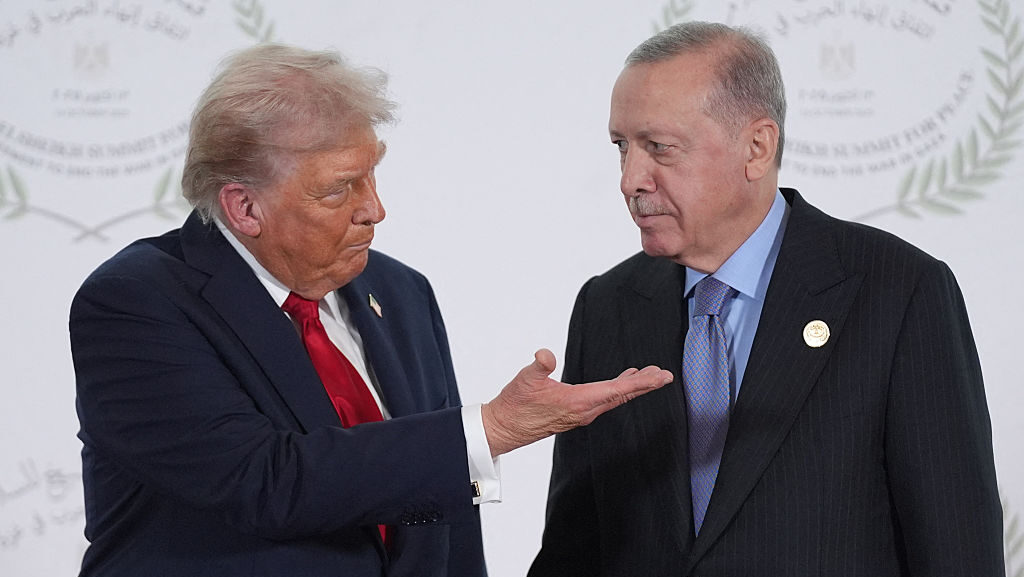
Turkish President Recep Tayyip Erdogan is preparing to make a strong impression at the upcoming NATO summit in Turkey. With an intent to showcase Turkey’s alignment with Western allies, Erdogan and his administration are making concerted efforts to enhance relations with both Washington and Brussels. Recent discussions have focused on Erdogan’s past connections with President Donald Trump, which could potentially pave the way for Turkey’s involvement in key military programs.
Objectives for Erdogan at the NATO Summit
Erdogan arrives at the summit with several strategic goals. A prime objective is to bolster Turkey’s defense industrial base while promoting its rapidly expanding arms exports. Moreover, Erdogan aims for Turkey’s reinstatement into the F-35 fighter jet program, which was revoked after Ankara’s acquisition of the Russian S-400 missile defense system in 2019. Turkish officials are optimistic, with Trump indicating a willingness to take actions that might satisfy Erdogan regarding the F-35.
However, the implications of reinstating Turkey into the F-35 program raise significant concerns. Critics argue that Erdogan has shown a tendency to build alliances with nations that oppose U.S. interests, particularly Russia. Granting Turkey access to advanced military technology like the F-35 could be seen as irresponsible, especially given Erdogan’s established relationships with adversaries of the United States.
The Case Against Turkey’s F-35 Reinstatement
The rationale for blocking Turkey from reacquiring the F-35 is grounded in national security. The F-35 is a crucial component of U.S. military strategy, central to future conflicts involving nations like China, Russia, and Iran. If Turkey were to retain both the F-35 and the S-400 missile defense system, this could enable adversaries to gather vital intelligence on the F-35’s capabilities and weaknesses. Such knowledge could subsequently be shared with states like China and Iran, thereby jeopardizing not only American security but also the safety of allied nations operating the aircraft.
President Erdogan’s continued commitment to cooperation with factions like Hamas highlights the risks involved. His support for this terrorist organization, recognized for its violent actions against U.S. allies, further exacerbates the argument against Turkey’s re-integration into sensitive defense programs. This pattern of behavior raises questions regarding Turkey’s reliability as a NATO ally.
Concerns Surrounding Turkey’s Alliances
Beyond its military alliances, Erdogan’s government has fostered concerning ties with China. With numerous Chinese companies already established in Turkey’s technological landscape and investments in 5G infrastructure, there are fears of potential espionage and cyber risks. Unlike many NATO allies, who have taken steps to limit Chinese influence, Turkey appears to be deepening its relationship with Beijing.
Furthermore, Turkey’s association with the Shanghai Cooperation Organization (SCO) is troubling. While not a full member, Turkey’s status as a “dialogue partner” signals alignment with a bloc that directly challenges Western interests. The SCO serves as a platform for the projection of Chinese power, and Turkey’s participation indicates a strategic pivot away from NATO alignment.
In summary, as Erdogan positions himself and Turkey for the NATO summit, the focus must stay on what is in the best interest of U.S. national security. The issue isn’t merely about political optics; it revolves around concrete strategic decisions that can affect the safety of allies and the broader geopolitical landscape. The critical question remains: is entrusting Turkey with the sophisticated capabilities of the F-35 prudent, especially given its alliances with adversaries?
Legislative leaders should urge the administration to reconsider any plans to transfer the F-35 to Turkey and instead focus on fostering transparency and accountability in Turkey’s military cooperations, especially with known adversaries like Russia and China.