
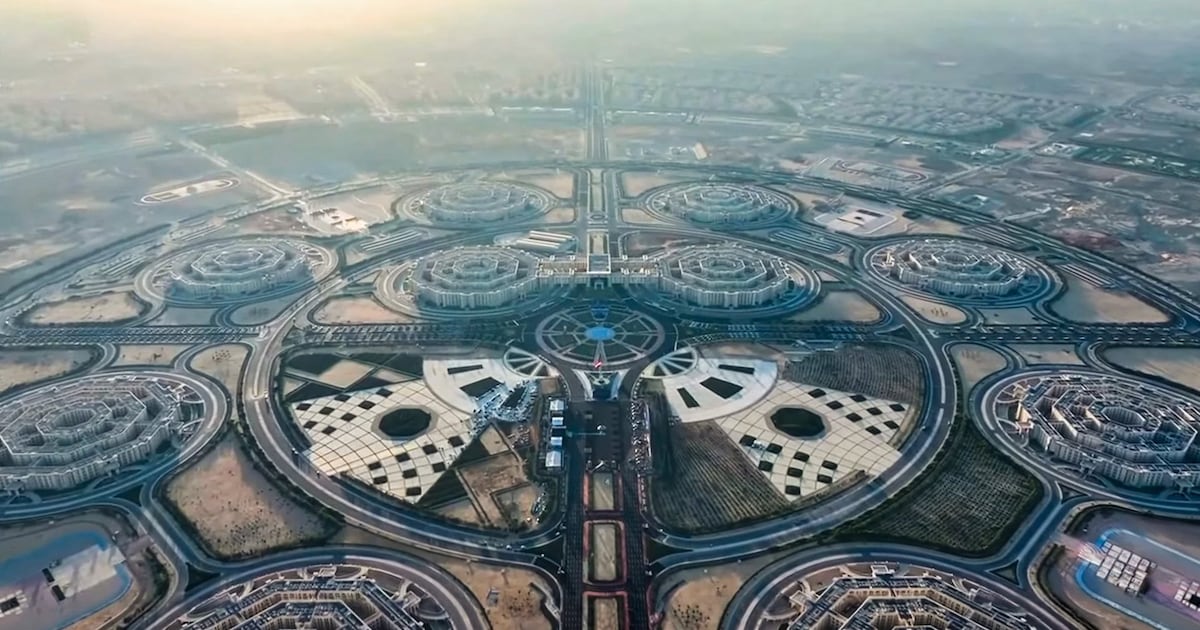
President Abdel Fattah El Sisi recently inaugurated “The Octagon,” a significant facility located in Egypt’s New Capital. This national command center is emblematic of the nation’s aspirations and resilience, as articulated by the Egyptian leader during the event.
Significance of The Octagon
During his address, President El Sisi, donning a field marshal uniform, highlighted the pivotal policies that have defined his 13 years in office. He reinforced his commitment to a stance against political Islam and expressed opposition to the Arab uprisings that have stirred unrest across the region. El Sisi underlined his determination to implement economic reforms, despite rising costs of living and significant currency depreciation that have burdened many Egyptians. These reforms, coupled with new taxation, aim to foster national stability and growth, even as they present challenges to everyday citizens.
A Symbol of Strength in Turbulent Times
This public appearance marked the first time in over a decade that El Sisi has donned a military uniform, last seen in 2015 during the inauguration of a parallel Suez Canal channel. His choice of attire was interpreted as a calculated move to project strength and stability amid various regional conflicts, including the ongoing fallout from the civil war in Sudan, the prolonged Gaza conflict, and political instability in Libya. Additionally, Egypt finds itself in a critical water dispute with Ethiopia, further complicating its regional relations.
El Sisi accentuated Egypt’s pivotal role in the Middle East, citing its formidable military forces and historical contributions to regional stability. He referenced the landmark peace agreement with Israel in 1979 as a foundational element that continues to uphold peace and security in the region.
The Vision Behind the New Republic
The Octagon is envisioned as more than just a military command center; it symbolizes the core principles of what El Sisi refers to as the “New Republic.” He explained that this term represents the comprehensive political and economic changes initiated since he assumed power in 2013. He reiterated that the facility was strategically located in the New Capital to safeguard against the political sieges experienced during the 2013 Islamist movements in Cairo.
El Sisi emphasized the necessity of relocating key government operations to ensure state security and stability, asserting, “The state had to leave the capital… no one can do this in Egypt again.” His assertive stance on governance seeks to prevent history from repeating itself, reinforcing a commitment to national security and proactive management of potential threats.
Challenges and Commitments Ahead
Reflecting on the past, El Sisi articulated a deep awareness of the struggles faced by the Egyptian populace. He acknowledged the need to improve living standards and alleviate hardships, which he considers a government priority. His administration has faced criticism for a severe crackdown on dissent, particularly targeting members of the Muslim Brotherhood and other activists involved in the 2011 uprisings.
El Sisi has voiced concerns that while the 2011 uprising was fueled by noble intentions, it led to chaos that severely impacted Egypt’s economy and security landscape. “I always recall the events of 2011 because God almighty saved Egypt,” he noted, juxtaposing Egypt’s fortunes with the ongoing struggles of other nations affected by similar uprisings.
In conclusion, the inauguration of The Octagon underlines President El Sisi’s vision for a modern, resilient Egypt addressing both internal struggles and external challenges, with a firm commitment to stability and development in the face of numerous obstacles.