
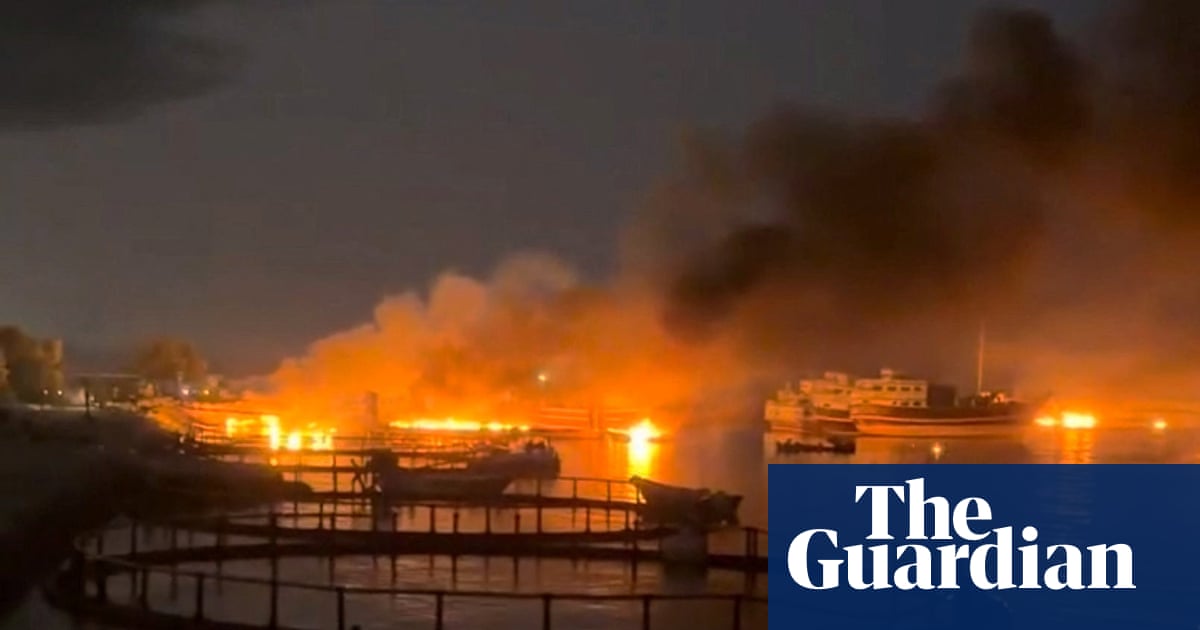
The ongoing conflict between the United States and Iran has escalated dramatically, marking a notable second day of military strikes by the U.S. military. This military action follows a declaration from President Donald Trump stating that an interim ceasefire agreement designed to halt hostilities is effectively over. As tensions mount, the situation in the region is increasingly precarious.
Recent Strikes and Iranian Responses
Late Wednesday, Iranian state media reported significant explosions in several locations, including the port city of Bandar Abbas and the Bushehr province, which houses Iran’s nuclear facilities. The strikes were a response to earlier Iranian attacks, specifically targeting U.S. cargo ships in the strategic Strait of Hormuz. Trump announced on social media that these retaliatory actions were a direct consequence of Iran’s aggressive actions: “If it happens again, it will get much worse!” The U.S. Central Command confirmed the strikes were ordered to impair Iran’s capacity to jeopardize freedom of navigation in the Strait of Hormuz.
On Tuesday, three commercial vessels were attacked while passing through the Strait, leading to the most extensive military exchange between the two nations since the interim agreement was brokered last month. The U.S. Treasury Department also revoked a temporary sanctions waiver that had allowed Iran to export oil, further intensifying the conflict.
Impact on Geopolitics and Economics
This latest escalation has significantly eroded hopes of transforming the memorandum of understanding signed in June into a lasting peace agreement. Iran’s military actions, targeting U.S. installations in Bahrain and Kuwait, resulted in heightened alarm, with sirens activated multiple times in Bahrain, home of the U.S. Navy’s Fifth Fleet. Although military sources indicate that damage from these attacks has yet to be assessed, Kuwait’s military affirmed they were actively intercepting possible drone and missile threats.
The impact of these military exchanges has reverberated globally, as U.S. stock markets dipped while Brent crude oil prices surged over 5%, nearing $80 a barrel. Such fluctuations are a stark reminder of the economic ramifications that accompany military conflict. Senator Bernie Sanders criticized Trump’s decisions, suggesting that rekindling hostilities with Iran would not only result in additional loss of life but also waste taxpayer resources.
The Future of U.S.-Iran Relations
During his remarks at the NATO summit, Trump suggested that the latest military strikes were intended as swift retaliation against Iranian provocations. He characterized Iran’s actions as fundamentally unacceptable, accusing the nation of launching missiles and drones at commercial shipping vessels. Underlying this conflict is Iran’s claim that the existing ceasefire grants it authority over Strait navigation.
Iranian officials have vocally disagreed, with their parliament speaker signaling that any attempt at coercion would not be tolerated. As military actions continue, Iran remains steadfast in its assertion of rights over the region.
As the international community watches closely, the situation remains fraught with uncertainty. The recent strikes occurred as Iran prepared for the burial of its supreme leader, Ayatollah Ali Khamenei, who was reportedly killed on the initial day of the U.S.-Israeli military strikes. With mourning ceremonies drawing vast crowds across Iran and Iraq, the potential for further escalation remains a critical concern. The geopolitical landscape is restless, and the consequences of this renewed conflict will likely affect global politics and economics for the foreseeable future.