
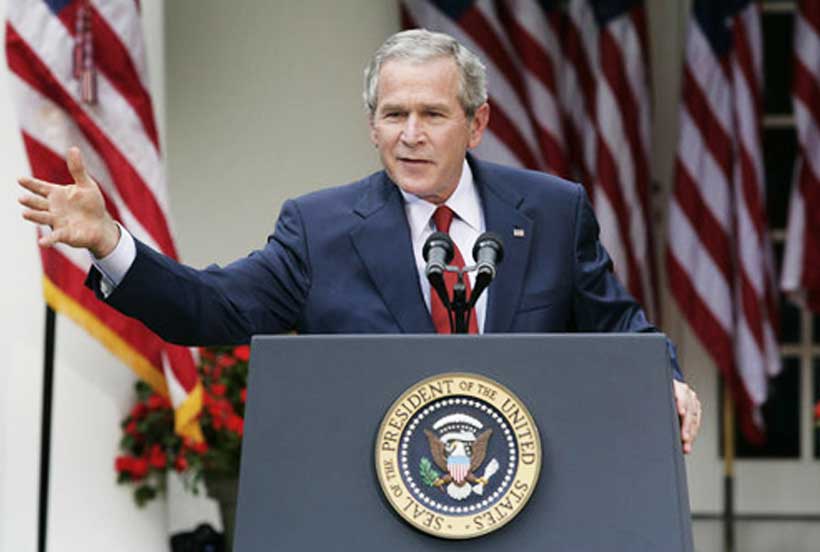
In the wake of the Freedom Agenda, a critical examination of U.S. interventions in the Middle East raises vital questions about their consequences. A former State Department official from the Bush administration recently revisited these issues, particularly in light of ongoing conflicts such as the war in Iran. This analysis not only reflects on past actions but also assesses current realities, shedding light on the complexities surrounding U.S. foreign policy in the region.
The Legacy of the Freedom Agenda
The Freedom Agenda was launched with the intention of promoting democracy and freedom in the Middle East, under the premise that these values would lead to stability and reduce extremism. However, two decades later, many argue that this strategy has had the opposite effect. Countries that once seemed poised for democratic reform have witnessed chaos, authoritarianism, or even civil war. The outcomes complicate the narrative that U.S. intervention can reliably foster positive change. Critics now ponder whether the costs of these interventions were justified when weighed against the realities on the ground today.
Assessing U.S. Interventions
Several instances of American intervention in the Middle East highlight the often unintended consequences of military involvement. The Iraq War, which initially aimed to dismantle a dictatorship, has instead resulted in enduring sectarian strife and power vacuums exploited by extremist groups. Similarly, the ongoing tensions in Syria illustrate how U.S. influence can sometimes exacerbate violence rather than quell it. These outcomes challenge the assumption that military intervention is a viable or effective solution to complex geopolitical issues.
The Current Conflict and Lessons Learned
The current war involving Iran serves as a crucial case study for understanding the implications of U.S. policy in the region. As tensions escalate, many wonder whether previous interventions have informed current strategies or merely perpetuated a cycle of conflict. The stakes are particularly high, given Iran’s strategic position and the potential for broader regional instability. Observers are increasingly calling for a shift in approach, emphasizing diplomacy and engagement over military solutions.
Looking Forward: Rethinking U.S. Strategy
In light of historical lessons and current realities, there is a pressing need for the U.S. to reevaluate its foreign policy framework in the Middle East. Rather than focusing solely on military intervention, policymakers might consider prioritizing diplomatic efforts and collaborations with local actors. Such a strategy could foster a more sustainable approach to peace and stability, recognizing the complexities of the region’s sociopolitical landscape.
The long-standing discourse around the Freedom Agenda and its repercussions emphasizes the importance of reflecting on past mistakes to avoid repeating them. With tensions persistently looming over the Middle East, the insights gained from these experiences are more crucial than ever for shaping future U.S. engagements. Prioritizing diplomacy, understanding local contexts, and fostering genuine partnerships may pave a new path toward long-term peace in a region fraught with challenges.