
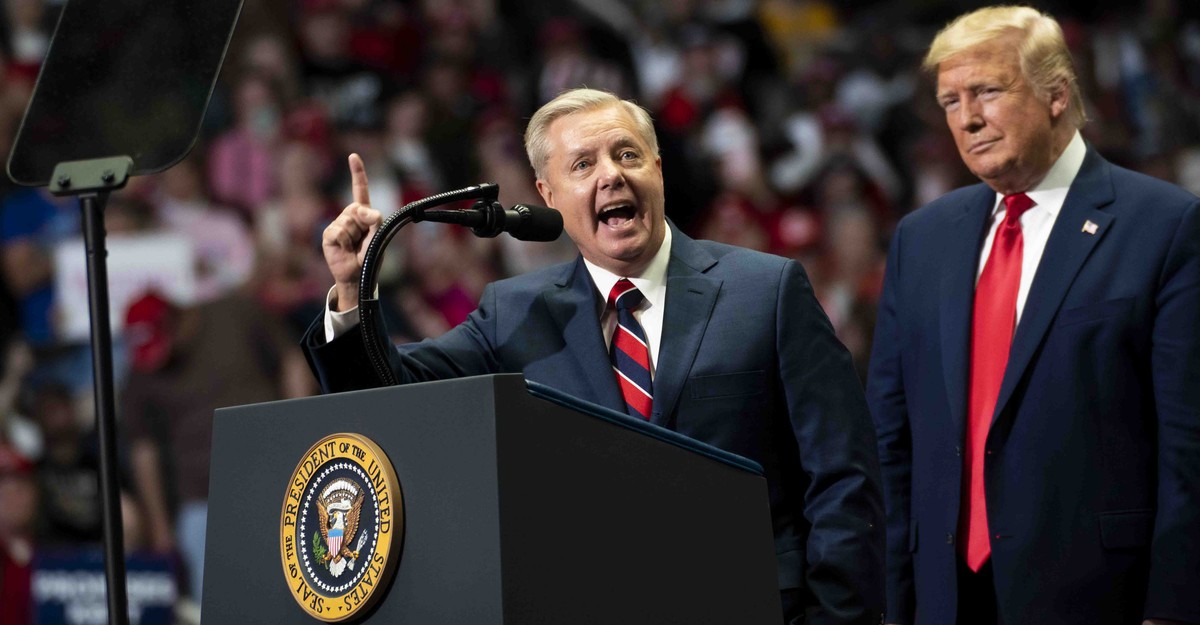
In the lead-up to the United States’ military action against Iran in February 2026, notable political actors were deeply entrenched in discussions about the potential conflict. Among them was Senator Lindsey Graham of South Carolina, who spent significant time advocating for war, aligning closely with key figures in the Trump administration and foreign allies, particularly Israeli Prime Minister Benjamin Netanyahu. Graham’s unwavering stance made him a central figure in directing U.S. foreign policy amidst growing tensions in the region.
The Role of Lindsey Graham in U.S.-Iran Relations
Graham’s influence on former President Trump’s foreign policy during the latter’s second term cannot be understated. While many Republicans have historically pushed for a more aggressive stance on global affairs, Graham distinguished himself by effectively communicating the need for military intervention in ways that resonated with Trump’s instincts. This skill allowed him to navigate the complexities of Republican foreign policy ideologies, balancing isolationist sentiments with the interventionist views harking back to the Reagan era. His ability to connect with Trump enabled him to advocate for military action against Iran, which ultimately turned out to be a significant misjudgment.
In particular, Graham’s transformation from a critic of Trump in the 2016 election cycle to a full-fledged ally exemplified his political acumen. By 2024, as Trump prepared for his presidential run, it became evident that support for Ukraine would hinge on Graham’s influence at Mar-a-Lago. Trump frequently criticized U.S. financial support for foreign nations, casting doubt on Ukraine’s corruption and expressing discontent with assistance packages. Graham, understanding Trump’s perspective, sought to reframe U.S. aid as loans backed by tangible returns rather than unconditional grants.
Strategic Alignments and Arguments
In early 2026, Graham was intensely focused on Iran, riding on Air Force One with Trump as they discussed military strategies. He believed the ongoing protests in Iran presented an opportune moment for U.S. intervention, aligning with Netanyahu’s view that military action was warranted due to the escalating nuclear threat from Iran. Throughout his final months, Graham maintained that other nations, particularly European allies, were significantly underestimating the global threats posed by Iran and Russia.
He consistently echoed the sentiment that a strong military response was necessary to counter these challenges, often criticized the notion of a “rules-based order” that he felt was naive in light of real-world threats. Graham argued fervently for proactive military measures, conveying to reporters that bad actors do not adhere to diplomatic niceties. He emphasized that true security was paramount for American citizens, especially amid rising adversarial actions from the likes of Putin and Iran’s regime.
The Outcomes of Military Decisions and Relationships
As the war commenced on February 28, 2026, both Graham and Trump faced the repercussions of their decisions. Graham had long advocated for the assassination of Iranian leaders as a way to facilitate regime change, asserting that military pressure could empower the Iranian populace to rise up against their government. However, despite these intentions, the results of the military actions taken against Iran led to further complications.
As the months unfolded, initial optimism surrounding the conflict diminished. Graham, recognizing the stalemate, began to entertain the idea of diplomatic negotiations but only after key elections in Israel and the U.S. indicated a shifting political landscape. His initial convictions about swift victory and regime change were increasingly challenged, and he expressed skepticism about relying on international mediators, spotlighting the complexities of military intervention in global politics.
In conclusion, Graham’s legacy is a testament to the intricate interplay of personal beliefs, political strategy, and international repercussions. His death from an aortic dissection on October 7, 2026, coincided with renewed hostilities in Iran, leaving behind a complicated narrative of ambition, misunderstanding, and strategic challenges in U.S. foreign policy. His life and career offer important lessons about the impact of individual leaders on the course of international relations.