
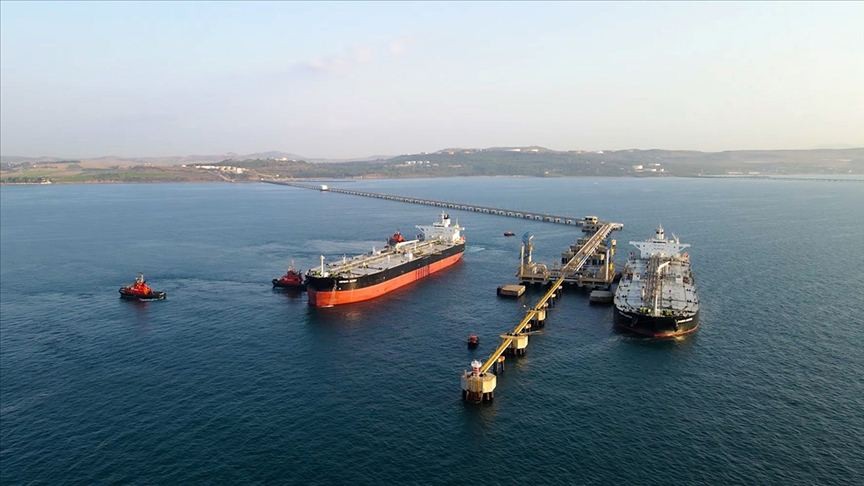
The recent agreement between Turkey and Iraq has put a temporary hold on the impending economic crisis anticipated on July 27. Turkey has consented to a one-year arrangement that will allow essential oil exports from northern Iraq to continue through pipelines to the Turkish port of Ceyhan. This protocol, treating the Iraq-Turkey Pipeline (ITP) as a cohesive system, aligns with the original 1973 ‘Crude Oil Pipeline Agreement,’ thereby offering a lifeline to Iraq’s struggling oil sector.
Importance of the Iraq-Turkey Pipeline
With the effective blockade of the Strait of Hormuz on February 28 and subsequent disruptions, the ITP has become increasingly vital for Iraq’s oil monetization. Historically, around 95% of Iraq’s crude oil was exported through this route to key markets, particularly in Asia. Following the blockade, Iraq faced unprecedented challenges; its oil storage facilities reached critical capacity, compelling a halt in production that posed serious risks of permanent damage to oil reservoirs. As the situation unfolded, Iraq’s immediate need for a stable export route became paramount.
The recent protocol ensures that over 200,000 barrels of oil per day will be transported through the Ceyhan corridor, a return to pre-crisis levels. However, this arrangement comes after a significant disruption where oil flows were entirely halted for over two years due to an arbitration ruling mandating Turkey to pay $1.5 billion for permitting the Kurdistan Regional Government (KRG) to sell oil independently of Baghdad. This ruling underlined the delicate balance of power between the KRG and the Federal Government of Iraq (FGI), a relationship shaped by historical agreements and ongoing tensions.
Challenges and Risks for Iraq’s Oil Sector
The hesitation from Baghdad to allow Kurdish independence in oil exports stems from fears of creating a financial basis for a Kurdish separation, which has been a longstanding concern for the FGI. The 2013 bill permitting KRG to independently export oil highlighted these fears, suggesting intentions of financial and eventually political autonomy. Despite the KRG’s push for independence evident in a 2017 referendum, the lack of Western support and subsequent backlash from Iraq and neighboring countries have dampened such aspirations.
Interestingly, Baghdad’s geopolitical strategy has recently tilted towards alliances with China and Russia, while KRG maintains a tenuous connection to the West in hopes of achieving independence. This complex interplay highlights the fragility of the situation, with Iraq’s leadership viewing any KRG independence as a direct existential threat. The balance of power shifts and the competing interests of regional and global players create a volatile environment, complicating Iraq’s oil future.
Looking Ahead: The Future of Iraq-Turkey Relations
Despite the current agreement, unresolved issues persist, particularly regarding Turkey’s demands for enhanced financial arrangements and a commitment from Iraq for consistent oil flow. These factors could influence the extendibility of the agreement beyond the one-year timeframe. Turkey’s drive for additional joint ventures in various sectors underscores its desire to ensure that the deal is mutually beneficial. If Iraq fails to meet Turkey’s expectations, the possibility of the agreement being terminated looms large.
In summary, while the temporary agreement offers Iraq a reprieve from an impending economic disaster, many uncertainties linger. The dynamics between Baghdad, Erbil, and Ankara will continue to shape the future of Iraq’s oil industry and its geopolitical position, making continuous monitoring essential for understanding the landscape. The stakes remain high as these relationships evolve, underscoring the intricate and often contentious nature of Middle Eastern geopolitics.