
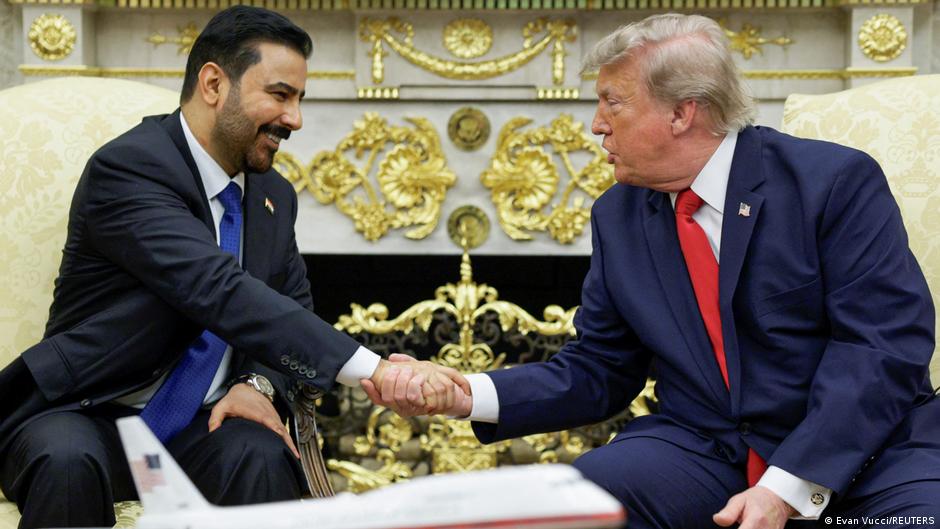
US troops are on track to completely withdraw from Iraq by September 30, according to Prime Minister Ali al-Zaidi. This announcement came during a meeting with President Donald Trump in Washington. The decision marks a significant shift in US military presence, which once saw around 2,500 troops stationed in the region for counter-Islamic State operations. Over time, that number has dwindled, reflecting changing priorities and efforts towards establishing Iraqi sovereignty.
Significance of the Withdrawal
Al-Zaidi’s government has linked the planned withdrawal of American forces to the disarmament of powerful Iran-backed militias, which have played a significant role in Iraq’s political landscape. The Prime Minister emphasized, “On September 30th, American forces will leave, and American companies will enter.” He asserted that post-withdrawal, no groups would be allowed to possess arms outside the state’s authority. This statement underscores Iraq’s aspiration for enhanced autonomy and stability, moving away from reliance on foreign military support.
Economic Partnerships on the Horizon
A primary goal of al-Zaidi’s visit to the United States was to secure substantial investment from American companies in Iraq’s oil, gas, and energy sectors. During their discussions, both leaders touched upon the potential for an economic partnership that could bolster Iraq’s economy. Trump remarked on Iraq’s vast oil resources, stating, “We’re going to be doing a lot of deals.” He mentioned the promise of job creation for both nations, hinting at collaborative ventures that could follow the troop withdrawal.
Reports indicate that recent discussions may lead to a significant deal involving Iraq, Chevron, TI Capital, and Qatar’s UCC. This agreement aims to establish a pipeline capable of transporting two million barrels of oil per day, linking Basra with Haditha and extending to ports in Turkey and Syria. Such projects not only promise to enhance Iraq’s oil export capabilities but also signify an increase in foreign investment, tapping into the country’s rich natural resources.
Challenges Ahead for Iraq
Despite these promising developments, Iraq faces a myriad of challenges in transitioning from a security-focused US presence to a robust, self-sustaining state. The disarmament of militias and the establishment of effective governance will be critical to ensuring long-term stability. The Iraqi government must navigate complex political dynamics, particularly those influenced by Iran, while fostering an environment conducive to foreign direct investment.
Moreover, the successful implementation of economic agreements will depend heavily on Iraq’s ability to maintain security and political coherence post-withdrawal. Establishing a reliable framework for businesses will be essential in fostering confidence among potential investors. As Iraq embarks on this new chapter, balancing economic ambitions with the need for domestic stability will be crucial for the country’s future growth.
In conclusion, while the anticipated US troop withdrawal signifies a momentous shift for Iraq, it also opens up a pathway for economic opportunities and partnerships. With an eye toward sustainable governance, Iraq can focus on harnessing its natural resources, providing a foundation for growth and development in an ever-evolving geopolitical landscape.