
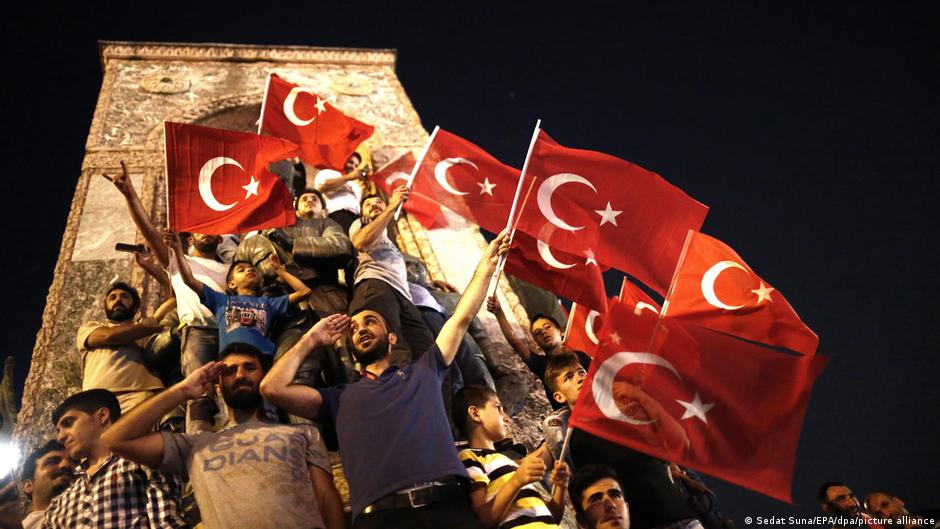
On the evening of July 15, 2016, a typically pleasant summer day in Turkey transformed into a scene of chaos and uncertainty. As citizens went about their Friday routines, few could have anticipated the dramatic events that would unfold, forever altering the country’s political landscape. The night would culminate in a military coup attempt that would leave lingering impacts, deeply ingraining itself into Turkey’s collective memory and shaping its future.
The Coup Attempt
That night, tanks rolled through major Turkish cities, with fighter jets soaring overhead. Soldiers took control of the Bosphorus Bridge, the crucial artery connecting Europe and Asia, while gunfire erupted around the parliament in Ankara. In an urgent attempt to regain control, President Recep Tayyip Erdogan appeared via video call, imploring the Turkish populace to resist the coup and protect democracy. Despite the chaos, the coup was swiftly thwarted, but its aftermath would send shockwaves through the nation.
In subsequent days, the Turkish government attributed the failed coup to the Gulen movement, led by Fethullah Gulen. Once an ally of Erdogan, their relationship soured over time, culminating in Gulen’s exile in the United States. The government accused him of infiltrating state institutions with followers, aiming to destabilize the nation. Gulen and his supporters vehemently denied any involvement in the coup, yet the fallout was severe; numerous military officials alleged to have ties to Gulen were detained, with many more facing a torrent of arrests in the following years.
By July 15 each year, the country now observes a national holiday dedicated to the memory of those who lost their lives during the coup attempt, which left 253 dead, primarily civilians. The Bosphorus Bridge was renamed the “Bridge of the Martyrs of July 15,” symbolizing the enduring scars of that fateful night. For many, the anniversary serves a dual purpose—commemorating the victims and marking a pivotal political shift that saw the Gulen movement categorized as a terrorist organization.
The State of Emergency
In the wake of the coup, a state of emergency was declared, lasting for two years and enabling the government to bypass standard legislative procedures. This state of emergency initially intended to last three months, was extended multiple times, allowing Erdogan to implement significant political purges. During this period, over 125,000 people from various sectors, including the civil service and military, were dismissed. Furthermore, nearly 390,000 individuals were detained on suspicion of having Gulen affiliations, while hundreds of institutions faced closures, further entrenching the government’s power.
The implications of these actions have fundamentally altered the Turkish political landscape. Analysts like Ersin Kalaycioglu argue that the effects of the state of emergency are still felt today, as it catalyzed a shift toward a more centralized and authoritarian governance model. Bureaucracy, once characterized by professional standards, has evolved into a system that simply executes political directives, marking a departure from democratic norms.
Opposition parties have accused the government of extending its purges beyond just Gulen followers, targeting critics and dissenters alike. This shift not only altered the state’s bureaucratic infrastructure but also influenced political alliances. Erdogan’s Justice and Development Party (AKP) formed a notable coalition with the ultra-nationalist Nationalist Movement Party (MHP), allowing for the successful passage of a 2017 constitutional referendum that transitioned Turkey from a parliamentary to a presidential system. Critics argue that this shift has resulted in a “one-man system,” consolidating power in Erdogan’s hands.
Political Repercussions and Resistance
The sweeping legal and political changes have also transformed the opposition landscape. Faced with the need to unify against a dominant ruling party, opposition groups have begun forming alliances to better compete in elections. Remarkably, the Republican People’s Party (CHP) won significant victories in 2019 and 2024 by capturing mayoral seats in Turkey’s largest cities, Istanbul and Ankara. However, many opposition leaders now contend with serious legal challenges and allegations of terrorism, indicating an increasingly precarious political climate.
As Turkey grapples with the consequences of the 2016 coup attempt, its society remains divided. The memory of that night serves as a sobering reminder of the fragility of democracy in the nation and the ongoing struggles for political freedom and justice. The events of July 15 not only highlight the complexities of Turkish politics but also signify a critical juncture that continues to influence the country’s path forward.