
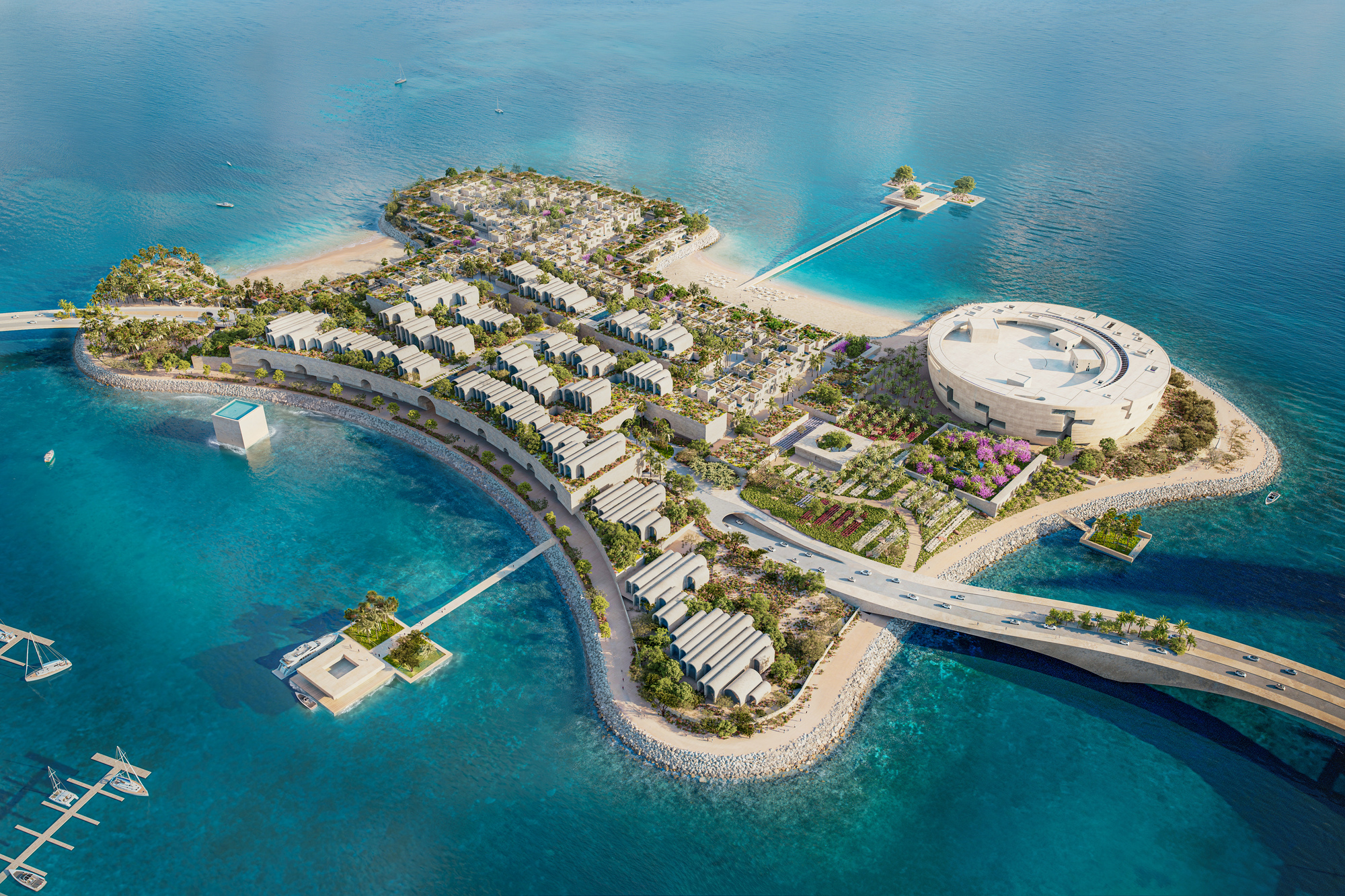
The Lusail Museum on Al Maha Island, a key project by renowned architecture firm Herzog & de Meuron, is set to become a major cultural landmark in Qatar. For those interested in architecture and cultural developments, the unveiling of new architectural designs and images provides an exciting glimpse into this innovative project.
A Visionary Cultural Hub in Lusail
Al Maha Island, an artificial creation off Lusail’s coast, serves as a vibrant leisure and entertainment destination. Opened in 2022, it played a significant role during the FIFA World Cup in Qatar. Recently, Herzog & de Meuron revealed new visuals showcasing the museum’s design, which aims to encapsulate the nuance of Orientalism. The museum will feature art that embodies the exchange of ideas and cultures over time, making it a pivotal venue for discussions on contemporary global issues.
Architectural Design and Structure
The Lusail Museum is architecturally unique, characterized by three intersecting spheres designed to create a harmony of space. It comprises two sections—one resembles a full moon, while the other takes a crescent form, fostering an environment of exploration and learning. Key areas within the museum, such as the library, auditorium, and café, will be connected by a scenic crescent-shaped corridor that invites natural light, enhancing the overall visitor experience.
Art Collection and Cultural Significance
This museum will be home to an extensive collection of Orientalist art, featuring notable works by painters like Titian and Eugène Delacroix, as well as early photographic exhibits capturing depictions of the East. The focus will span artforms from the 16th to the 19th century, showcasing both classic and modern interpretations of Orientalist themes. In addition, the museum will support collaborative projects involving local artisans, reinforcing Qatar’s commitment to cultural preservation.
An Eco-Friendly and Accessible Space
Sustainability is at the forefront of the museum’s design, employing materials that echo the natural landscape of the region. The façade reflects an earthy texture reminiscent of the surrounding sands, featuring recessed windows to manage sunlight exposure. Walkways and bike paths designed throughout the site focus on mobility and accessibility, incorporating public art installations from local and international artists, which adds another layer to the cultural tapestry of Lusail City.
The Lusail Museum is more than just an architectural structure; it aims to become the heart of a blossoming cultural scene in Qatar. Its incorporation of art, community spaces, and environmentally friendly design will not only preserve historical narratives but will also engage and inspire future generations. As the museum progresses toward completion, it promises to be an essential destination for both locals and visitors, solidifying Lusail’s status as a key contributor to Qatar’s cultural landscape.