
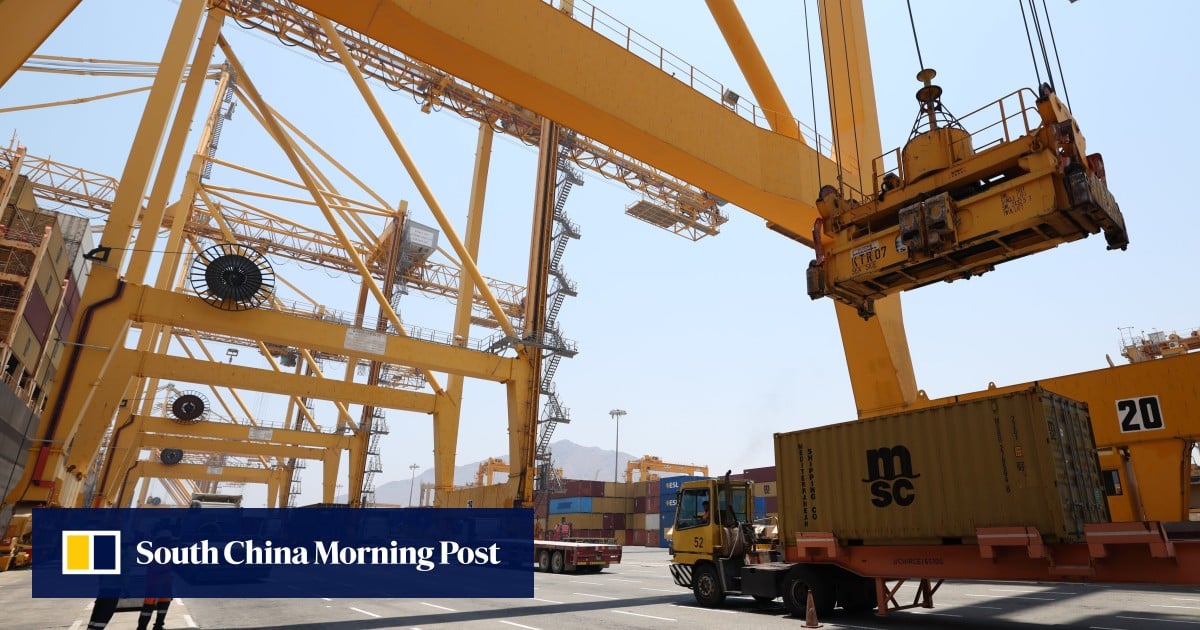
Geopolitical uncertainties are reshaping trade dynamics in the Gulf region, particularly for the United Arab Emirates (UAE). Seeking to lessen its reliance on the Strait of Hormuz, a key maritime route, the UAE faces a significant challenge given that its primary ports, which are essential to its economy, are strategically located within this waterway.
The Strategic Role of UAE Ports
Jebel Ali and Khalifa ports are instrumental in managing the UAE’s substantial non-oil trade, valued at around $1 trillion annually. A large part of this trade is linked to Asian markets, making these ports vital gateways for goods traveling to and from Europe and beyond. This logistical corridor, which runs from Singapore to Europe, offers a unique strategic advantage that is not easily replicated elsewhere. Thus, any disruption in these routes not only affects the UAE but also significantly impacts global trade networks.
Impact of Geopolitical Tensions
However, the ongoing tensions between the United States and Iran have necessitated a reevaluation of these trade routes. As exporters across Asia grow increasingly anxious about potential conflicts, Oman’s ports have become attractive alternatives. Ports like Duqm, Salalah, and Sohar are witnessing a resurgence, drawing shipping companies, investors, and lucrative deals in free trade zones. These developments indicate a strategic pivot toward more stable routes, away from the volatility currently associated with the Strait of Hormuz.
Investment in Alternative Ports
In response to these shifts, the UAE is not only looking to expand its existing operations but is also investing heavily in ports along the Gulf of Oman. Foreign Trade Minister Thani Al Zeyoudi has outlined comprehensive plans to enhance facilities in Khor Fakkan, Fujairah, and Dibba, along with the construction of a new facility on the country’s eastern coastline. These initiatives aim to bolster the UAE’s resilience against potential disruptions in the Strait of Hormuz.
Future Outlook
“We’re moving towards having zero Hormuz dependency, regardless of its status,” Zeyoudi remarked in a recent Bloomberg interview, framing this strategic pivot as a form of insurance. The UAE government remains optimistic that the Strait will eventually reopen, yet it emphasizes that the new plans will proceed independently of this outcome. With a clear focus on diversifying its logistics and trade routes, the UAE is positioning itself not just as a regional trade hub but as a resilient player in the global marketplace.
In summary, as the geopolitical landscape evolves, the UAE’s strategic initiatives to reduce dependence on the Strait of Hormuz reflect a proactive approach to ensure economic stability and growth. These movements signal a broader trend, as nations rethink their trade routes in response to regional tensions. This strategic realignment sets the stage for new opportunities in the Gulf, potentially reshaping trade dynamics for the foreseeable future.