
A veteran’s journey through the challenges of life after a traumatic brain injury (TBI) is a poignant testament to resilience and the long-lasting impact of war. J.P. Moszer, a soldier who served in the Iraq War, illustrates the complexities of living with TBI nearly two decades after a near-fatal incident.
Surviving the Attack
In October 2007, while stationed in Baghdad, J.P. Moszer, who served in both the U.S. Army and the North Dakota National Guard, was a victim of a rocket blast that would change his life forever. The explosion occurred at a market where Moszer had briefly stopped to purchase a Diet Coke. In addition to the traumatic brain injury, he faced numerous physical injuries affecting his shoulder, hip, knee, and foot. Tragically, Moszer’s experience is not isolated; about 1.5 million Americans served in Iraq from 2003 to 2011, with over 30,000 sustaining serious injuries.
Moszer articulated the shock of his condition in an interview, recalling that he had no recollection of the months following the attack. “I couldn’t walk. I couldn’t talk. I couldn’t do math. I couldn’t tie my shoes. I didn’t know my wife,” he explained, emphasizing the severity of his cognitive impairments.
The Struggles of Memory Loss
The aftermath for Moszer involved an uphill battle to regain lost memories. He faced the heart-wrenching reality of conversing with his wife over the phone yet failing to recognize her. “When she would talk to me and ask if I remembered her, I would respond honestly, ‘Nope, I’m not married,’” he stated. Fortunately, Moszer’s recovery began when he first remembered his dog, Lindy—a pivotal moment that led him back to recognizing his wife.
Despite some progress, the challenges didn’t end there. Moszer continues to suffer from chronic vertigo and apraxia, a neurological disorder that disrupts motor skills and spatial understanding. These conditions significantly affect his daily life, making simple tasks a formidable challenge.
Advancements in TBI Detection and Support
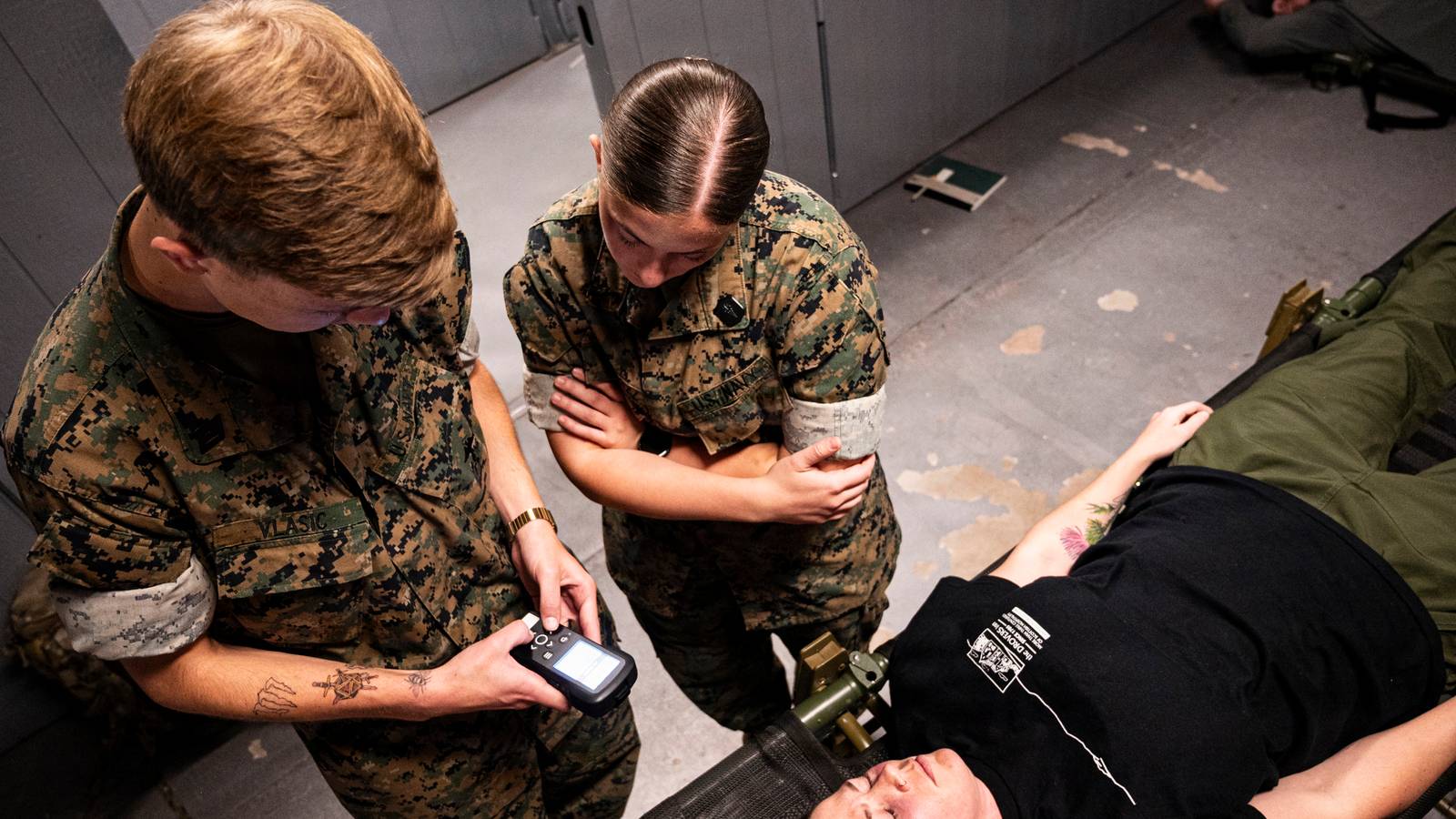
The importance of addressing TBI within the military community cannot be overstated. In light of this, the Army recently unveiled a significant breakthrough in TBI detection— the handheld diagnostic device, i-STAT Alinity. This innovative tool utilizes a blood sample to detect specific biomarkers released during brain injuries, capable of identifying neural damage in less than 15 minutes. Such advancements aim to streamline response times and improve treatment outcomes for veterans like Moszer who continue to navigate the complexities of their injuries.
In the years following his service, Moszer pursued further education, ultimately attaining a master’s degree. Now living on the Texas Coast, he dedicates his time to volunteering at a local food pantry, embodying a spirit of community service and commitment to giving back. “When I leave this earth, I’m just a small-town boy from North Dakota that made a positive impact on the world. I didn’t do it for recognition; I did it out of love for my country,” he reflected.
J.P. Moszer’s story serves as an essential reminder of the sacrifices made by veterans and the ongoing battles many face long after their service has ended. His resilience underscores the need for awareness, targeted support, and continued innovations in the detection and treatment of traumatic brain injuries.