
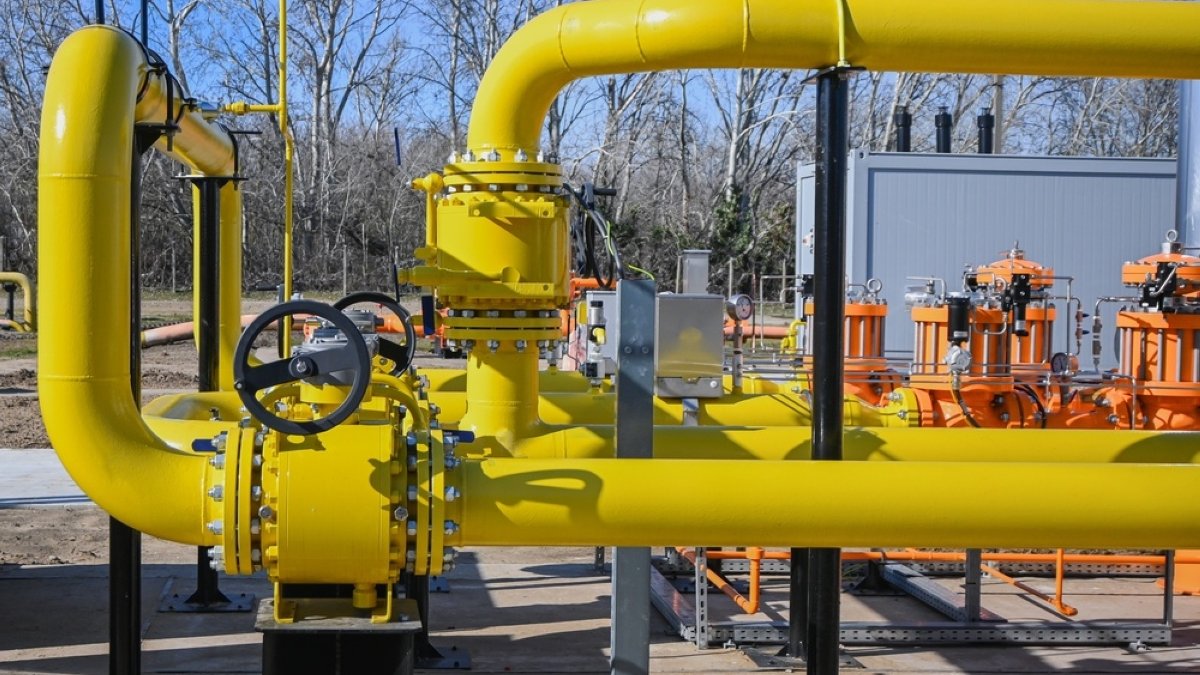
The development of a natural gas pipeline between Türkiye and the Turkish Republic of Northern Cyprus (TRNC) has the potential to transform energy dynamics in the Eastern Mediterranean. Analysts suggest that this initiative is not merely about energy security; it could also become a significant export conduit for gas, enhancing Türkiye’s status as a critical gas hub in the region.
Overview of the Pipeline Project
On July 10, Türkiye and the TRNC formalized their partnership with a memorandum of understanding (MoU) concerning natural gas supplies. Following this, Energy and Natural Resources Minister Alparslan Bayraktar confirmed that the construction of a subsea pipeline linking both territories had commenced. This pipeline will extend 101 kilometers (approximately 63 miles), including 97 kilometers offshore and 4 kilometers onshore, connecting Anamur on Türkiye’s Mediterranean shoreline with Teknecik in the TRNC.
The project will feature two 22-inch pipelines designed to allow gas to flow in both directions. This setup not only lets natural gas travel from Türkiye to the TRNC but also enables the possibility of transporting gas produced on the island back to Türkiye—and potentially on to Europe.
Analysts note that the envisioned capacity of the pipeline is likely to exceed the TRNC’s immediate gas needs. This suggests the possibility of broader regional trade in gas, thereby enhancing Türkiye’s role in the Eastern Mediterranean energy landscape.
Strategic Implications for Regional Gas Markets
Julian Bowden, a senior research fellow at the Oxford Institute for Energy Studies, emphasizes that the combined capacity of the proposed pipelines far surpasses what the TRNC is expected to require. He believes that the bi-directional nature of the lines indicates ambitions for exporting gas from Cyprus to Türkiye. However, Bowden warns that the project is still in its preliminary stages, with planning, construction, and commercial negotiations likely delaying its operational status until at least 2030.
The Eastern Mediterranean gas market, as Bowden articulates, currently relies heavily on the relationship between Israel and Egypt. Israel’s dependence on Egypt as its primary export destination complicates the situation. Due to a domestic supply shortfall, Egypt has shifted from being an LNG exporter to an importer, thus affecting the overall dynamics of the region’s gas trade.
If a pipeline to Türkiye is established, Bowden argues, it could significantly alter regional market conditions by providing more export possibilities for both Israel and Cyprus and potentially encouraging further exploration.
Barriers to a Regional Gas Corridor
Sohbet Karbuz, an expert on energy at the Mediterranean Organization for Energy and Climate, points out that while the route through the TRNC and Türkiye offers geographical advantages, political challenges remain a substantial obstacle. The unresolved Cyprus issue could hinder wider collaboration and the establishment of a regional gas corridor.
If stakeholders can find a common ground, it may open up avenues for more comprehensive gas transport systems connecting the Eastern Mediterranean to Europe. Karbuz underscores that exploration activities remain robust in the region, with ongoing licensing rounds and talks with international energy companies.
In the near term, the underlying market conditions will play a more crucial role than infrastructure in dictating gas flows in the region. Currently, Egypt’s supply deficiency positions it as the main purchaser of Eastern Mediterranean gas. All recent or ongoing export infrastructure developments are geared towards facilitating the flow of Israeli and southern Cyprus gas to Egypt, solidifying its status as a key player in the regional gas market until it can successfully address its domestic supply challenges.
In summary, while the planned pipeline between Türkiye and the TRNC holds promise for enhancing regional energy dynamics, its success will depend heavily on navigating political challenges and market conditions in the years to come.