
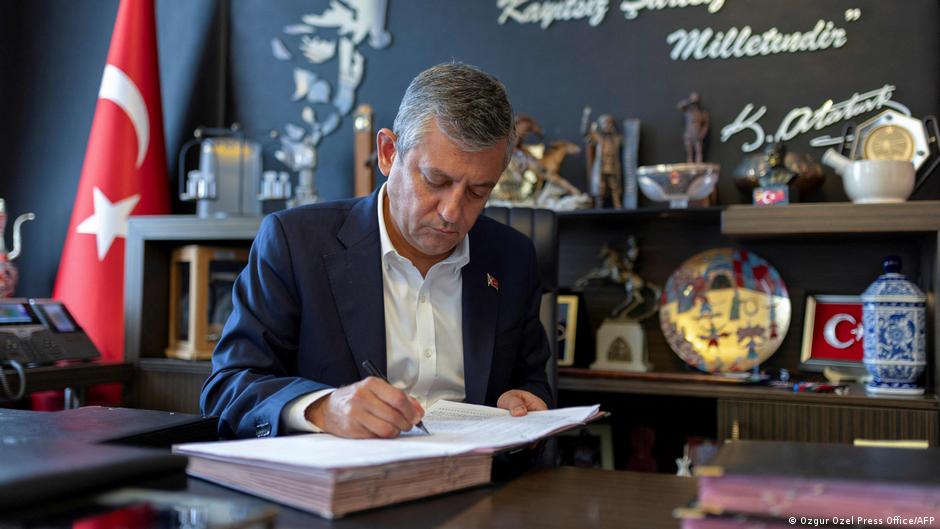
The political landscape in Turkey has witnessed a significant shift as the former leader of the opposition Republican People’s Party (CHP), Ozgur Ozel, recently announced the formation of a new political entity with the support of 90 fellow lawmakers. This development sets the stage for a new chapter in Turkey’s political dynamics, emphasizing the growing challenge to long-standing leadership.
The Emergence of the New Party
Ozgur Ozel’s new organization, aptly named the “New Party,” marks a crucial transition, positioning itself as the second-largest party in Turkey’s 600-seat parliament. It holds 91 seats, trailing only behind President Recep Tayyip Erdogan’s Justice and Development Party (AKP), which commands 277 seats. This shift diminishes the CHP’s standing, leaving it with only 44 lawmakers, making it the fourth largest party, surpassed by the pro-Kurdish Democratic Regions Party (DEM) which has 56 seats. Ozel has expressed his commitment to transforming his new party into the foremost opposition force in the Grand National Assembly.
Challenges Within the CHP
The formation of Ozel’s party stemmed from ongoing divisions within the CHP, known for its historical legacy as founded by Mustafa Kemal Ataturk in 1923. Ozel had previously won the party’s leadership election in 2023 and led the CHP to notable victories in municipal elections. However, internal conflicts reached a boiling point when Ozel faced legal challenges and was replaced by his rival following the annulment of the mayoral election in Istanbul, where he had positioned himself as a key figure against Erdogan’s influence.
Such turmoil has been exacerbated by ongoing legal issues involving prominent figures like Istanbul’s Mayor Ekrem Imamoglu, who has faced serious charges that many critics deem politically motivated. These developments have led to questions about the integrity of Turkey’s judicial system, with allegations of manipulation aimed at suppressing political opposition. Ozel’s new party emerges not just as an alternative political faction but as a response to what supporters characterize as a declining democratic environment.
Future Implications
The establishment of the New Party opens various possibilities for Turkey’s political future. Ozel has made it clear that he aims for the party to reclaim the trust of constituents disillusioned by the current governmental structure. His rhetoric emphasizes a commitment to unifying opposing voices in the face of what he perceives as an authoritarian regime. As frustrations about governance grow, the New Party may attract a base eager for change and reform.
Additionally, the growing political disruptions within the CHP may signify a larger trend of fragmentation among opposition groups in Turkey. This could lead to shifting alliances and new political strategies as rivals emerge from the shadows of traditional party politics.
In summary, Ozgur Ozel’s formation of the New Party marks a pivotal moment in Turkey’s political trajectory, challenging the established order and potentially reshaping the future landscape of governance in the country. As Turkey continues to grapple with its identity in the face of internal and external pressures, the developments regarding Ozel and the New Party will undoubtedly be closely monitored by analysts and citizens alike.