
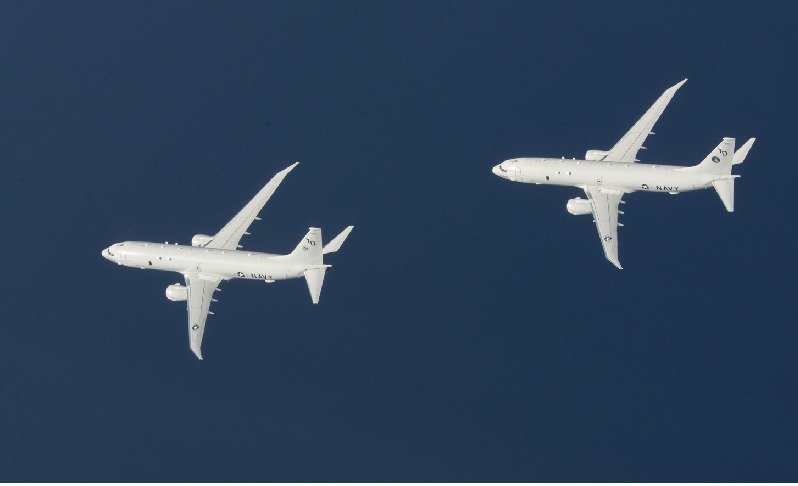
Israel is reportedly exploring the possibility of acquiring the U.S. P-8 Poseidon aircraft as regional naval threats continue to escalate, particularly concerning Turkey’s growing maritime capabilities. This development highlights Israel’s intention to enhance its defense capabilities amid evolving geopolitical tensions.
Israel’s Need for Enhanced Maritime Surveillance
The Israeli Defense Forces (IDF) have been looking into the procurement of maritime patrol and anti-submarine capabilities, primarily focusing on the P-8 Poseidon. According to the Jerusalem Post, this aircraft serves as a militarized version of the Boeing 737-800. It is designed for a variety of roles, including anti-submarine warfare, anti-surface warfare, and intelligence, surveillance, and reconnaissance (ISR) tasks. The addition of P-8 aircraft to Israel’s arsenal could optimize its operational reach in significant maritime areas, particularly given the aircraft’s specialized submarine-hunting technologies.
IDF officials indicate that they currently possess robust anti-submarine warfare capabilities, mainly supported by an advanced strategic intelligence platform known as Oron. This aircraft enables coordination across various branches, including the Air Force and Navy. However, the unique features and long-range endurance of the P-8 would provide Israel with a dedicated tool for overseeing large maritime zones, especially as Turkey expands its naval presence in the Eastern Mediterranean.
Budget Constraints and Operational Costs
Despite the strategic advantages that the P-8 could offer, the IDF is facing significant budgetary restrictions. Acquiring even a small fleet of these aircraft would come at a steep price, with estimates of approximately $328.5 million per unit. The IDF must weigh the associated costs against the already constrained defense budget, making such acquisitions a complex decision. Furthermore, it is believed that any potential purchase would likely require integration into a larger diplomatic or strategic agreement with the United States, underscoring the intricate web of international relations affecting this procurement.
Israel remains vigilant regarding Turkey’s military capabilities, especially its robust navy. With over ten modern diesel-electric submarines and plans to expand its fleet with air-independent propulsion technology, Turkey poses a serious maritime challenge. Reports indicate that Turkey’s naval capabilities have been enhanced through both domestic developments and foreign acquisitions, expanding its footprint in the region. This evolving military landscape further complicates Israel’s security considerations.
The Strategic Role of the P-8 Poseidon
The P-8 Poseidon is not just an advanced surveillance platform; it is a multi-role maritime aircraft that excels in various operational capacities. Equipped with cutting-edge radar systems, sophisticated sensors, and electronic warfare capabilities, the P-8 is designed for long-range missions. Its maximum range of approximately 7,500 kilometers and endurance of up to 10 hours allow it to conduct extended patrols, making it a valuable asset for monitoring strategic maritime chokepoints in the Eastern Mediterranean.
This aircraft’s advanced detection systems include a long-range X-band radar, which provides significant surveillance capabilities over vast distances. The platform can track potential threats, providing enhanced situational awareness. Additionally, the P-8 carries a magnetic anomaly detector and has the ability to deploy numerous sonobuoys, crucial for tracking Turkey’s increasingly quiet submarines.
Moreover, the P-8’s advanced weaponry capabilities, such as precision-guided missiles and torpedoes, enable it to engage threats effectively. Its networked sensor platform allows for real-time data sharing with Israeli naval forces, enhancing teamwork among different military branches and enabling quicker, coordinated responses to potential threats.
While Israel continues to grapple with significant strategic challenges, the potential acquisition of the P-8 Poseidon could serve as a critical component in reassuring its maritime security and influencing the balance of power in the Eastern Mediterranean. As tensions with Turkey continue to rise, the P-8 would not only function as an operational asset but would also act as a strategic deterrent, bolstering Israel’s defense posture in a rapidly evolving maritime landscape.