
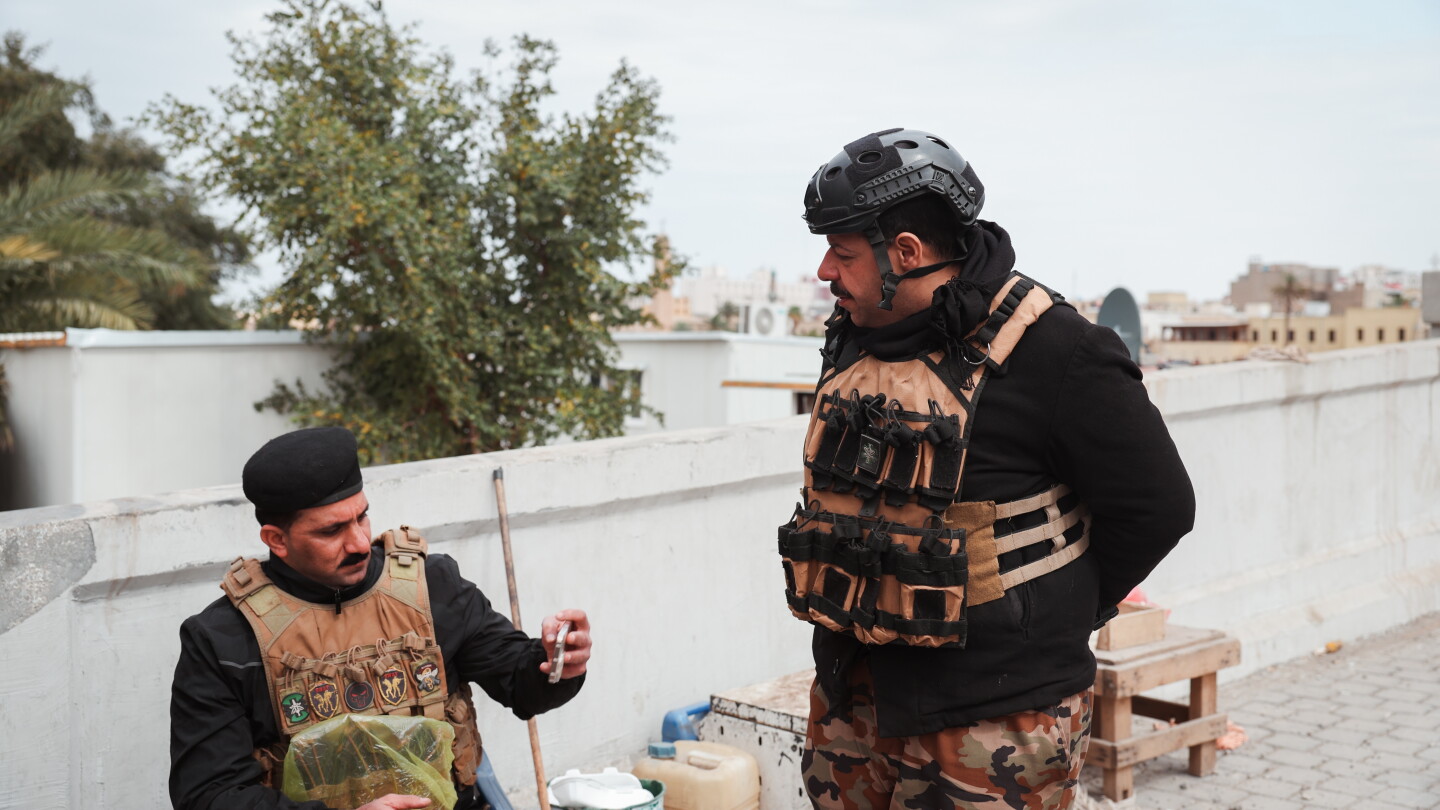
Tehran’s most profound influence in Iraq is rooted not in its militia networks, but in its infiltration of Iraq’s security institutions. As personnel aligned with Tehran consolidate their positions within these state military and security frameworks, the Iranian influence transitions from entities that Washington can sanction or Baghdad can dismantle into legitimate state institutions with governmental authority, resources, and international recognition. If the United States does not prioritize the removal of Iranian loyalists embedded in Iraq’s security apparatus, any initiatives aimed solely at disarming militias will inadvertently preserve Tehran’s critical strategic advantages.
### The Maksusi Family’s Role in Iranian Influence
The trajectory of the Maksusi family exemplifies how Iranian power flourishes through institutional continuity rather than individual appointments. Recent intelligence leaks have unveiled that Hatem Al-Maksusi, formerly the head of Military Intelligence, offered Iraqi intelligence capabilities—including U.S.-supplied systems—to Tehran. His nephew, Zaid Al-Maksusi, transitioned from deputy to director of Military Intelligence and subsequently stepped into a key role at the Counter-Terrorism Service. Meanwhile, Hatem’s son, Ali, gained parliamentary entry through the Arak Party, which is led by militia head Muhammad al-Bawi. This interconnectedness underscores a broader trend: Iranian influence in Iraq functions through a web of security, political, and militia networks that reinforce each other, creating an institutional resilience that can outlast governmental changes.
### The Impact of Institutional Capture
The findings reveal a deeply entrenched mechanism: under leaders like Saad Al-Allaq, who once directed Military Intelligence, key intelligence on Iran-backed militias was deleted, obscuring the presence of U.S.-sanctioned figures like Rayan al-Kildani. Following in these footsteps, Zaid Al-Maksusi has initiated the erasure of records related to Muhammad al-Bawi from Military Intelligence archives. Such record purging creates an environment where militia leaders can claim a lack of official misconduct, facilitating a scenario where Iraqi authorities deny possessing incriminating information, consequently stifling the need for criminal investigations or compliance with U.S. sanctions.
Since 2020, the narrative has shifted as Iraqi Military Intelligence has increasingly overlooked attacks attributed to Iran-backed militias, even as individuals affiliated with groups such as Kataib Hezbollah have infiltrated the agency. This has resulted in a situation where Military Intelligence has transformed from a defensive entity aimed at countering threats into one that suppresses investigations, undermining its original purpose.
### The Consequences of Compromised Institutions
The most acute manifestation of this institutional takeover is evident in the Counter-Terrorism Service, which was once insulated from Iranian sway due to robust U.S. support. However, Prime Minister Mohammad Al-Sudani’s dismantling of this independence culminated in Zaid Al-Maksusi’s appointment to a key leadership role within the service. This shift has effectively allowed a family network with connections to the Khomeinist establishment to extend its influence into Iraq’s elite anti-terror unit, further compromising its integrity.
Such comprehensive infiltration enables Iran-backed groups to execute operations under the veneer of official Iraqi state structures. For example, the 2015 abduction of Qatari individuals in Iraq was conducted using the resources and logistics of the Iraqi Ministry of Interior, with officials directly involved in Iran’s strategic objectives.
### A Strategic Miscalculation
For U.S. policymakers, treating Iraq’s military and security frameworks as independent allies without demanding a significant purge of leadership poses a strategic miscalculation. A narrow focus on disarming militias risks emboldening Iran, allowing the regime to cede less politically favorable factions while still holding substantial power. Washington must recognize the extent to which Iranian interests have commandeered its substantial investments in Iraqi security and intelligence capabilities.
In conclusion, the removal of Iranian loyalists from Iraq’s security institutions is not merely a supplementary reform; it stands as a vital prerequisite for reclaiming Iraq’s sovereignty and fortifying U.S. interests in the region. Absent this critical intervention, Tehran’s most significant accomplishment in Iraq will not be the preservation of its militias, but their metamorphosis into the state apparatus itself.