
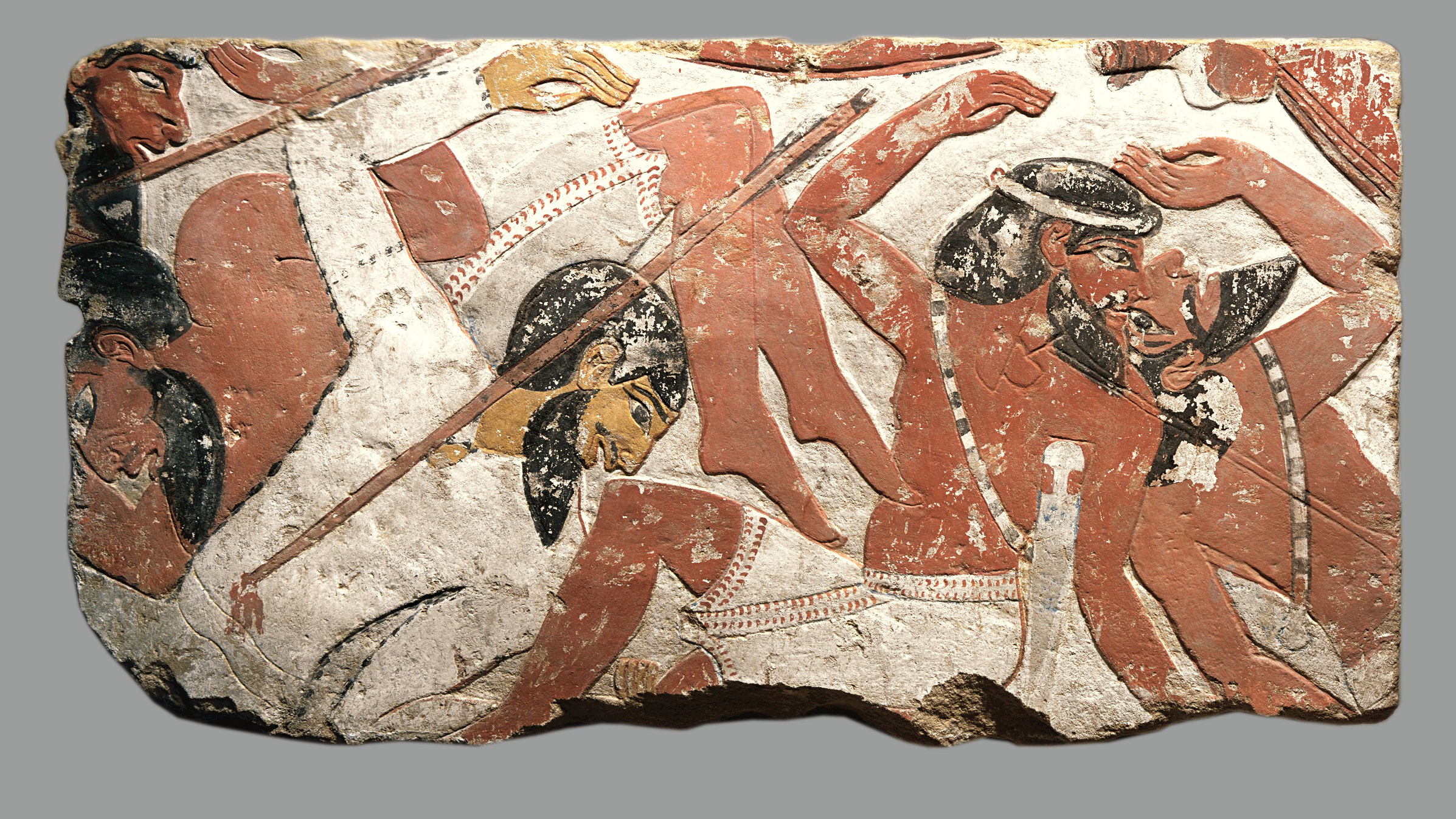
The fascinating world of ancient artifacts holds countless insights into past civilizations. One such remarkable piece is a relief fragment known as “Relief fragment with vanquished enemies,” originating from Luxor, Egypt. This beautifully crafted artwork, made from painted sandstone, dates back to approximately 1427 to 1400 B.C. and reflects not only the artistic prowess of the time but also the historical context surrounding its creation.
Historical Significance
This relief, attributed to the era of Pharaoh Amenhotep II during Egypt’s 18th dynasty, showcases a striking battle scene, portraying the pharaoh in a victorious stance as he vanquishes his foes. Interestingly, when the artifact was unearthed in 1912 by notable Egyptologist Herbert E. Winlock, it was found incorporated into the foundation of the still unfinished mortuary temple of Ramesses IV, who ruled in the 20th dynasty. This practice of reusing materials exemplifies how the ancient Egyptians regarded their artistic legacies.
Artistic Features
Measuring around 24 by 45 inches (61 by 115 centimeters), this painted sandstone slab likely formed part of a larger tableau of the pharaoh defeating enemy forces. According to Catharine Roehrig, former curator of Egyptian art at the Metropolitan Museum of Art, where the artifact is housed, the relief showcases dynamic components, including the chariot and horses of the pharaoh in the upper right corner, while a rival soldier desperately tries to evade being trampled. Notably, three enemies are depicted with arrows piercing them, adding a sense of drama to the piece.
Contextual Interpretation
The distinct beards and traditional garments observed on the figures suggest these vanquished foes were likely ancient Syrians or possibly the Hyksos, a Semitic-speaking dynasty ruling Egypt from 1640 to 1530 B.C. The intricate details may reflect real historical conflicts between Amenhotep II’s dynasty and Asian rulers. However, it’s essential to note that this relief was not intended as a specific tribute to any single historical clash but rather as a representation of the pharaoh’s role as the triumphant guardian of Egypt.
Preservation and Legacy
The remarkable state of preservation and the vivid colors of the relief can be attributed to its repurposing within Ramesses IV’s temple construction, as noted by Roehrig. This re-integration not only safeguarded the artifact but also provided a glimpse into the creative legacy of ancient Egyptian artistry. Such works continue to be invaluable sources of information, enhancing our understanding of the cultural and political narratives from Egypt’s storied past.
Through examining significant relics like this relief, we not only appreciate the artistry involved but also gain insight into the sociopolitical dynamics of ancient Egypt. With each discovery, our understanding of this ancient civilization deepens, reaffirming the importance of archeological endeavors in uncovering the human story woven through time.