
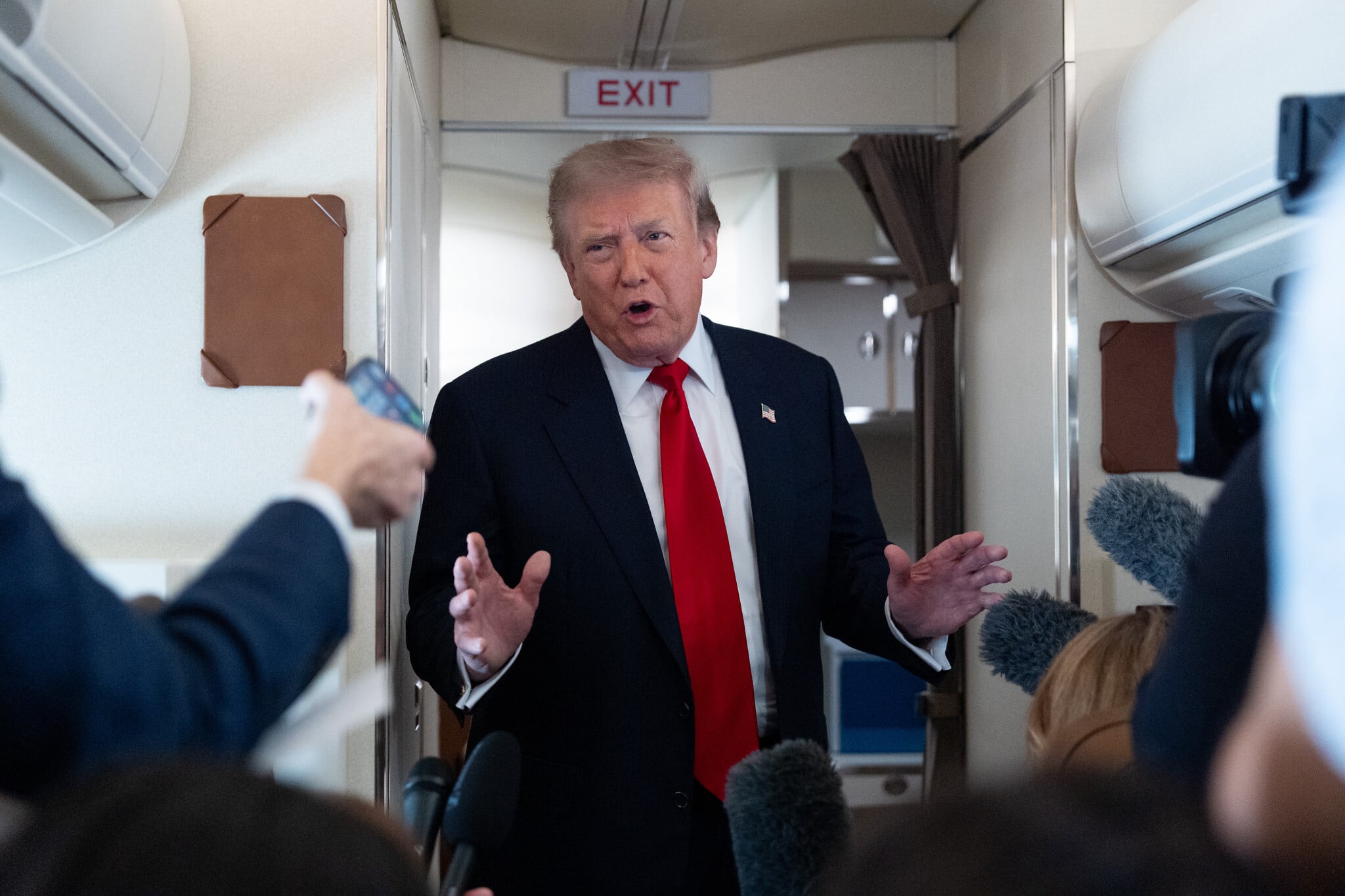
On Monday, President Donald Trump responded to Israeli Prime Minister Benjamin Netanyahu’s concerns about the sale of F-35 fighter jets to Turkey, praising the nation as a valuable ally. This statement came just a day before Trump and Netanyahu were scheduled to meet at the White House.
Trump’s Stance on Turkey
While speaking to reporters aboard Air Force One, Trump stated, “Nobody tells me what we should be selling,” asserting his favorable stance toward Turkey, especially under President Recep Tayyip Erdogan’s leadership. Despite ongoing tensions between Turkey and Israel, particularly following the conflict in Gaza sparked by an attack from Hamas on October 7, 2023, Trump emphasized Turkey’s importance, remarking, “Turkey has been a tremendous ally for me.”
Netanyahu, on the other hand, has recently characterized Turkey as a regional adversary. In a Fox News interview, he aggressively criticized Turkey’s alignment with the Muslim Brotherhood, labeling it an extreme group that opposes the United States. He emphasized his opposition to any sale of F-35 jets or components to Turkey, reflecting the fraying diplomatic ties between the two nations.
Ongoing Diplomatic Concerns
Trump acknowledged the complexities of the relationship, noting that while Turkey may not be particularly fond of Israel or Netanyahu, it has been beneficial for his diplomatic efforts. He hailed Turkey as a “very powerful country” with an impressive military, indicating a preference for maintaining strong ties with Ankara. This perspective reveals a nuanced approach to foreign relations, prioritizing personal rapport over traditional alliances.
However, the proposed F-35 sale faces hurdles that extend beyond diplomatic niceties. The U.S. State Department has communicated to Congress that Turkey currently does not meet the requirements for purchasing F-35s. This added layer of complexity stems from Turkey’s earlier involvement in a multinational F-35 program, from which it was removed in 2020 due to its acquisition of Russian S-400 air defense systems. This development has led to sanctions imposed on Turkey under U.S. law.
Legal Implications and Future Considerations
Although Trump previously suggested a potential F-35 sale might be approved, the State Department’s recent disclosures indicate that Turkey has yet to comply with necessary conditions, including the cessation of the S-400 system usage. A letter from the State Department clarified that Turkey must eliminate any possession of S-400 systems, provide guarantees against future acquisitions, and meet additional statutory certification requirements before the situation can change.
Despite these barriers, the letter did not entirely close the door on the possibility of Turkey eventually qualifying to purchase F-35s, highlighting that discussions regarding foreign military sales often involve layers of legal and diplomatic intricacies. The evolving dynamics between Israel, Turkey, and the U.S. will continue to be pivotal as diplomatic negotiations unfold in the coming months. The implications of these relationships carry significant weight, not only for regional stability but also for global geopolitical strategy.