
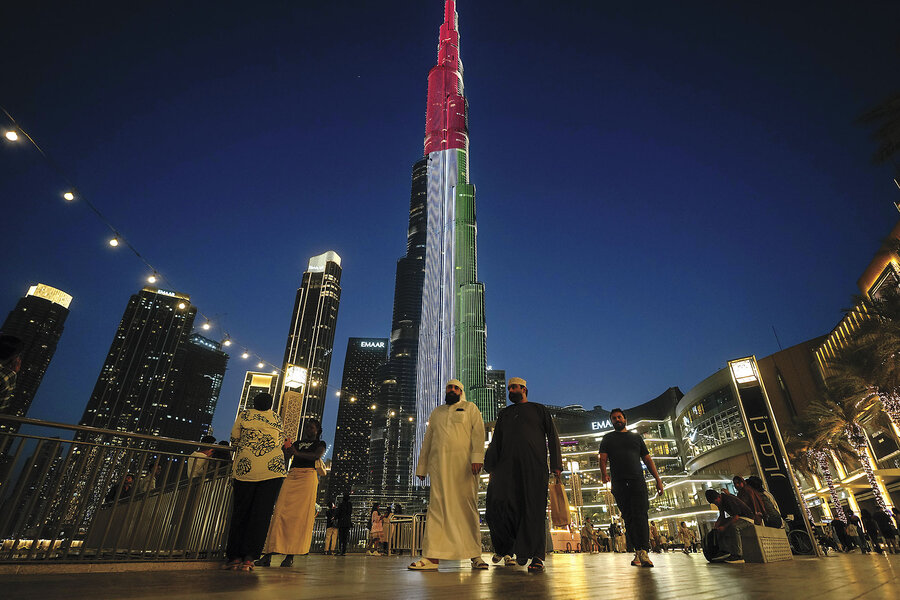
The recent attacks involving ballistic missiles and drones launched by Iran against the United Arab Emirates (UAE) have shattered the long-standing image of the country as a fortress of safety. Despite these challenges, the resilience of the UAE’s people is shining through, with many exhibiting renewed confidence and a sense of pride in their homeland.
Resilience in the Face of Adversity
The ongoing conflict has prompted a significant shift in perspective among foreign residents and Emiratis alike. While the threat from Iran has been palpable, many now claim a deeper connection to the UAE. Mohammed Al Omar, a Jordanian expatriate, articulates this sentiment, stating, “The UAE feels like our country now.” He emphasizes that the government’s diligent efforts to safeguard residents during the crisis have galvanized a newfound appreciation among its diverse population.
Tourism, which seemed precarious, is beginning to recover as visitors from Asia and Europe start to return. Popular cafés and shopping malls are once again bustling with activity. Many of the 11.5 million residents—90% of whom are expatriates—express how the shared experience of navigating these trying times has formed a collective bond.
A Model of Defense and Unity
The UAE’s strategic investments in military capabilities over the last two decades have paid significant dividends during this conflict. Despite the barrage of nearly 3,000 Iranian drones and missiles aimed at the UAE, local air defense systems, bolstered by American, South Korean, and Israeli technology, successfully neutralized 97% of the threats, as reported by local authorities. This success has not only reinforced confidence in the state’s ability to protect its people but also enhanced national pride among its residents.
Moreover, the UAE’s commitment to forging strong diplomatic ties, particularly with the United States, has solidified its position. Leaders encourage a model of economic growth intertwined with security alliances. This approach has garnered admiration from residents, with large national flags often displayed in homes and public spaces, serving as symbols of unity during turbulent times.
Cultural Resurgence and National Identity
Despite the ongoing challenges, the sense of community has strengthened. Katherine, a British finance professional who wishes to remain anonymous, captures this sentiment perfectly: “Emiratis and foreigners experienced this crisis together. It deepened our sense of belonging.” Indeed, the conflict has acted as a catalyst for shared resilience, with many residents feeling a renewed attachment to the country they call home.
Analysts assert that the war has not only tested the UAE’s national identity but has also revealed its maturation. As political tensions loom, the UAE remains committed to leveraging its cultural diversity and inclusivity as foundational pillars of its society. The government’s initiatives to promote Emirati customs and Arabic language, coupled with its openness to foreign influences, have enabled a strong national identity predicated on shared values rather than lineage.
A Path Forward
The road to recovery, while promising, remains fraught with obstacles. Current occupancy in hotels hovers around 50%, and the service sector faces challenges due to previous layoffs and relocations. Furthermore, shipping traffic through the Strait of Hormuz remains alarmingly low, at less than 3% of pre-conflict levels.
Political relations with Iran and neighboring countries continue to strain, and while challenges persist, the UAE’s steadfast commitment to its national identity offers hope for a brighter future. The recent conflict may have tested the nation’s resolve, but it has also illuminated its journey toward a more mature sense of self, one that is adaptable, resilient, and united.