
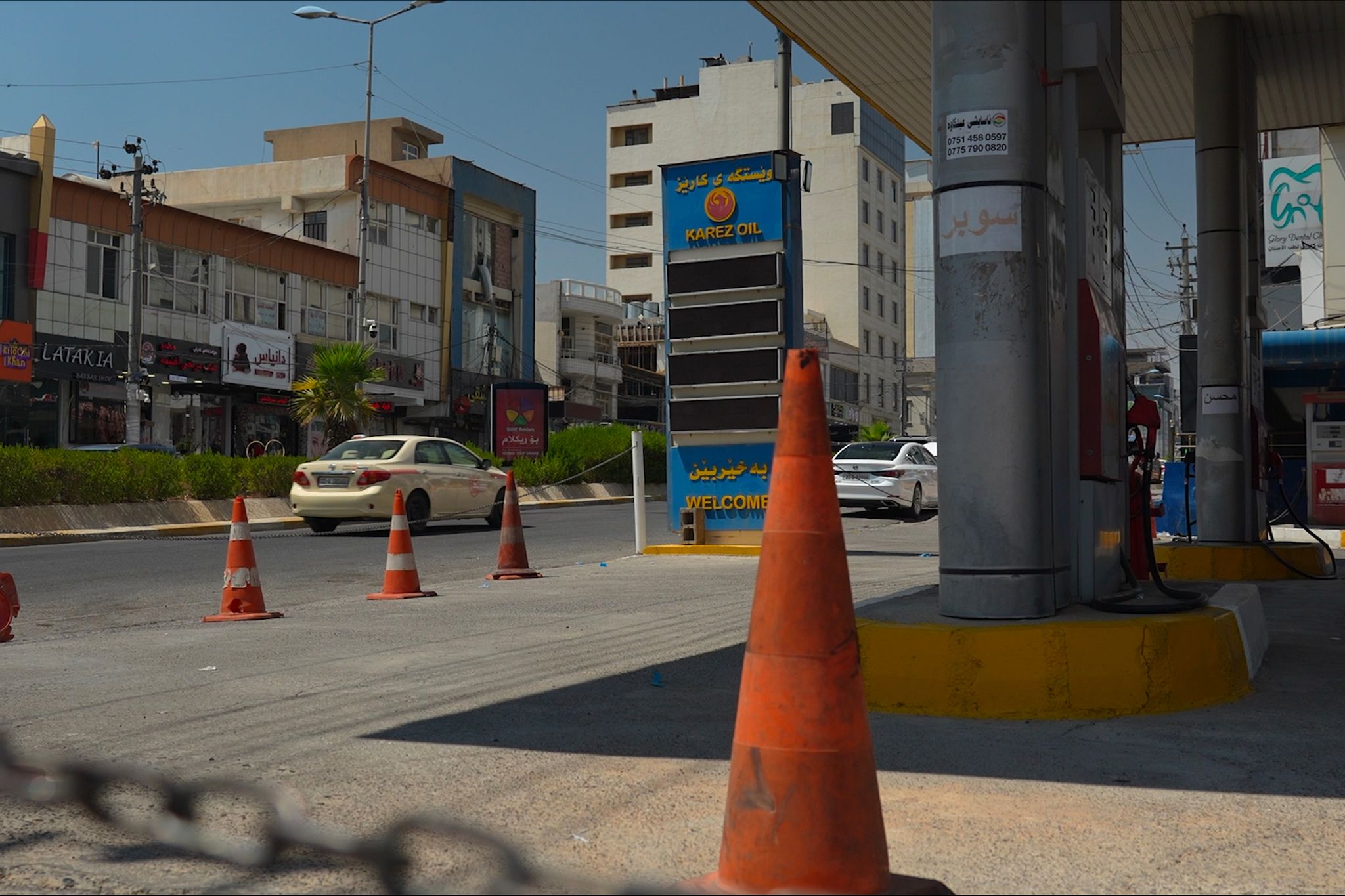
In recent days, a fuel crisis has gripped Irbil, the capital of Iraq’s northern Kurdish region, leaving drivers waiting for hours—and, in some cases, overnight—to fill their tanks. This shortage is significantly impacting daily life in the city as private gas stations remain mostly closed, with only a few government-run stations operating. The situation has sparked frustration among residents, who find themselves in long queues desperate for fuel.
The Impact of Security Threats on Fuel Supplies
The fuel shortage can be attributed to several factors, primarily security concerns affecting oil production. Recent conflicts, particularly those involving Iranian-backed militia groups, have disrupted operations at key facilities. The Dana Gas company, which plays a critical role in the region’s energy sector, has had to reduce its output from the Khor Mor gas field due to these threats, including drone attacks. Kurdish regional government officials, including Prime Minister Masrour Barzani, have stressed that ongoing violence is severely hampering fuel distribution.
Long Waits and Rising Temperatures
As the summer heat intensifies, the struggle for fuel becomes even more challenging. Early on Tuesday morning, residents began lining up at gas stations, often waiting in sweltering temperatures that soared above 45 degrees Celsius (113 degrees Fahrenheit). Many drivers are rationing their remaining fuel, choosing to forgo air conditioning as they wait in line. The situation has led to occasional tensions as impatient motorists abandon orderly queues, further complicating an already difficult scenario.
Government Response to the Crisis
In light of the ongoing fuel shortages, Prime Minister Barzani has called on the central government in Baghdad to increase crude oil allocations for the Kurdish region. Currently, the allocation stands at 50,000 barrels per day, a figure he has proposed increasing to approximately 126,700 barrels to help alleviate the crisis. Despite these efforts, many residents remain skeptical about immediate relief and the effectiveness of these measures.
A Country Rich in Oil Yet Facing Shortages
The irony of a country rich in oil grappling with fuel shortages is not lost on residents. Iraq, which relies on oil revenues for about 90% of its budget, finds itself in a precarious position. Not only are locals facing higher gas prices, but many are struggling to find available supplies altogether. As fuel lines form outside the few stations still in operation, the frustrations continue to mount. Motorists often express disbelief that even with abundant natural resources, they are forced to confront such challenges.
The situation in Irbil highlights broader issues related to security, governance, and resource management in Iraq. With mediators attempting to broker peace and initiate negotiations between the U.S. and Iran, the hope for a resolution remains fragile. For residents of this bustling city, the struggle for fuel serves as a painful reminder of the complexities that continue to affect daily life in a region rich in resources yet fraught with conflict.