
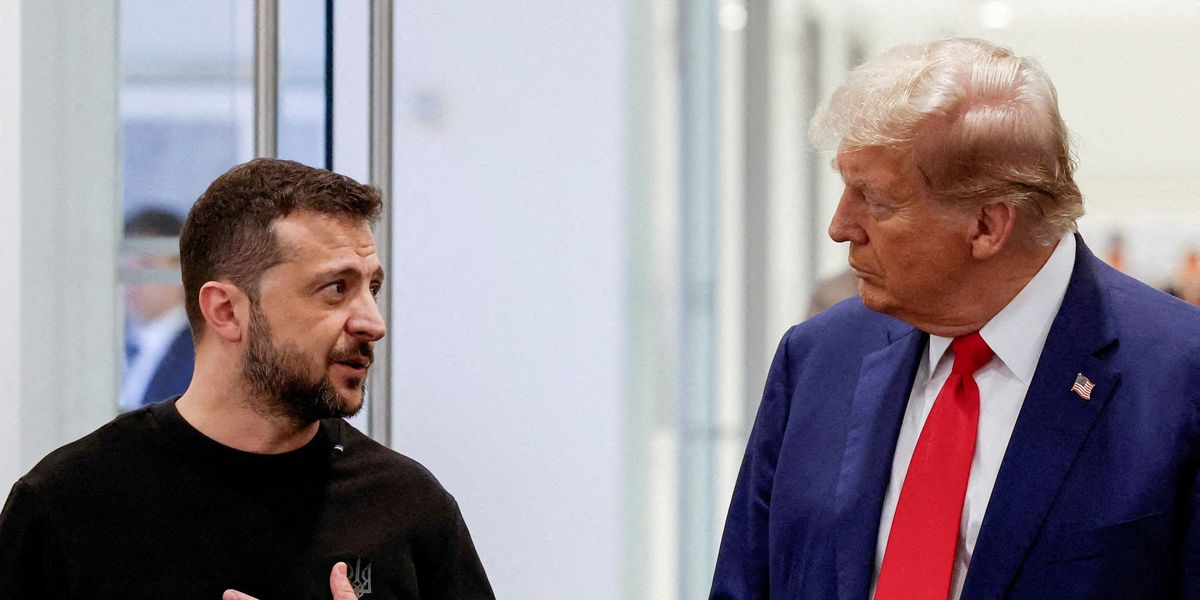
Ukrainian President Volodymyr Zelensky made a significant entrance in Washington on Tuesday, shortly after Ukraine executed a missile strike on an Iranian cargo ship in the Caspian Sea. This bold military action appears to be part of Zelensky’s strategy to strengthen ties with President Donald Trump, who has historically had a complicated relationship with the Ukrainian leader.
Ukraine’s Strategic Positioning
Zelensky’s approach appears to be centered around showcasing Ukraine as an essential ally capable of taking decisive action when necessary. George Beebe from the Quincy Institute remarked that Zelensky’s main aim is to persuade Trump to view Ukraine as a valuable partner akin to Israel in Eastern Europe. The narrative is that Ukraine can actively counter Russian aggression, stem expansionism, and bolster the defenses of Europe and NATO. Moreover, Kyiv seeks to demonstrate to Trump that it offers more than America’s traditional NATO allies, whom Trump has criticized for their perceived lack of support in his confrontations with Iran.
A Shift in Perspective
Recent developments indicate that Zelensky’s overtures may be resonating on the political right. Pro-Israel activist Laura Loomer, previously a vocal critic of Ukraine, recently shifted her stance, particularly concerning the relationship between Russia and Iran. After meeting with Zelensky, she expressed intentions to advocate to Trump for increased support to Ukraine. Loomer highlighted the fact that Iranian forces utilize Russian weaponry to target American soldiers, emphasizing a connection that might compel Trump to reassess his stance.
Trump’s reaction to these claims, however, has been cautious. He expressed skepticism about the alleged intelligence collaboration between Russia and Iran, hinting that he would seek clarification from Russian President Vladimir Putin. This skepticism reflects a broader concern that Ukraine’s assertions may not present a complete picture of the geopolitical landscape.
The Risk of Escalation
While Zelensky strives to elevate Ukraine’s priority on Trump’s agenda, one emerging risk is the potential for broader entanglement in ongoing conflicts. The interwoven nature of the wars in Ukraine and the Middle East raises alarms about the U.S. inadvertently stepping into a larger conflict that stretches from Eastern Europe to the Middle East. Beebe emphasizes that U.S. officials should directly engage with their Russian counterparts to prevent unnecessary escalation. He advocates for Trump to take Putin up on his offer to mediate a peace deal between Iran and the United States, suggesting that this could pave the way for resolutions in both regions.
Zelensky’s maneuvers appear to be designed to secure advanced military technology from the U.S. to strengthen Ukraine’s defense against Russian incursions. However, this strategy risks redirecting American focus away from potential diplomatic solutions, which could have long-term implications for both the U.S. and Ukraine in their respective conflicts.
In conclusion, while Zelensky is intent on solidifying Ukraine’s place in American foreign policy, the overlapping crises could lead to unanticipated outcomes. The complexities of these international relationships underscore the importance of thoughtful diplomacy in navigating these turbulent waters. Only through careful negotiations and cooperation can the threats posed by global adversaries be effectively addressed while maintaining peace in both Eastern Europe and the Middle East.