
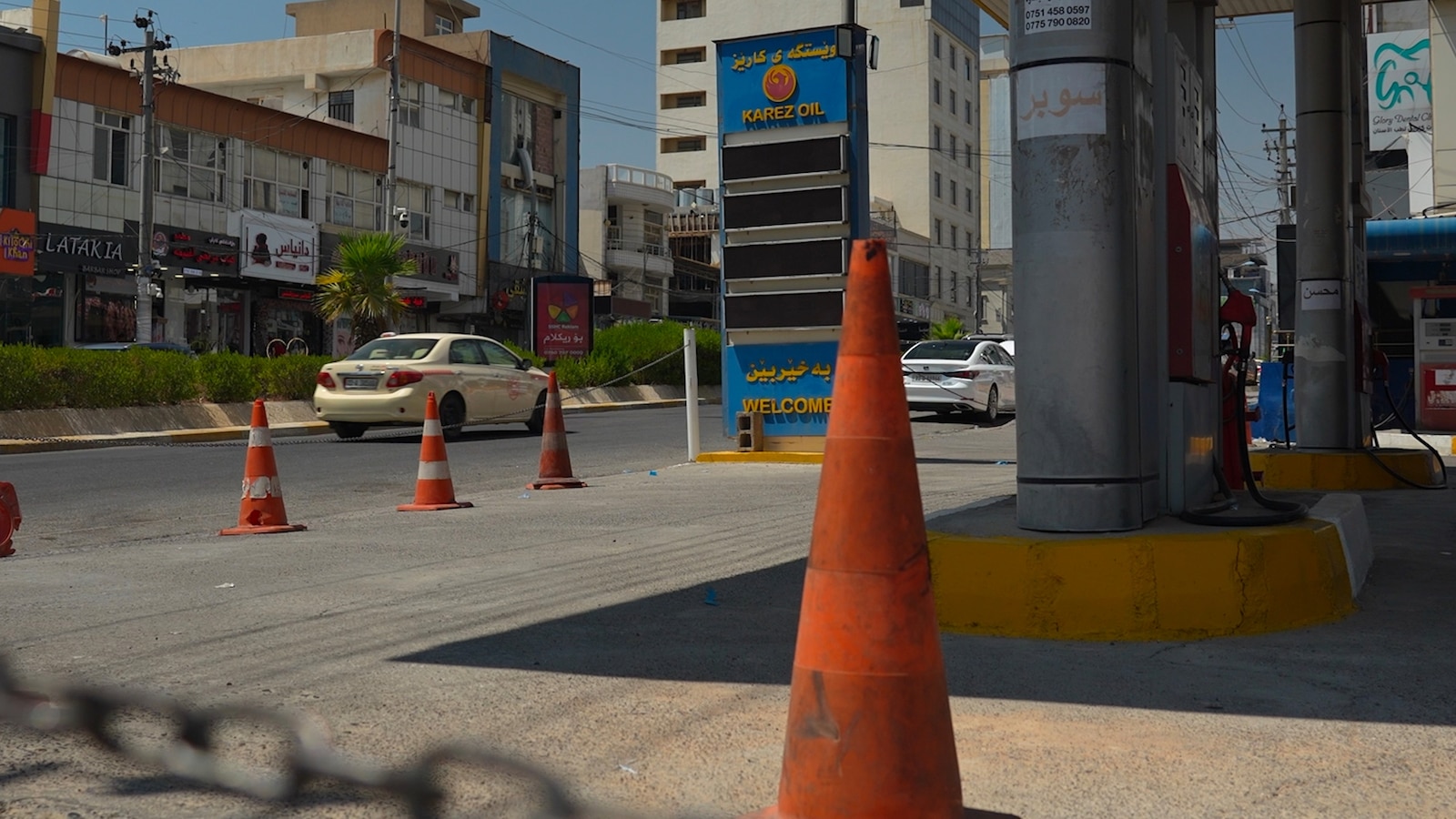
Drivers in the northern Kurdish region of Iraq have faced severe fuel shortages in recent days, leading to extensive lines and frustration. This crisis has left many finding it increasingly challenging to fill their tanks, with some queuing for hours or even overnight.
Fuel Stations Shuttered Amid Crisis
During a recent Tuesday, most private gas stations in Irbil closed, leaving only a handful of government-run facilities operational. As a consequence, many drivers found themselves waiting in long lines, with vehicles often stretching far beyond the visibility of the pumps. This situation has prompted drivers to ration their remaining fuel, opting not to use air conditioning despite the scorching summer heat, which reached temperatures above 45 degrees Celsius (113 degrees Fahrenheit).
Compounding the crisis, security concerns stemming from conflict in neighboring Iran have hindered fuel production in the region. The Dana Gas company, which is the largest in northern Iraq, has reduced its output at the Khor Mor gas field due to these threats, which include drone attacks on facilities. Kurdish Prime Minister Masrour Barzani addressed these issues in a recent press conference, expressing concerns about the impact of ongoing violence on fuel availability.
Contributing Factors of the Fuel Shortages
Various armed groups, including Iranian-backed militias, have engaged in numerous drone strikes targeting U.S. interests in Iraq. In response, the U.S. has conducted strikes against militia bases in an attempt to protect its personnel. Simultaneously, Kurdish opposition factions have also been involved in armed resistance against Iranian authorities, further complicating the security landscape. The ongoing conflict has prompted northern Iraqi officials to attribute the recent fuel shortages directly to the broader geopolitical tensions.
As temperature and frustrations rise, drivers like Twana Mohammed, an educator, have voiced their exasperation. After multiple nights of searching for fuel, he struggled to get to a gas station. “It will be good if it makes it to the gas station,” he remarked, highlighting the urgency of the situation as many vehicles ran dangerously low on fuel.
Proposed Solutions and Impacts on Daily Life
In response to the growing fuel scarcity, Barzani has called on the central Iraqi government in Baghdad to increase the Kurdish region’s daily crude oil quota from 50,000 to approximately 126,700 barrels. The aim is to replenish supplies and stabilize prices, which many residents feel have spiraled out of control. The existing allocations have led to limited sales at operational stations, where attendants report being overwhelmed by the demand. For instance, one station could only serve a limited number of vehicles with its available fuel supply while adhering to a strict policy of allowing each household only one fill-up twice a week.
This fuel crisis has significantly hindered local economies, with people losing valuable working hours while standing in line. Abdullah Hamad, a local car dealer, shared his experience, noting that the time spent waiting was impacting productivity across various sectors. The irony of a country rich in oil resources facing fuel shortages was not lost on drivers, who expressed anger at the inexplicable lines they endured daily.
Overall, the situation in northern Iraq highlights the complex interplay of security, resource allocation, and economic challenges, exacerbated by external conflicts. As mediators work towards resuming negotiations between the U.S. and Iran, many hope for a peaceful resolution that will alleviate these daily struggles and restore access to essential resources like fuel.