
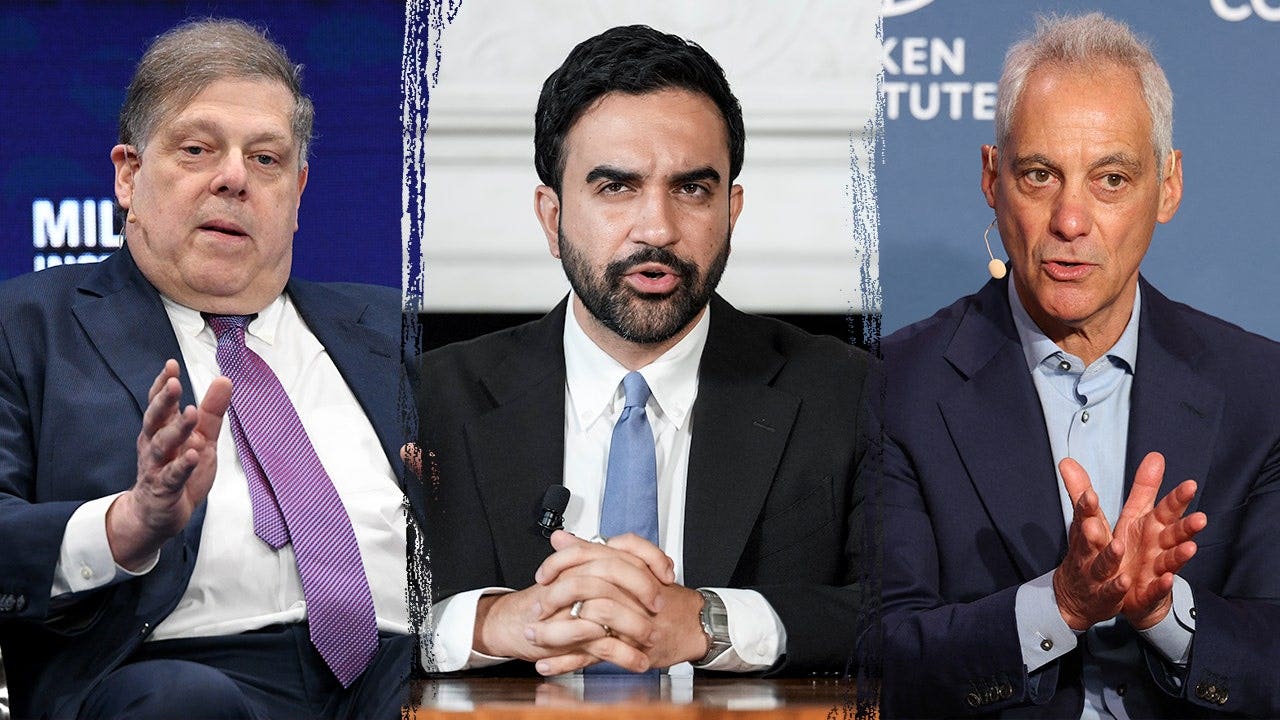
Two influential Democratic figures, Mark Penn and Rahm Emanuel, have recently voiced their dissent against New York City Mayor Zohran Mamdani. This has sparked significant discussions, particularly considering the deep political connections these individuals have within the Democratic Party and their previous roles in the Clinton and Obama administrations. Their criticisms are directed at Mamdani’s proposed property tax plan and his contentious stances on Israel, presenting a multifaceted examination of his political strategies.
Critique of the Property Tax Proposal
Mark Penn, a veteran Democratic strategist and former advisor to President Bill Clinton, has taken a firm stance against Mamdani’s proposed pied-à-terre tax. This tax primarily targets luxury property owners who own secondary homes in New York City. Penn argues that the Mayor has drastically underestimated the potential impact of this tax. After analyzing Mamdani’s recent public database identifying relevant property owners, Penn concluded that nearly one million property owners could be affected, rather than the estimated 30,000 luxury homeowners initially mentioned by the Mayor. He contends that the tax could lead to a decline in property values and discourage future investments in the city.
In a detailed social media post, Penn referred to the “fake” valuation figures used to justify the proposed tax. He pointed out the flaws in the city’s valuation system, which he believes could unjustly classify many properties, thus forcing homeowners to prove their exemption from taxation. The implications of such a policy raise questions about its logistical feasibility and potential constitutional challenges, making it a significant talking point in the ongoing electoral climate.
Concerns Regarding Israel and International Relations
In addition to the property tax debate, Rahm Emanuel, former White House Chief of Staff under President Obama, has expressed his concerns over Mamdani’s position on Israel. Emanuel recounted a private meeting with Mamdani, during which he emphasized the need for a clear delineation regarding the Israel-Palestine conflict. Emanuel criticized Mamdani’s use of the slogan “from the river to the sea,” arguing that such language perpetuates conflict rather than fostering peace. He noted that while he supports some aspects of Mamdani’s domestic policy, such as childcare initiatives, the Mayor’s rhetoric on international issues remains problematic.
Emanuel’s remarks highlight the growing divide within the Democratic Party concerning foreign policy, particularly regarding Israel. As progressive voices gain more prominence, the party’s traditional stances are being challenged, leading to questions about party unity and strategy for upcoming elections.
The Response and Political Implications
As these critiques unfolded, communications director Anna Bahr responded to Emanuel’s comments, disputing his characterization of their discussion. This adds a layer of complexity to the narrative, as it raises questions about the nature of Mamdani’s approach and whether his views align with mainstream Democratic values. Emanuel’s criticism of the Democratic Socialists of America (DSA) further underscores the tensions within the party, as he stresses the importance of focusing on winning elections rather than engaging in ideological divisions.
These exchanges illustrate the challenges Mamdani faces as he seeks to navigate his ambitious agenda amidst scrutiny from established party members. The clash of perspectives signals that as the 2026 elections approach, issues surrounding taxation, foreign policy, and party identity will continue to dominate the discourse.
In sum, the criticism from influential Democrats Mark Penn and Rahm Emanuel brings to light critical issues within Mayor Mamdani’s administration. The ongoing debate regarding property taxation and foreign policy stances may significantly influence the political landscape in New York City as well as the broader Democratic Party. The reactions from key party figures suggest an urgent need to reconcile progressive initiatives with traditional values, setting the stage for a potentially transformative electoral season.