
Violence Escalates in the West Bank: Settler Attacks Intensify Amid Clashes
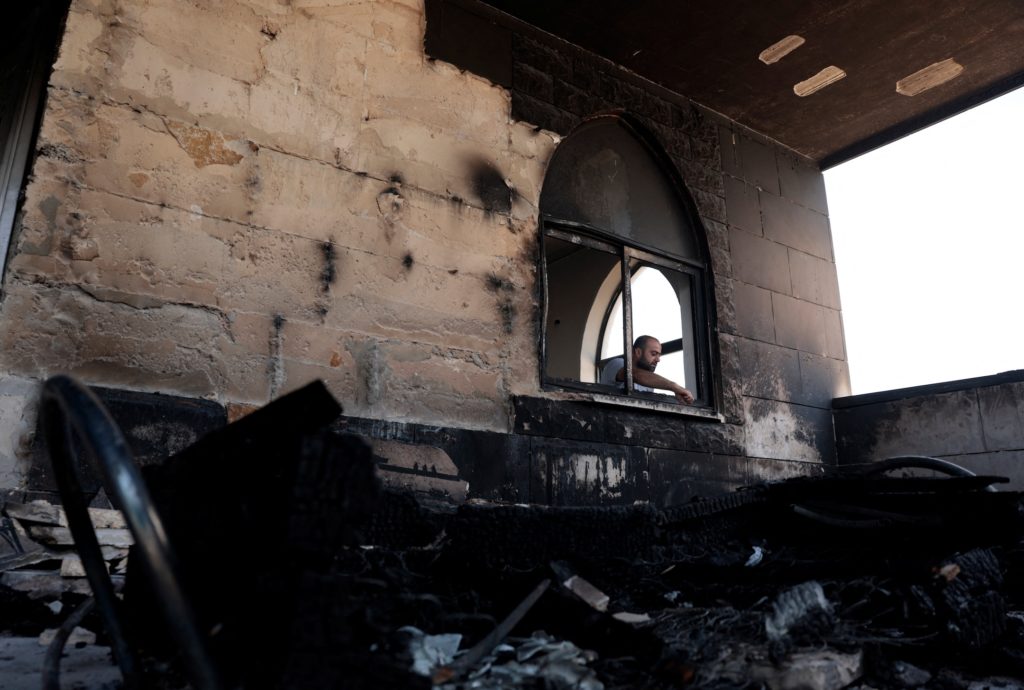
Recent events in the West Bank have seen a troubling rise in violence, particularly against Palestinian communities. Reports indicate that Israeli settlers burned two mosques over the weekend amid ongoing tensions that resulted in deadly confrontations between Israeli soldiers and Palestinians. Witnesses and local leaders have voiced concerns over the increasing footprint and aggression of Israeli settlers, raising fears about the future of Palestinian communities in what they envision as their future state.
Recent Attacks and Rising Tensions
This past weekend, a series of assaults were reported in Palestinian villages, notably Qusra and Kour, where settlers vandalized holy sites. Eyewitnesses described the aftermath of these incidents, which left the mosques in ruins and painted a picture of deepening animosity. The violence escalated last Friday when Israeli settlers clashed with residents in the nearby village of Tell, leading to fatalities on both sides. While Israel frames these as acts of Palestinian aggression, local narratives paint a different picture — one of defenseless communities under threat.
Israeli Prime Minister Benjamin Netanyahu has pledged to take action following these events, asserting the need for stringent counterterrorism operations. Reports from the ground indicate that Israeli forces have conducted numerous raids across Palestinian territories, claiming to target illegal constructions while arresting a significant number of Palestinians. Many locals, however, argue that the real violence stems from a combination of militant settlers and military forces, leaving them in an increasingly precarious position.
Voices From the Ground
In their attempts to cope with ongoing violence, Palestinian residents have shared stark recounting of their experiences. Mohammed Bani Odeh, a West Bank resident, spoke about the fear and upheaval his family experiences due to settler aggression. He detailed an encounter with armed settlers, who aimed firearms at his family, highlighting the sense of intimidation felt throughout the community. For many, fleeing from their homes is not an option, as they find themselves surrounded by settlements claiming more and more land.
Residents across various villages express a pervasive sense of hopelessness. In Ainub, the body of a deceased villager faced obstacles in being laid to rest, as settlers refused to open the gates, forcing the grieving community to carry the deceased under a barrier, an act steeped in humiliation. This indignity illustrates the deep fractures within social and communal life under the current conditions, further exacerbating tensions.
The Impact on Future Generations
The young people of the West Bank are not exempt from this climate of violence. In an alarming indicator of the current crisis, schoolchildren in Umm Al Khair have been unable to attend their classes due to barriers placed by settlers, forcing them to hold lessons on hillsides. The obstacles they face are not merely physical; they are emblematic of a larger struggle for rights and recognition.
One young student, Masa Al-Hathaleen, expressed her dreams of becoming a doctor, reflecting the aspirations of many Palestinian children who wish for a better future. Yet, the ongoing violence and encroachments pose significant barriers to such hopes. The children’s pleas for safety and access to education highlight an urgent call for international attention to their plight and potential solutions.
Violence in the West Bank continues to escalate, revealing a complex web of challenges that demand urgent intervention and meaningful dialogue. As tensions rise and communities are forced to navigate an increasingly hostile environment, the need for peace and understanding has never been more critical. The situation underscores the crucial need for concerted efforts to address underlying grievances, protect vulnerable populations, and foster an environment where aspirations for peace and coexistence can thrive.