
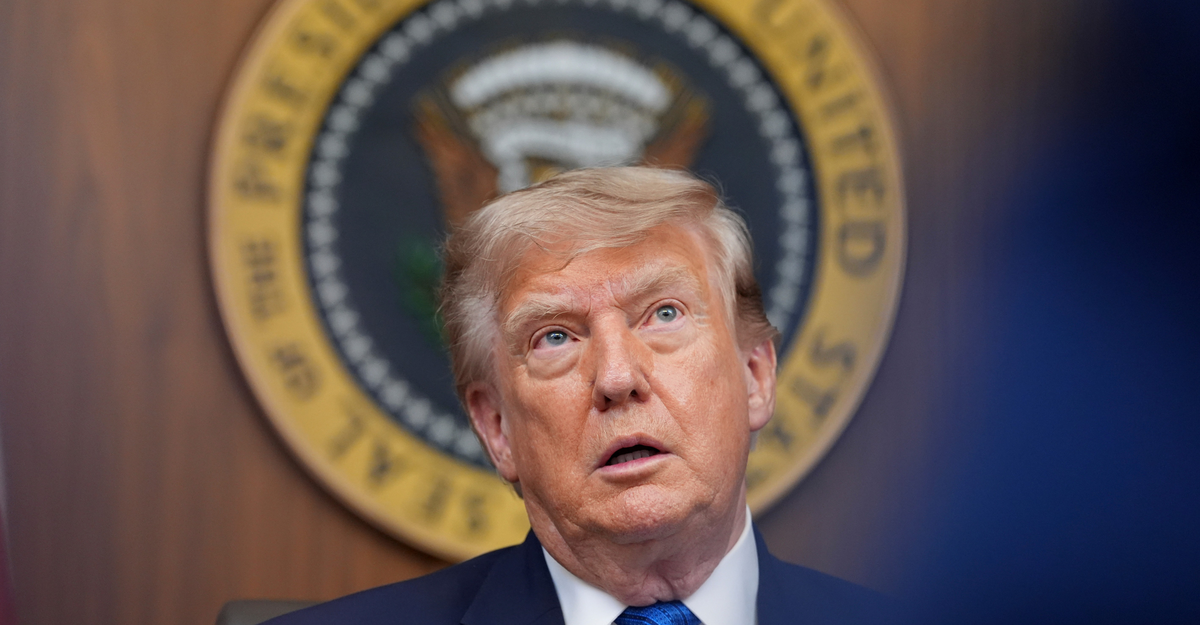
In a recent press conference, President Trump made headlines while discussing the ongoing conflict with Iran, offering a winding narrative of courage and resilience. Surprisingly, his praise was directed toward the very nation the U.S. is fighting against. While describing the situation, he depicted Iran’s military capabilities as virtually obliterated, yet still expressed confidence in their will to fight on.
Assessing Iran’s Military State
Trump described Iran’s naval forces as completely vanquished, stating, “Their entire navy is laying at the bottom of the sea,” and remarked that all of their 200 airplanes are gone, leaving them without aerial support. He further claimed that their advanced weaponry and radar systems had also been destroyed. This unsettling portrayal begs the question—if Iran’s military is reportedly in ruins, what does it even mean for them to be continuing the fight? A functional military is typically a prerequisite for sustaining warfare, and such contradictory proclamations create confusion about the real state of affairs.
Strategic Misinterpretations
The complexity of Trump’s rhetoric is compounded by its apparent alignment with the sentiments expressed by hawkish allies advocating for a tough stance against Iran. Comments by figures like Marc Thiessen, a former speechwriter for Bush and an advisor to Trump, illustrate a dissonance between analysis and reality. Thiessen recently published an article suggesting that despite Iran’s setbacks, a continued military strategy could still yield victory. He asserted that significant successes had been achieved—such as dismantling Iran’s nuclear capabilities and significantly crippling their military infrastructure—but claimed that these initiatives were paused, potentially allowing their forces to regroup.
Thiessen’s commentary highlights a problematic assumption: that the damage inflicted on Iran’s military can remain permanent. A recent report indicated Iran’s quick recovery of military capabilities and infrastructure, indicating the transient effects of bombardment. This implies that without a sustained and comprehensive military strategy, previous victories may be quickly undone.
Questions of Military Capability and Readiness
Trump’s unyielding optimism stands in stark contrast to operational realities. Reports have emerged suggesting that limitations on U.S. military resources could hinder efforts to launch further decisive strikes against Iran. However, officials have dismissed these claims, asserting that the military has everything it requires for ongoing operations. This insistence raises questions about the actual state of U.S. preparedness in what continues to be a volatile environment.
In a moment that resonated with historical allusions, Trump was pressed on the potential for continued Iranian attacks. His response was predictably vague as he acknowledged the cyclical nature of conflict: “They’ll get weaker… and then they peter out.” Such statements reveal a troubling understanding of warfare, one that downplays the complex dynamics at play.
In a rapidly changing military landscape, clarity and actionable strategy are crucial. As the conflict evolves, the need for a realistic appraisal of Iran’s capabilities and intentions remains paramount. Relying on empty rhetoric may offer political comfort, but it does little to address the pressing challenges facing military planners and policymakers. As the situation unfolds, the dichotomy between vision and reality will be critical in defining the future trajectory of U.S.-Iran relations.