
On Thursday, a significant escalation occurred in the ongoing tensions between the United States and Iran. The U.S. military conducted a series of pronounced airstrikes targeting various military command centers and missile facilities in Iran. In a concerning turn of events, Iranian authorities reported that these strikes also affected a residential area, resulting in the tragic loss of two children.
U.S. Strikes as Retaliation
These airstrikes were characterized by the U.S. military as a response to what they classified as an “attempted surprise attack” involving ballistic missiles aimed at American forces in the Middle East. Iranian forces claimed responsibility for targeting the Muwaffaq Salti Air Base—a prominent U.S. military hub in Jordan—during these missile strikes. This base, well-known for being frequently attacked, recently bore the brunt of an incident that led to the deaths of three U.S. service members.
In the early hours following the strikes, Jordan’s military intercepted five Iranian missiles intended for its territory. President Trump made statements affirming a robust U.S. response to Iranian actions, suggesting that the situation warranted a strong military approach.
Consequences in Iraq
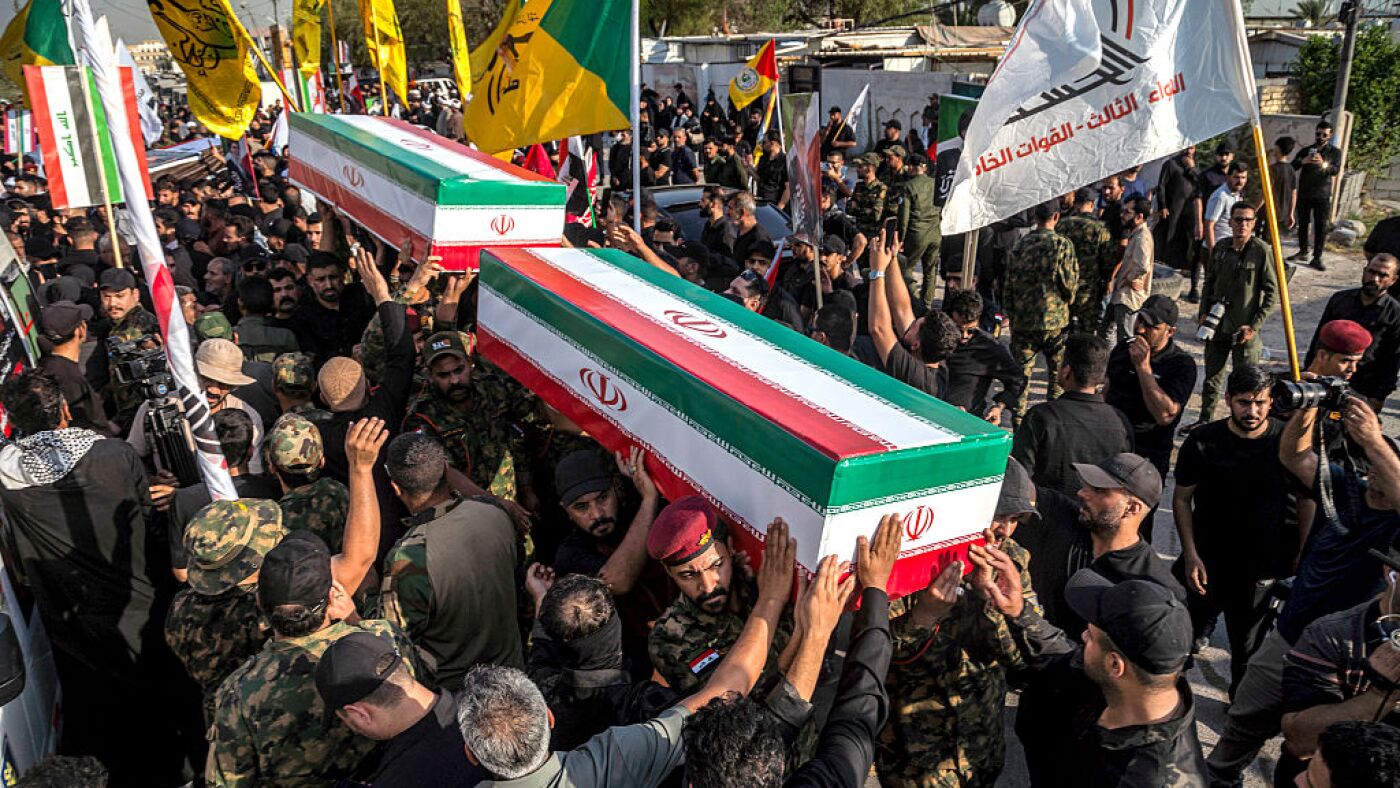
Simultaneously, the U.S. and Saudi Arabia launched airstrikes on seven paramilitary bases in Iraq linked to Iran-backed militias. These strikes reportedly resulted in the deaths of at least 20 fighters and drew immediate threats from the militias, which have since given the Iraqi government a week’s notice to respond to these military actions. Iranian officials confirmed that four members of the Islamic Revolutionary Guard Corps were among those killed.
In Baghdad, local reactions included funeral processions for the deceased fighters, where attendees voiced their anger by chanting anti-American and anti-Saudi slogans. The strikes coincided with a significant Shia religio-cultural event, Arbaeen, a 40-day mourning period that sees millions of pilgrims converge on the city of Karbala to honor the martyrdom of Imam Hussein, a pivotal figure in Shia Islam.
The Role of Iraqi Leadership
Iraq’s new Prime Minister, Ali al-Zaidi, faces immense pressure to address the growing influence of Iran-allied militias, which operate largely beyond the purview of the Iraqi government. Despite repeated calls from the U.S. to rein in these factions, the situation remains largely unchanged. Zaidi, who lacks extensive political experience, was selected after the U.S. opposed a more established candidate deemed too close to Iranian interests.
The Iranian militia groups became prominent following the chaos that ensued after the U.S.-led invasion in 2003, and their fusion into Iraq’s security apparatus complicates the current political landscape. Even as both Iraqi leadership and the U.S. sought stability in the region, the lingering power of these militias poses a significant challenge.
Regional Implications and Future Outlook
In the wake of the recent U.S.-Saudi strikes, Prime Minister Zaidi appears to have shelved a previously planned visit to Saudi Arabia, as Iraq’s Shia-led government endeavors to navigate its complicated relationships with Sunni Gulf states. Amidst these tensions, Iran reported thwarting two oil tankers that were allegedly attempting to navigate the strategic Strait of Hormuz under U.S. guidance. Simultaneously, an Iranian statement cited allowing a Qatari tanker passage through the channel, coordinated with Qatar, although confirmation from the latter is pending.
As this situation evolves, the potential for further conflict remains high, underscoring the intricate web of regional politics that continues to shape U.S.-Iran relations and the broader Middle East landscape.