
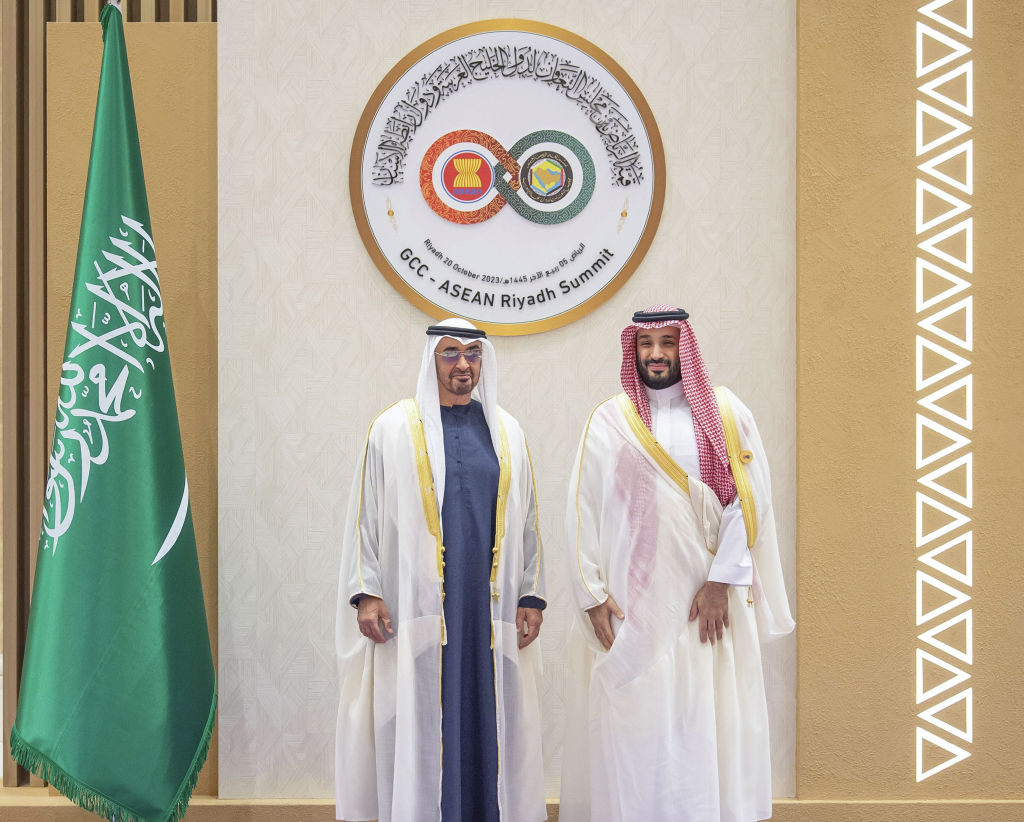
The development strategies of Saudi Arabia and the United Arab Emirates (UAE) showcase remarkable similarities, driven primarily by hydrocarbon exports, a strong alignment with the United States and other Global North nations, and neoliberal economic approaches. Both nations are navigating the complexities of a post-oil future, leveraging advanced technologies, tourism, and ambitious large-scale projects. Politically, they are characterized by absolute monarchies that resist any form of dissent or alternative viewpoints, maintaining a tight grip on power and suppressing even the mildest expressions of opposition.
### Population Dynamics and Economic Disparities
The demographic and economic landscapes of Saudi Arabia and the UAE present significant contrasts. The sheer size of Saudi Arabia’s population, which is approximately three times larger than that of the UAE, gives it a particular advantage in terms of financial and human resources. When considering only the citizens of each nation, the gap becomes even more pronounced, with the UAE’s native population comprising less than 10% of Saudi Arabia’s. Despite this demographic imbalance, the UAE boasts a much higher per capita income for its citizens and has developed its economic model more swiftly. Notably, Saudi Arabia only began issuing tourism visas in 2019, while the UAE has long positioned itself as a travel hub, capitalizing on its strategic location between East Asia and Europe.
### Rising Competition and Economic Policies
As both nations strive to enhance their global standing, competition is intensifying. The UAE was quick to exploit the Gulf Cooperation Council (GCC) Free Trade Agreement, establishing numerous enterprises in various “free zones,” particularly in Dubai. However, in July 2021, the Saudi government took a decisive step by terminating the free trade status of products emanating from these zones and instituting import tariffs, targeting the UAE as a principal competitor. This marked a distinct shift in their economic relationship, signaling a more aggressive stance from Saudi Arabia and complicating the UAE’s previously advantageous position.
### Corporate Relocations and Strategic Moves
In tandem with changing trade regulations, Saudi Arabia passed a decree in 2021 requiring major international companies to establish their headquarters within its borders. This step nudged over 660 companies to relocate to Riyadh, motivated by various incentives despite concerns about the city’s living conditions compared to more relaxed locales like Dubai. This strategic move aims to bolster Saudi Arabia’s appeal as a business hub, though the comfort and lifestyle offered in the UAE remain a strong draw for many firms.
### Challenges and Opportunities for Growth
Despite the UAE’s early advancements, the ongoing reforms in Saudi Arabia are enabling it to close the gap. Two major factors play a crucial role in this transformation: improved entertainment standards in the kingdom and the potentially lucrative market that Saudi Arabia represents. The Financial Times recently highlighted ongoing delays in financial transfers between the two countries, suggesting that these growing tensions might affect future collaborations or investments.
### Military Engagements and Strategic Differences
Another distinguishing factor between the two nations lies in their military engagement strategies. Since the 1990s, the UAE has actively participated in several international military operations, earning the nickname “little Sparta” among US military officials. This involvement has underscored the UAE’s assertive foreign policy approach. In contrast, Saudi Arabia’s military capabilities are often criticized as being ineffective, with its forces primarily viewed as a ceremonial entity. This disparity has left Saudi ground troops underutilized in conflicts, such as the protracted war in Yemen, where the UAE has faced considerable losses.
In summary, while both Saudi Arabia and the UAE share common developmental objectives, their individual strengths and weaknesses, as well as differences in approach, continue to shape the dynamics of their regional and international engagements.